
 Beställ idag, leverans senast
 Bathroom Wall Art: Yes, You Can Hang Art in a Bathroom (Here's How)
The honest answer to humidity anxiety, splash zones, and whether your bathroom can actually pull off a quote print.


Yes, you can hang art in a bathroom. The internet has somehow convinced everyone this is risky business reserved for people with dehumidifiers and degrees in conservation, and that simply isn't true. With a bit of common sense about format and placement, your bathroom can be the most interesting room in your house.
The humidity question: what actually happens to art prints in a bathroom (and what does not)
Here's the honest version. A typical bathroom with a working extractor fan or an openable window sits at roughly 50 to 70% relative humidity during a shower, and drops back to normal household levels (40 to 55%) within an hour. That is not a hostile environment for a print. It's a slightly damp one, briefly.
What actually damages art is sustained, unventilated moisture over months. Cheap paper warps. Cheap MDF frames swell at the corners. Low-quality inks fade or run. None of that happens to a properly made print in a bathroom that gets aired out daily.
What does NOT happen: your art does not melt, mould, or disintegrate the first time someone takes a hot shower. People keep books and toilet rolls in bathrooms without incident, and a well-made giclée print on thick matte paper is more robust than either.
The two things you actually need are decent ventilation (a fan that runs for 15 to 20 minutes after a shower, or a window you actually open) and a print built with quality materials. Solid wood frames don't warp the way MDF does. Water-based pigment inks don't bleed. Thick matte paper holds its shape. The failure mode in this category is almost always the framing, not the bathroom.

Canvas vs framed vs unframed in a bathroom: format matters more here than anywhere else
In every other room you can pick a format based on style. In a bathroom, format is also a practical decision, and there's a clear hierarchy.
Canvas is the safest choice. Stretched canvas on a solid wood frame breathes, doesn't trap condensation behind glass, and shrugs off humidity better than any paper-based option. The matte finish doesn't reflect harsh bathroom lighting either. If your bathroom runs hot and steamy daily, start with bathroom canvas prints.
Framed prints with quality glazing are the next best option. A framed paper print is fine in most bathrooms, with one caveat: the glazing matters. Glass can develop condensation on the inside if temperatures swing fast. UV-protective acrylic glaze (which is what we use) handles temperature changes better, doesn't shatter, and weighs less, which matters when you're hanging on tile or plasterboard.
Unframed paper prints work in dry bathrooms only. Powder rooms, guest bathrooms, ensuites with strong ventilation. Anywhere a daily shower fills the room with steam, skip the unframed paper option.
The budget reality: if you can't stretch to canvas or framed, an unframed print in a well-ventilated bathroom away from the shower will still be fine for years. Don't let perfect be the enemy of having something nice on the wall.
Safe zones and splash zones: where to hang art based on your bathroom layout
Forget generic "above the toilet" advice. Think of your bathroom in three zones.
Splash zone (avoid). Anywhere within roughly 60cm of the shower opening, directly above the bath taps, or within arm's reach of the sink. Direct water contact ruins anything, no matter how well made.
Steam zone (canvas only, ideally). The walls inside a wet room, the wall the shower faces, anywhere that gets visibly misted during a hot shower. Canvas handles this. Framed prints can too, but you'll want to wipe condensation off the glazing occasionally.
Safe zone (anything goes). The wall opposite the shower, above the toilet, beside or above the mirror, the wall behind a freestanding bath, the back of the door. These spots see ambient humidity but no direct moisture. Standard art prints for the bathroom work fine here.
A useful rule: if a towel hung on that wall would still feel damp the next morning, it's a steam zone. If it would dry overnight, it's safe.
Powder rooms are a special case. No shower means no real humidity issue, so treat them like any other small room. This is where you can get away with anything, including unframed paper, original watercolours, or that pricey print you wouldn't risk in the master bath.

Subjects that work in bathrooms: coastal, botanical, minimalist, and the unexpected ones
The obvious subjects are obvious for a reason. They work.
Coastal and ocean. Water imagery in a water room is a cliché, but it's a cliché because it genuinely looks good. The trick is avoiding the "seaside gift shop" version. Skip the lighthouse with the rope border. Instead, look for moody, painterly takes on waves, swimmers, or shorelines. Ocean art prints and seaside art prints range from abstract to photographic, and the better choice is usually the more restrained one.
Botanical. Pressed ferns, palm leaves, single-stem studies, vintage botanical illustrations. The bathroom is one of the best rooms for plant art because the imagery echoes the tropical-feeling humidity of a hot shower without being literal about it. Browse botanical art prints or plants art prints for options that range from delicate line drawings to lush colour studies.
Minimalist. Line drawings, single-shape abstracts, neutral colour studies. These work because bathrooms are often busy already, with tiles, fixtures, towels, and bottles competing for attention. A simple minimalist print gives the eye somewhere to rest.
The unexpected ones. Architectural photography, vintage maps, abstract figure studies, black and white portraits, food and drink illustrations in a kitchen-adjacent bathroom. The bathroom doesn't have to "match" its function. Some of the best bathrooms we've seen have art that would look equally at home in a study or a hallway.
Black and white deserves a specific mention. It's perennially popular in bathrooms because it hides the occasional water spot, never clashes with the inevitable rotation of towel colours, and reads as timeless rather than trend-led.
The funny quote print: when it works and when it makes your bathroom feel like a student flat
Bathroom quote prints are everywhere, and most of them are bad. Let's be specific about why.
A quote print works when the typography is genuinely good (not a free script font), when the message is dry rather than try-hard, and when it's the only quote in the room. It fails when it's loud, when it announces itself ("WASH YOUR HANDS YA FILTHY ANIMAL"), or when it's surrounded by other novelty pieces. Three quote prints in one bathroom is one quote print too many.
If you want a quote print, treat it like any other art. Choose it for the typography first and the joke second. A well-set Helvetica reading "but first, coffee" is still bad. A beautifully drawn typographic piece with a wry, restrained line can be excellent. The good ones live in quotes and sayings prints.
The general test: would you still hang it if it weren't a quote? If the design itself stands up, you're fine. If the only thing carrying it is the words, leave it on the shelf.
Colour palettes: blues, greens, and neutrals that complement tiles and fixtures
The bathroom is usually the most colour-committed room in the house. Tiles don't change. Grout doesn't change. The bath is whatever it is. So pick art that works WITH what's already there, not against it.
Blues. A soft sage-blue or deep navy print plays well against white tiles, brass fixtures, or natural stone. Blue art prints are the easiest win for a classic bathroom.
Greens. Sage, olive, deep forest. Greens work brilliantly in bathrooms with warm wood, terracotta, or pink-toned tiles. They're also flattering under both natural and warm artificial light.
Neutrals. Ivory, oat, charcoal, terracotta. If your bathroom already has strong colour in the tiles or paint, neutral art is the safest bet. Black and white photography or muted abstract pieces let the room's existing palette breathe.
Avoid matching too literally. A bathroom with sage green tiles doesn't need sage green art. It needs art that complements the green, often through contrast (a warm terracotta) or restraint (black and white).

Sizing for bathrooms: above the toilet, beside the mirror, and above a freestanding bath
Bathrooms are smaller than other rooms, but the art still needs to be big enough to register. Undersized art is the most common mistake.
Above the toilet. A medium print (around 40x50cm or 45x60cm) works for a standard toilet. The bottom edge should sit roughly 25 to 30cm above the cistern. A pair of two smaller prints stacked vertically also works, but only if you commit to the stack and don't space them awkwardly.
Beside the mirror. This is a tricky spot because the mirror itself is doing a lot of visual work. Go smaller and quieter here. A 30x40cm print, ideally vertical, sitting at roughly mirror height.
Above a freestanding bath. This is the showcase wall, and it deserves a showcase piece. Go large. A 70x100cm or larger print, hung so the bottom edge is around 20 to 25cm above the rim of the bath. Canvas works particularly well here because of the proximity to water.
Above a vanity (no mirror above). Treat it like above a sofa: the art should be roughly two-thirds the width of the vanity below it.
Small bathrooms: why one bold piece beats three tiny ones
The instinct in a small bathroom is to go small. Resist it.
Small art in a small room makes the room feel smaller, because lots of little objects break the eye into fragments. One larger piece does the opposite. It creates a focal point, draws the eye, and makes the wall feel intentional rather than fussy.
In a tiny powder room, a single 50x70cm print on the main wall will do more for the space than three 20x25cm prints clustered together. The clustered approach also creates more hardware on the wall, more dust collection points, and more chances for one piece to hang slightly crooked and ruin the whole arrangement.
If you genuinely want multiple pieces, do two large ones rather than five small ones. And give them room to breathe.

A final note on what not to risk
Don't hang anything in a bathroom you couldn't bear to lose. Original paintings, irreplaceable family photos, signed pieces, anything with sentimental or financial value beyond replacing. Quality reproduction prints are designed to be hung confidently in real rooms, including damp ones. Heirlooms belong in the hall.
Pick canvas or a properly framed print, keep it out of the splash zone, run the fan, and stop worrying. Bathrooms are rooms too, and they deserve art that makes them feel like part of your house rather than a tiled afterthought.

Fab-produkter som visas i denna blogg
-

Canvastavlor lekfull utter med toarulle för badrum
Försäljningspris Från £49.95£74.95 -
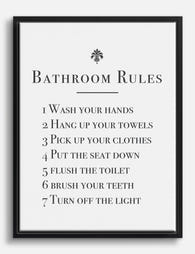
Canvastavlor stilfulla badrumspåminnelser i svartvitt
Försäljningspris Från £49.95£74.95 -

Poster med citat för badrum i fet typografi
Försäljningspris Från £11.95£19.95 -

Poster badrumsregler – klassisk svartvit guide
Försäljningspris Från £11.95£19.95 -

Poster badrum – vardagsritualer i svartvit linjeteckning
Försäljningspris Från £11.95£19.95 -

Canvastavlor katt som läser på toaletten
Försäljningspris Från £49.95£74.95 -

Canvastavlor nyfiken svart katt i badrummet
Försäljningspris Från £49.95£74.95 -

Canvastavlor med nyfiken svart katt i badrummet
Försäljningspris Från £49.95£74.95 -

Canvastavlor badrumscitat i svartvitt – bubbellycka
Försäljningspris Från £49.95£74.95 -

Canvastavlor lekfull typografi för badrum
Försäljningspris Från £49.95£74.95 -
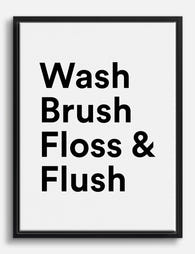
Canvastavlor badrumscitat – fräsch start i svartvitt
Försäljningspris Från £49.95£74.95 -

Canvastavlor för badrum – lekfullt svartvitt citat
Försäljningspris Från £49.95£74.95 -

Poster läsande katt i badrummet
Försäljningspris Från £11.95£19.95 -

Canvastavlor botaniskt badrum med frodig grönska
Försäljningspris Från £49.95£74.95 -

Canvastavlor vardagens badrumsritualer – svartvit linjeteckning
Försäljningspris Från £49.95£74.95 -

Canvastavlor krokodilens badstund
Försäljningspris Från £49.95£74.95 -

Canvastavlor svart hund läser tidning i badrummet
Försäljningspris Från £49.95£74.95 -

Poster tiger i badkaret
Försäljningspris Från £11.95£19.95


Mer från The Frame

Botanical Bedroom Ideas: How to Use Plant Print...
Botanical prints belong in bedrooms more than any other room in the house. The trick is choosing the right subjects, sizing them properly, and understanding how a printed leaf on...

Why Kew Gardens Became the World's Most Famous ...
Kew Gardens holds around 200,000 botanical illustrations, the largest collection of its kind anywhere. Behind that number is a story of royal ambition, global exploration, and artists sent to the...

Are Botanical Prints Still in Style? Why They W...
Yes, botanical prints are still in style. But the version of botanical art that feels current in 2025 looks very little like the pastel rose bouquets in gilt frames you...