
 Beställ idag, leverans senast
 What Makes a Good Art Print? The Quality Markers Every Buyer Should Know
A buyer's guide to spotting genuine quality, decoding product pages, and never wasting money on a fading print again.


Most art prints look identical in a thumbnail. The difference between one that lasts a lifetime and one that yellows within two years lives in details the seller doesn't always show you. This guide gives you the specific, checkable markers professional buyers use, so you can evaluate any print from any seller before you spend a penny.
Paper weight: why 200gsm is the minimum you should accept
Paper weight is measured in grams per square metre (gsm). It's the single most useful number on a product page, and many sellers don't list it.
For context: standard office paper is 80gsm. Magazine pages are 100-150gsm. A decent greetings card is around 250gsm. A serious art print should sit between 190gsm and 320gsm, with 190gsm as the minimum for anything you intend to keep.
Why does it matter? Heavier paper holds ink without bleeding, resists curling and rippling once framed, and feels substantial in your hands. Pick up a 150gsm print and it flexes like a magazine. A 200gsm print has a noticeable rigidity and a faint texture, what paper makers call "tooth," that catches light differently across the surface.
Cheaper prints often use 150-170gsm paper because it's significantly less expensive to source and ship. The trade-off shows up later: warping behind glaze, ink that looks flat, and a print that ages like a poster rather than artwork. Our art prints are printed on heavyweight matte paper specifically because lighter stock can't carry detailed work without compromise.

Giclée printing explained
Giclée (pronounced "zhee-clay") comes from the French verb meaning "to spray." It's not a marketing term, it's a specific printing process: pigment-based inks sprayed onto fine art paper through 8 to 12 separate ink channels at high resolution, typically 300 DPI or higher.
Compare that to the alternatives. Offset printing, used for posters and books, uses just four colours (CMYK) and prints in large runs. Standard inkjet uses dye-based inks across four to six channels. Both can produce decent results for casual use, but neither captures the subtle gradations a giclée printer can.
The practical difference is visible. With 12 inks instead of 4, a giclée print can reproduce the soft transition from dawn pink to lavender in a sky without banding (those visible stripes you sometimes see in cheap prints). It captures the texture of brushstrokes in an oil painting reproduction. Skin tones look like skin, not orange.
Giclée print quality also depends on the printer being properly calibrated and the paper being matched to the ink set. A giclée label alone is not a guarantee. Look for sellers who specify the printer, ink system, or paper alongside the term.
Ink longevity: archival vs standard
This is where cheap prints betray themselves. Standard dye-based inks begin to fade within 2 to 3 years, especially in any room that catches sunlight. The first thing to go is usually red and yellow, which is why old prints look bluish and washed out.
Archival pigment inks behave differently. The pigment particles are larger and chemically more stable, and good ones are independently rated for lightfastness by laboratories like Wilhelm Imaging Research. Quality archival inks are rated to last 100 to 200 years under normal indoor conditions without significant fading.
Look for the words "pigment-based," "archival," or specific ink series names on a product page. Vague phrases like "long-lasting inks" or "high-quality printing" without specifics usually mean dye-based inks. If the seller can't tell you what ink they use, assume the worst.
UV exposure is the other variable. Even archival inks fade faster behind regular glass in direct sunlight. UV-protective acrylic glaze blocks the wavelengths that cause fading, which is why we use it on every framed print rather than glass. It's lighter, safer, and actually protective.
Colour accuracy and what to look for in product photos
A great print is only as good as the colour it actually arrives in. Professional printers use colour-managed workflows: monitors are calibrated weekly, files are converted to the printer's specific colour profile, and test prints are checked against reference swatches. Cheaper operations skip this entirely and trust the screen.
You can't verify a seller's workflow, but you can read product photos for clues. Good signs: consistent lighting across the range, neutral whites in framed prints (not yellowish or blue), shadows that look like shadows rather than grey blobs, and lifestyle photos where the print's colours match the close-up shots.
Red flags: oversaturated colours that look like a phone filter, prints that appear differently in lifestyle photos versus product shots, and the same generic mockup used for every print regardless of size. If a seller can't be bothered photographing the actual product, they may not be bothered printing it carefully either.
A useful sanity check: search for customer photos in reviews. The honest reflection of what the print looks like on a real wall, in real light, tells you more than any product photo.

The details that separate good from great
Once the print itself is sorted, finishing decides whether it arrives looking professional or amateur.
Edges. Hold a print up to the light. Quality giclée prints have crisp, clean edges with no visible ink overspray, no fibre fraying, and no slight angle from a misaligned trim. Cheap prints often have a faint white border on one side and not the other, a tell that the trimming was done quickly.
Packaging. This sounds trivial. It isn't. A print should arrive in a rigid mailer or sturdy box, between layers of acid-free tissue or glassine, with corner protectors if framed. If your print arrives in a flimsy envelope with a single sheet of bubble wrap, that's a signal about how it was treated upstream as well.
Documentation. For limited editions, expect a signed and numbered certificate. For open-edition giclée reproductions, expect at minimum information about the paper, inks, and care instructions. Silence on these details usually means the seller doesn't want you asking.
Framing quality markers
The most common reason people are disappointed with framed art is the frame, not the print. Three things to check.
Frame material. Solid wood is the standard you should expect. MDF (medium-density fibreboard) is sawdust mixed with resin, finished with a printed wood-effect veneer. It's heavy, it warps in humid rooms, and the veneer chips. Real wood is lighter, ages gracefully, and doesn't pretend to be something it's not. All of our picture frames are made from FSC-certified solid wood for this reason.
Glazing. Three options exist: glass, acrylic, and plastic. Glass is heavy, breaks in transit, and offers no UV protection unless specifically treated. Standard plastic scratches easily and yellows over time. UV-protective acrylic is the professional choice (it's what Fab uses), lighter than glass, shatter-resistant, and actively protective against fading. If a product page doesn't mention what the glazing is, it's almost certainly basic plastic.
Hanging fixtures. A framed print should arrive with the hanging hardware already attached, properly aligned, and rated for the weight. The biggest single failure in this category is frames shipped separately from prints, requiring you to fit everything yourself. We ship the frame and print together in one box, properly fitted, ready to hang. It's the bare minimum and somehow remains rare.
Browse our framed art prints if you want to see how this should look.
Canvas quality
Canvas is judged by different criteria. The print is wrapped around a wooden frame, so the questions are about the structure as much as the image.
Stretched vs rolled. Stretched canvas arrives ready to hang, taut over its frame. Rolled canvas is shipped in a tube and requires you to stretch it yourself or pay a framer. Stretched is the right answer for almost everyone.
Staple placement. Turn a quality canvas over and the staples will be on the back of the frame, not the sides. This means the canvas wraps cleanly over the edges with no metalwork visible from any angle.
Corner folding. Look at the corners. They should be folded neatly into hospital corners, like a well-made bed, with no bunching or visible canvas edges. Sloppy corners are the easiest tell that a canvas was assembled in a hurry.
Mirrored edges. When the main image is wrapped around the sides of the frame, you lose some of the picture. Mirrored edge wrapping reflects the edges of the image onto the sides instead, preserving the full composition on the front. It's the standard we use across our canvas art prints.
Canvas has a specific advantage worth knowing: it's lighter than framed glass and tolerates humidity better, which makes it the better choice for bathrooms, kitchens, and rooms with temperature swings. The trade-off is that it looks less formal than a framed print.

How to spot a bad art print before you buy
Run any product page through this checklist. The fewer answers it gives you, the more cautious you should be.
- No paper weight listed. If they don't say 190gsm or higher, assume it isn't.
- Vague ink language. "Premium inks" means nothing. Look for "pigment-based" or "archival."
- No printer or paper specified. Quality sellers are proud of their materials. Silence is a tell.
- Suspiciously low prices. A genuinely framed A2 print under £25 with free shipping is either using MDF, plastic glazing, dye inks, or all three. The materials cost more than that to produce honestly.
- No size guide or scale photos. If you can't tell how big the print will be on a real wall, the seller hasn't thought about your experience.
- Generic mockups only. No photos of actual products in actual rooms means there may not be many actual customers.
- No returns policy or a 14-day window. Confidence in quality looks like a generous returns window. We offer 99 days because we'd rather you live with a print for a season before deciding.
The made-to-order advantage
There's a counter-intuitive truth in this category: print-on-demand often produces better quality than warehouses of pre-printed stock.
Pre-printed inventory sits in warehouses for months or years. Inks oxidise on the paper. Humidity causes subtle paper warping. Colour standards shift as printer technology improves, but the stock is already printed to older specifications. By the time it reaches you, it may be technically the same product, but it's been quietly degrading the whole time.
Made-to-order prints are produced when you order them, on freshly calibrated machines, with inks from sealed cartridges. The colour profile is current. The paper hasn't been sitting in a box. The print travels straight from the printer to your wall.
The trade-off is honest: you'll wait a few days longer than you would for warehouse stock. For something you'll live with for years, that's a fair exchange. Our Fab favourites and new in collections are all made to order for exactly this reason.

What to do with this information
You don't need to memorise gsm thresholds and ink chemistry. You need to know that quality is specific, listed, and verifiable, or it isn't there. Open the product page. Ask: what's the paper, what's the ink, what's the frame made of, what's the glazing, where are the staples on the canvas?
If the answers are there, the seller is confident. If you have to guess, assume the worst and buy from someone who tells you.

Fab-produkter som visas i denna blogg
-

Poster meningsfulla relationer
Translation missing: sv.products.product.sale_price Från £11.95£19.95 -

Poster fläckig grand danois i akvarell
Translation missing: sv.products.product.sale_price Från £11.95£19.95 -
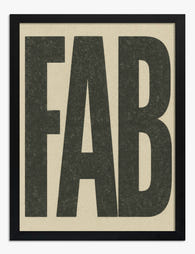
Poster typografi FAB – svart text på beige
Translation missing: sv.products.product.sale_price Från £11.95£19.95 -

Poster med text 'Better Late Than Ugly' i rosa
Translation missing: sv.products.product.sale_price Från £11.95£19.95 -

Poster Matisse-inspirerad mysig fristad
Translation missing: sv.products.product.sale_price Från £11.95£19.95 -

Poster gör dig själv stolt
Translation missing: sv.products.product.sale_price Från £11.95£19.95 -

Poster golfbana i vårgrönt med klargul flagga
Translation missing: sv.products.product.sale_price Från £11.95£19.95 -
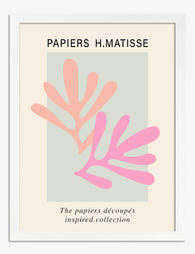
Poster rosa pappersklipp i Matisse-stil
Translation missing: sv.products.product.sale_price Från £11.95£19.95 -

Poster restaurangnota med text 'good things'
Translation missing: sv.products.product.sale_price Från £11.95£19.95 -

Poster porträtt av Marguerite av Matisse
Translation missing: sv.products.product.sale_price Från £11.95£19.95 -
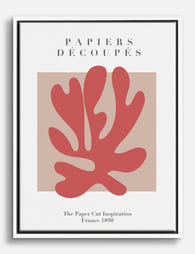
Canvastavlor rött pappersutklipp i Matisse-stil
Translation missing: sv.products.product.sale_price Från £49.95£74.95 -

Poster nostalgisk julstämning
Translation missing: sv.products.product.sale_price Från £11.95£19.95 -

Poster abstrakt porträtt i terrakotta
Translation missing: sv.products.product.sale_price Från £11.95£19.95 -

Poster välklädd i guld
Translation missing: sv.products.product.sale_price Från £11.95£19.95 -

Poster restaurangkvitto med 'Good Things are Coming!'
Translation missing: sv.products.product.sale_price Från £11.95£19.95 -

Poster mjuka reflektioner i neutrala och blå toner
Translation missing: sv.products.product.sale_price Från £11.95£19.95 -
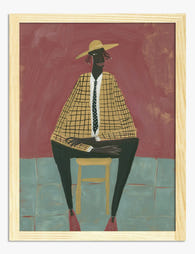
Poster den moderna musan
Translation missing: sv.products.product.sale_price Från £11.95£19.95


Mer från The Frame

Thrushes, Hares, and Peacocks: The Animals in W...
Why Morris put animals at the centre of his designs William Morris wasn't decorating walls with cute creatures. He was making a quiet argument. While Victorian factories churned out cheap,...

From Dutch Masters to Modern Minimalism: The Ke...
Search "types of flower bouquet art" and you'll get wedding centrepieces, posy guides, and cascading bridal arrangements. Useful if you're getting married. Useless if you're trying to choose what goes...

Every Flower in William Morris's World: A Guide...
William Morris designed roughly 50 wallpapers and around 30 chintzes across his career, and almost every single one features a plant. If you've ever stood in front of a Morris...