
 Order today for delivery by
 Wall Art Trends 2026: What's In, What's Out, and What's Actually Worth Buying
An honest, opinionated look at what's actually worth hanging on your walls next year, and what to skip entirely.


Most trend roundups read like a shopping list with no opinions. This one has opinions. We've sorted the 2026 trends into what's worth investing in, what's worth trying affordably, and what to actively skip, because not every trend deserves your wall space or your money.
The big shift: from perfect to personal
The single biggest move in interior art trends 2026 is the death of the perfectly curated wall. For about a decade, the dominant aesthetic was symmetrical, beige, and Pinterest-ready. Three identical frames above the sofa. Matching tones. Nothing out of place.
That look is over. The new direction is collected, not curated. Walls that feel like they've been built up over time, with pieces that don't necessarily match but somehow make sense together. A vintage botanical next to a moody abstract next to a small framed photograph from a holiday. The logic is emotional, not visual.
There's a cultural reason for this. After two years of AI-generated everything, people are reacting against polish. Visible brushstrokes, hand-drawn lines, slightly wonky compositions, these all signal "a human made this" in a way that flat digital art no longer does. The imperfection is the point.
This shift matters for buying decisions. If you're choosing art in 2026, prioritise pieces with character and personality over pieces that "go with" your sofa. The sofa will change. The art shouldn't have to.

Texture is everything
If you only take one trend from this article seriously, take this one. Texture is the most universally agreed-upon direction in popular art prints 2026, and it's not a fad. It's a long-term correction against a decade of flat, screen-friendly graphic design dominating walls.
What does textured art actually look like? Visible brushstrokes that catch the light. Thick impasto layers in oil-style abstracts. Hand-torn paper collage. Rough charcoal marks. Block-printed shapes with slight registration imperfections. Anything where you can sense the hand and the materials.
The reason this works on a wall (and flat digital art increasingly doesn't) is depth. A textured piece changes throughout the day as the light shifts. It rewards being looked at up close. It feels physical, even when it's a print.
This is where print quality matters enormously. A cheaply printed textured artwork looks worse than a cheaply printed flat graphic, because all the subtlety of brushwork gets lost. If you're buying into this trend, spend on print quality. Giclée printing on thick matte paper preserves the depth and tonal range that makes textured art feel real. Anything thinner and glossier flattens the effect.
Verdict: Investment-worthy. Texture has staying power because it's a reaction to a decade-long design problem, not a seasonal whim. Browse abstract art prints for the strongest expression of this trend.
Japandi calm: still going nowhere
Japandi (the marriage of Japanese minimalism and Scandinavian warmth) has been dismissed as a "trend" for about five years now, and it's still here. At this point, calling it a trend is almost insulting. It's a style.
What makes Japandi work as wall art is restraint. A single ink-wash mountain. A minimal botanical study with negative space. A muted geometric. The colour palette stays narrow: warm whites, soft greys, charcoal, ochre, the occasional rust. Nothing shouts.
The reason Japandi keeps winning is that it solves a real problem. Most homes are visually overstimulated already (open-plan layouts, multiple textiles, screens everywhere). Japandi art gives the eye somewhere to rest. It also ages beautifully, because there's nothing in it that will look dated in five years.
If your home leans busy, one large Japandi piece can do more for the room than three smaller pieces ever could. We'd argue 60x80cm is the sweet spot for most living rooms, and 70x100cm if you've got the wall.
Verdict: Investment-worthy. This is the safest bet in the article. Explore Japanese-influenced art and minimalist art prints if this is your direction.
Mediterranean optimism: the joy trend
The Mediterranean look (terracotta tones, lemon trees, sun-washed villages, ceramic still lifes, blue and white stripes) is having a proper moment in art print trends 2026. After years of moody, atmospheric, vaguely depressing art being everywhere, people want their walls to feel like a holiday.
We're into it, with caveats. The broad direction (warm earth tones, organic shapes, a sense of light and place) has real longevity. The specific motifs (a literal lemon, a literal Vespa, a literal "Ciao Bella" in cursive) do not. Those are going to feel very 2026 by 2028.
The trick is to buy the feeling, not the cliché. A washed-out terracotta abstract has Mediterranean energy without locking you into a specific Italian-villa fantasy. A loose painting of olive branches reads warmer and more grown-up than a literal lemon graphic.
This is also a trend that translates room by room. It works brilliantly in kitchens, dining rooms, and bathrooms where you want a lift in mood. It can feel try-hard in a serious living room or a bedroom you sleep in.
Verdict: Try affordably. Pick the atmospheric pieces, not the literal motifs. Mediterranean art prints collection is worth a browse if you want to test the temperature without committing to a full lemon-grove aesthetic.

Bold colour is back, but with rules
For about five years, the dominant home palette has been some flavour of grey, oat, or sage. That era is ending. Bold primary colour is returning to walls, but the way it's being used is fundamentally different from the maximalism of the early 2010s.
The 2026 version of bold colour is intentional and restrained. One strong red painting on an otherwise neutral wall. A single cobalt-blue abstract anchoring a beige sofa. A daffodil-yellow piece in an entryway. The art does the colour work. The room stays calm.
This is what people mean by "intentional maximalism," and it's a much more useful idea than full-blown maximalism. You're not painting every wall a different colour and stacking ten pieces of art. You're using one bold piece as a focal point and letting it do the heavy lifting.
The honest assessment: very specific colour blocking and rainbow-bright walls are a moment, not a movement. They photograph well, which is why they're everywhere on social media, but they age fast. A single confident piece of saturated colour, however, has been working in interiors for a hundred years and will keep working.
Verdict: Try affordably for the very loud stuff. Investment-worthy for one strong, well-chosen colour piece you genuinely love.
Nature reimagined: feeling, not photography
Literal nature photography (HD shots of forests, beaches, mountains) is fading. What's replacing it is more interesting: stylised, atmospheric, painterly interpretations of nature that capture mood rather than document a place.
Cloud and sky studies are everywhere right now. Soft horizons. Foggy meadows. Loose botanical paintings where you can't quite identify the plant. Ink-wash mountains that suggest rather than describe. The point is that the art evokes something (calm, expansiveness, melancholy, warmth) rather than showing you a postcard.
This connects back to the texture trend and the AI backlash. A painterly cloud study feels like someone observed the sky for an hour. A hyper-real photograph of a sunset feels like a stock image, even when it isn't. The painterly version wins on a wall.
Stylised botanicals are a particularly strong sub-trend with real longevity. Vintage-style pressed-flower studies, loose ink drawings of leaves, and atmospheric forest scenes all read as warm and grown-up without being precious. They work in almost any room.
Verdict: Investment-worthy, especially for botanicals. Botanical art prints and vintage art prints are both strong directions for this trend.

What is OUT
Time for the contrarian section. Here's what we'd actively avoid in 2026, even though some of it is still being heavily marketed.
Overly polished digital art. Hyper-clean vector illustrations, perfectly gradient-blended abstracts, anything that looks like it was generated in thirty seconds. The market is saturated and people are visibly bored of it. If your art looks like a phone wallpaper, it's probably not the right call for your wall.
The perfectly matched gallery wall. Six identical black frames in a perfect grid, each containing a different muted abstract from the same series. This was the dominant aesthetic from roughly 2018 to 2024. It's done. Asymmetrical, mixed-frame, mixed-size arrangements have replaced it.
All-grey palettes. The greige era is over. If every piece on your wall is a slightly different shade of warm beige, you're decorating for 2019.
Word art. "Live Laugh Love" never came back. Neither did "Gather," "Hello," or any other single-word kitchen sign. Skip.
Literal trend motifs taken too far. A single tasteful lemon print: fine. A whole wall of lemons, lemon-print cushions, and a lemon-shaped lamp: not fine. The same applies to mushrooms, checkerboards, and any other Instagram-driven motif having a moment.
Matching art to your sofa. This is the single most common mistake. Your sofa will be replaced. Your art shouldn't be tied to it. Choose art that works with your wall colour and the light in the room, not your upholstery.
Future-proofing your buys
A quick framework for separating trends with staying power from fads. Pieces that will age well usually share three traits: they're physically well-made (real materials, proper printing, solid frames), they have textural or compositional depth that rewards repeated looking, and they don't depend on a very specific motif to read as "current."
Pieces that won't age well usually have flat digital execution, a single trendy subject (a particular fruit, a particular phrase, a particular silhouette), or a colour palette that's tied to a specific season's marketing.
A practical investment rule we use: spend more on the largest piece in any room, because it does the most work. Spend less on smaller, more decorative pieces in low-stakes spots like hallways and downstairs loos, where you can experiment and rotate things out.
Worth flagging: the cheapest version of a good trend will look worse than the cheapest version of a safe trend. A poorly printed textured abstract looks muddy. A poorly framed Japandi minimalist looks flimsy. Cheap framing is the single most common reason wall art looks bad in real homes (warped frames, glass that catches every reflection, prints not properly fitted, frames shipped separately and assembled at home). Worth paying for proper framing if you can, because the difference is visible from across the room.

Our picks: what we'd actually buy
We promised opinions, so here are ten directions in our art prints collection that nail the 2026 trends without chasing fads. These are categories rather than specific pieces, because the right exact print depends on your room.
- A large textured abstract in muted tones. The single highest-impact buy of 2026. 70x100cm if you have the wall.
- A loose ink-wash botanical. Hits both the Japandi calm and reimagined-nature trends in one piece. Works almost anywhere.
- A stylised cloud or sky study. The painterly version of landscape photography. Calming in bedrooms, grown-up in living rooms.
- A warm terracotta abstract. Mediterranean energy without the literal lemons. Ages beautifully.
- A vintage-style pressed botanical. Affordable, charming, and ages like a real artwork because it's modelled on real ones.
- A single bold-colour statement piece. One saturated red, blue, or yellow abstract on an otherwise neutral wall. Confidence buy.
- A minimalist Japanese-style mountain or landscape. Negative space, restraint, and quiet authority. Hard to get wrong.
- A loose figurative line drawing. The hand-drawn, visibly imperfect line work that signals "human, not algorithm."
- A moody atmospheric landscape. Foggy fields, distant horizons, low light. Grown-up and emotional without being sad.
- A textured ceramic still life. Bowls, vases, fruit. Quietly warm, with longevity built in.
A note on canvas versus framed prints, because people ask: framed prints under acrylic glaze look more polished and protect the paper from sunlight, which matters if your wall gets direct light. Canvas is lighter, glare-free, and has a softer, more painterly quality, which suits textured abstracts particularly well. Neither is universally better. Pick by room, light, and the look you want.
The actual takeaway
Buy art you'd want to live with for ten years, not art that matches your current sofa. Prioritise texture, restraint, and craft. Skip anything that depends on a specific motif to read as "current." Spend more on the biggest piece in the room and on proper framing, because both decisions are visible from across the space. Everything else is detail.

Fab products featured in this blog
-

Urban Earth Abstract Art Print
Sale price From CHF 16.00CHF 23.00 -

Earthy Modern Geometry Canvas Print
Sale price From CHF 63.00CHF 90.00 -
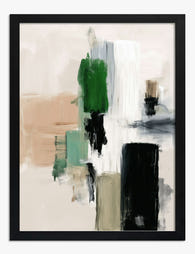
Urban Green Abstract Art Print
Sale price From CHF 16.00CHF 23.00 -

Warm Terracotta Layers Art Print
Sale price From CHF 16.00CHF 23.00 -

Red Tower on Dusty Blue Art Print
Sale price From CHF 16.00CHF 23.00 -

Modern Balance Shapes Canvas Print
Sale price From CHF 63.00CHF 90.00 -

Terracotta Muse Art Print
Sale price From CHF 16.00CHF 23.00 -

Soft Terracotta Flow Art Print
Sale price From CHF 16.00CHF 23.00 -

Urban Calm Abstract Art Print
Sale price From CHF 16.00CHF 23.00 -
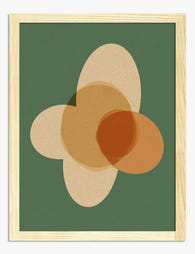
Earthy Overlap Shapes Art Print
Sale price From CHF 16.00CHF 23.00 -

Terracotta Flow Art Print
Sale price From CHF 16.00CHF 23.00 -

Bold Horizon Abstract Art Print
Sale price From CHF 16.00CHF 23.00 -

Quiet Company Art Print
Sale price From CHF 16.00CHF 23.00 -
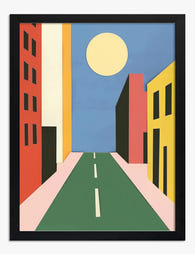
Sunny City Street Cut-Out Art Print
Sale price From CHF 16.00CHF 23.00 -

Urban Geometry Art Print
Sale price From CHF 16.00CHF 23.00 -
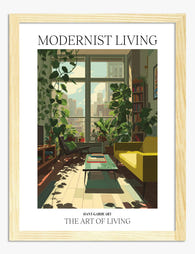
Modernist Living — The Art of Living Art Print
Sale price From CHF 16.00CHF 23.00 -

Soft Terracotta Flow Canvas Print
Sale price From CHF 63.00CHF 90.00 -
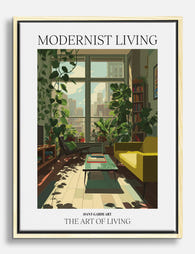
Modernist Living — The Art of Living Canvas Print
Sale price From CHF 63.00CHF 90.00 -
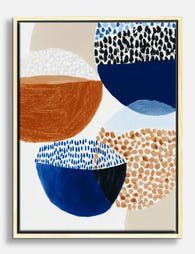
Bowl Study in Navy and Rust Canvas Print
Sale price From CHF 63.00CHF 90.00 -

Bauhaus Waves Canvas Print
Sale price From CHF 63.00CHF 90.00


More from The Frame

Why Do Most Park Wall Art Gallery Walls Fail Be...
Most gallery walls fail on paper, not on the wall. People buy prints they love, guess at spacing, hammer in a nail, and hope. This guide walks through the actual...

Curated or Cluttered? Decorating with Nature Pr...
Nature prints are the easiest wall art to buy and the easiest to get wrong. One botanical here, a moody forest there, a vintage bird plate your aunt gave you,...

Japandi Bedroom Wall Art: How to Create a Space...
Bedrooms are the hardest room to decorate well because the goal isn't to impress anyone. It's to help you sleep, wake up gently, and spend quiet hours in a space...