
 Pide hoy, entrega el
 Cherry Blossom Art Meaning: Symbolism, History, and Why It Still Resonates
The centuries-old symbolism behind sakura art, and why those falling petals still stop you in your tracks.


Cherry blossom art has a strange grip on people. You can scroll past a hundred botanical prints and stop, properly stop, at a branch of pink sakura against a pale sky. This is an article about why, and what to do with that feeling when you go to choose a print for your wall.
Sakura in Japanese culture: more than a pretty flower
In Japan, cherry blossoms are not a decorative motif. They are a national event. Forecasters track the bloom front (the sakura zensen) as it moves north from Okinawa to Hokkaido each spring, and people plan weeks of their lives around it.
The tradition of hanami, literally "flower viewing", goes back over a thousand years. It started in the imperial courts of the Nara period as aristocrats picnicked under the trees writing poetry, and it never stopped. Today entire families, offices and groups of friends gather on blue tarps in city parks to eat, drink and look up.
What makes this more than tourism is the timing. The blossoms last roughly a week, sometimes less if rain comes. The brevity is the point, not a flaw. You watch them precisely because you cannot keep them.
This is the cultural soil from which every piece of cherry blossom art grows. When you hang a sakura print on your wall, you are quietly participating in a tradition built around paying close attention to something that will not stay.
Cherry blossoms in classical Japanese art (ukiyo-e and beyond)
The cherry blossom enters the visual canon properly in the Edo period (1603 to 1868), when ukiyo-e woodblock prints turned popular subjects into mass-produced art. The name itself means "pictures of the floating world", which already tells you something about the worldview.
Katsushika Hokusai, best known for the Great Wave, returned to sakura repeatedly in his landscape series. His blossoms often frame Mount Fuji, layering one symbol of permanence (the mountain) against one of transience (the petals). Utagawa Hiroshige, his contemporary, did the same with softer atmospheric effects, using a technique called bokashi, a gradient wash of ink that makes skies look genuinely dawn-lit.
Earlier traditions matter too. Sumi-e, the minimalist ink wash painting brought from China and adopted by Zen monks, treats sakura with extreme restraint: a few brushstrokes, vast areas of empty paper. Where ukiyo-e is detailed and worldly, sumi-e is sparse and contemplative. Both are still cherry blossoms. They just feel completely different on a wall.
The quick technical distinction worth knowing: ukiyo-e is woodblock printing, often colourful, with strong outlines and flat planes of pigment. Sumi-e is hand-painted, monochrome or near-monochrome, and built around the philosophy that what you leave out matters as much as what you put in.

What cherry blossoms represent: impermanence, renewal, beauty
The single most important concept for understanding cherry blossom art is mono no aware. It translates roughly as "the pathos of things", or the gentle sadness you feel when you notice that beautiful things end. It is not depression. It is closer to a tender awareness.
The cherry blossom is the textbook image of mono no aware because the falling petals make the metaphor literal. Full bloom lasts days. Then hanafubuki, a "flower snowstorm", and it is over.
This is the first layer of meaning, and the one most people know. But there are others, and they often coexist in the same image.
Renewal and new beginnings. Sakura arrives at the start of the Japanese school year and the fiscal year in April. It is the flower of fresh starts, first days, and quietly closing one chapter to open another.
Beauty that requires no justification. In a culture that historically prized restraint and usefulness, the cherry blossom is unapologetically ornamental. It produces no edible fruit of note. It exists to be looked at, and that is enough.
Courage and the warrior's life. During the samurai era, the falling blossom became a symbol of bushido, the warrior code. A samurai was meant to live brightly and accept death without clinging, like a petal letting go of the branch. This symbolism was later co-opted, sometimes uncomfortably, during the militarist period of the early 20th century.
The richness of cherry blossom art comes from these meanings sitting on top of each other. A single branch in pale ink can read as melancholy, hopeful, or steadying depending on what you bring to it.
Cherry blossom symbolism in Buddhist and Shinto traditions
Both of Japan's main spiritual traditions found different things in the same flower.
In Buddhism, particularly the Zen schools that flourished alongside ukiyo-e, the cherry blossom illustrates anicca, the doctrine of impermanence. Everything that arises will pass. Suffering comes from refusing to accept this. The blossom, by being so beautiful and so brief, becomes a teaching tool you cannot argue with.
Shinto, the indigenous Japanese tradition, takes a different angle. Kami, the spirits or sacred presences in nature, are said to inhabit cherry trees. The blossoming is a moment when the kami make themselves visible. Hanami, in its oldest form, was partly a way of welcoming and honouring these spirits, and the food and sake left under the trees were offerings.
Regionally, the symbolism spreads with variations. In Chinese tradition, cherry blossoms carry associations with feminine beauty and love, less weighted with impermanence. In Korean culture, beot-kkot are associated with purity and the start of spring, often appearing in romantic contexts. The Japanese reading is the one that travelled furthest globally, but it is worth knowing it is not the only one.
How modern artists reinterpret sakura imagery today
Cherry blossoms left Japan in the late 19th century during the wave of Japonisme that swept European art. Van Gogh copied Hiroshige's plum and cherry prints directly. Monet planted a Japanese garden at Giverny. Whistler, Klimt and others absorbed the compositional ideas: high horizons, flat colour, asymmetrical balance, branches cropped at the edge of the frame.
That cross-pollination never stopped. Contemporary Japanese artists have radically reworked the image. Takashi Murakami flattens sakura into smiling cartoon faces in his Superflat aesthetic, deliberately collapsing the high-low distinction between traditional art and pop culture. Damien Hirst's Cherry Blossoms series, gigantic canvases of thickly dabbed pink and white paint, treats the flower as pure sensory excess.
Beyond the gallery names, a generation of independent illustrators and printmakers reinterpret sakura through every imaginable lens: minimalist line drawings, moody nocturnes lit by a single lantern, abstract washes that suggest blossoms without depicting them, photography-led work shot in soft focus.
This matters when you are looking at traditional Japanese art prints versus contemporary takes. The classical work carries the full weight of cultural history. The contemporary work asks what that history means now, or strips it back and starts over. Neither is more authentic. They answer different questions.

Why cherry blossom art prints feel so calming on a wall
There is a reason a good sakura print lowers your shoulders when you walk into the room. It is not mystical. It is design.
Negative space and the concept of *ma*
Ma is the Japanese word for the meaningful gap, the pause, the space between things. In painting, it is the empty paper around a branch. In music, it is the silence between notes. The brain reads negative space as breathing room, and in a print-heavy, image-saturated daily life, a composition built around emptiness genuinely resets your nervous system.
When you look at a cherry blossom print and feel calm, you are usually responding to ma before you are responding to the flowers. Notice how much of the image is sky, mist or paper. That is the active ingredient.
Asymmetry and the off-centre branch
Western design traditions tend toward symmetry and centre balance. Japanese composition prefers asymmetrical arrangements, a branch entering from one corner, the focal point pushed off-axis. This creates a sense of natural growth rather than placed objects, and the eye moves through the image rather than locking onto a centre.
Soft gradients and *bokashi*
Those skies in classical prints that fade from pink at the horizon to pale blue overhead are not accidents. Bokashi gradients soften the boundary between things, which is restful to look at. Modern giclée printing on thick matte paper preserves these gradients beautifully because matte paper diffuses light rather than bouncing it back at you.
Colour temperature
Pink-white sakura in particular sits in a colour range your eye reads as warm but low-saturation. It is the visual equivalent of being slightly under-stimulated, which is exactly what an over-stimulated brain wants on a wall.
A note on what to read into the image
If you want to look more closely: white blossoms tend to signal purity and the start of bloom. Deeper pink suggests fullness, often peak hanami. Falling petals shift the meaning toward mono no aware and acceptance. Night sakura scenes, yozakura, lit by paper lanterns, carry a more romantic, intimate weight than daytime views. None of this is rigid, but knowing the vocabulary helps you pick a print that says what you actually want it to say.
Choosing a cherry blossom print that carries the meaning you connect with
This is the part most articles skip. You know the symbolism. Now what?
Start with what you actually need from the room
A piece above a sofa works hardest when you are at rest. Lean toward calmer, more spacious compositions, lots of ma, soft gradients, a single branch rather than a dense canopy. A 70x100cm framed print in this register can do real emotional work in a lounge or bedroom.
A hallway or stairwell can take something more graphic. A bold ukiyo-e style sakura with strong outlines and saturated pinks holds attention in a passing glance, where a subtler piece would just disappear.
A workspace benefits from something with a hint of motion or hope rather than melancholy. Spring sakura, full bloom, blossoms with a clear sky behind, this is the symbolism of new beginnings, the fresh fiscal year energy.
Match the style to your existing interior
Classical ukiyo-e prints with their strong lines and flat colour pair well with mid-century furniture and warm woods. The graphic clarity holds its own against simple silhouettes.
Sumi-e and minimal ink-wash sakura belong in wabi-sabi leaning interiors: natural linens, raw plaster, ceramics, low contrast palettes. The restraint of the art reinforces the restraint of the room.
Contemporary or abstract sakura art (thicker textures, looser brushwork, modern colour palettes) sits comfortably in more eclectic or contemporary spaces and pairs well with other botanical art prints if you are building a small gallery wall.

Framed or unframed canvas
This is genuinely a trade-off. A framed art print on thick matte paper, behind UV-protective acrylic, gives you the polished, museum-quality look that suits the formal traditions of ukiyo-e and sumi-e. The acrylic glaze means even a sakura print in direct morning sun will not fade for decades, which matters if you are committing wall space to something.
A canvas print, hand-stretched over a solid wood frame with mirrored edge wrapping, has a softer, less ceremonial feel. It works particularly well for contemporary or painterly sakura images, where the texture of canvas adds to the brushy quality. Canvas is also lighter and easier to hang on tricky walls.
The honest answer is that traditional Japanese-style prints often look most authentic framed, while modern interpretations can go either way. If you are uncertain, framed tends to win for the small-to-medium classical pieces, canvas tends to win for the larger contemporary statement work.
Size and placement
For a single feature piece, go bigger than feels safe. A 70x100cm framed print above a sofa reads as intentional, while a 40x50cm in the same spot reads as hesitant. For canvas, the upper sizes (up to 100x150cm) can carry a wall on their own.
Hang the centre of the image at roughly 145 to 150cm from the floor for standing-eye level, slightly lower if it is above seating so you see it properly when you sit.
Connect the meaning to the moment
The unspoken thing about cherry blossom art is that people often buy it during transitions. A new flat. A new relationship. A loss. A career change. The symbolism of impermanence and renewal lands when you are already living through both.
If you are choosing a print for a real moment in your life, let that guide you. Falling petals if you are processing a loss or learning to let go of something. Full bloom against open sky if you are starting fresh. A single branch in deep negative space if you want a daily reminder to pay attention. The meaning is not abstract once it matches what you are actually carrying.

Browse the wider nature art prints selection if you want to see sakura sitting alongside other organic imagery. Sometimes the right cherry blossom piece reveals itself by contrast with what it is not.
Look at a print for at least a minute before you decide. If your shoulders drop, your breathing slows, or you find yourself still looking after you meant to look away, that is the one. The symbolism will do its work for years. Your job is just to choose the image that already feels like yours.

Productos Fab destacados en este blog
-

Lámina cerezos en flor de Hokusai
Translation missing: es.products.product.sale_price Desde £13.99£19.99 -

Lámina vista de cerezos en flor de Hokusai
Translation missing: es.products.product.sale_price Desde £13.99£19.99 -

Lámina serenidad de cerezos en flor de Hiroshige
Translation missing: es.products.product.sale_price Desde £11.95£19.95 -

Lámina ensueño de cerezos en flor
Translation missing: es.products.product.sale_price Desde £11.95£19.95 -

Lámina ramas en flor de Hiroshige
Translation missing: es.products.product.sale_price Desde £11.95£19.95 -

Lámina cerezos en flor de Hiroshige
Translation missing: es.products.product.sale_price Desde £11.95£19.95 -
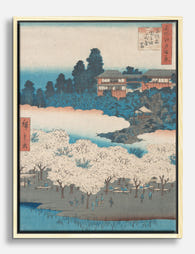
Lienzo cerezos en flor de Hiroshige
Translation missing: es.products.product.sale_price Desde £44.95£74.95 -

Lámina paseo bajo los cerezos en Tokio
Translation missing: es.products.product.sale_price Desde £11.95£19.95 -

Lámina de cerezos en flor (sakura) y cumbres nevadas
Translation missing: es.products.product.sale_price Desde £11.95£19.95 -

Lámina cascada de cerezos en flor de Shin Bijutsuka
Translation missing: es.products.product.sale_price Desde £13.99£19.99 -

Lámina elegancia de la flor de cerezo
Translation missing: es.products.product.sale_price Desde £11.95£19.95 -

Lámina vuelo de grullas entre cerezos en flor
Translation missing: es.products.product.sale_price Desde £11.95£19.95 -
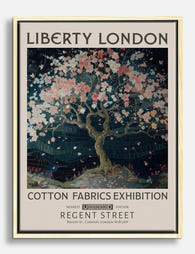
Lienzo ensueño de cerezos en flor
Translation missing: es.products.product.sale_price Desde £44.95£74.95 -

Lienzo vista de cerezos en flor de Hokusai
Translation missing: es.products.product.sale_price Desde £55.99£79.99 -

Lámina elegancia de los cerezos en flor
Translation missing: es.products.product.sale_price Desde £11.95£19.95 -
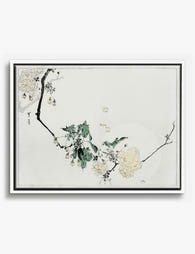
Lienzo elegancia del cerezo en flor
Translation missing: es.products.product.sale_price Desde £55.99£79.99 -

Lámina grullas sobre cerezos en flor
Translation missing: es.products.product.sale_price Desde £11.95£19.95 -
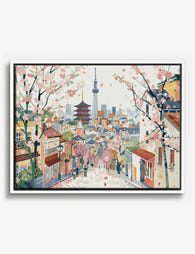
Lienzo cerezos en flor en Tokio
Translation missing: es.products.product.sale_price Desde £44.95£74.95 -

Lámina vuelo de aves entre cerezos en flor
Translation missing: es.products.product.sale_price Desde £11.95£19.95


Más de The Frame

The Real Plants Behind William Morris's Most Fa...
Most people know William Morris loved nature. Almost no one knows which specific plants are in which patterns, or how to recognise them once you do. This is the field...

The Best Rooms for Dragonfly Art (and How to St...
Dragonfly prints are quietly versatile. They carry the symbolism of transformation and the visual lightness of botanical art, which means they slot into far more rooms than most nature motifs....

Why Dragonflies Mean So Much: Symbolism, Spirit...
Few creatures have captivated artists as consistently as the dragonfly. For 4,000 years, across cultures that never met, they've shown up in tomb carvings, samurai armour, Tiffany lamps and now...