
 Commandez aujourd'hui, livré le
 How to Create a Greeting Card Gallery Wall That Actually Looks Curated
The design rules that turn a stack of pretty cards into a wall that looks professionally styled.


Most greeting card displays look like a craft project. Pegs, string, washi tape, a slow drift toward visual chaos. This guide treats card illustrations as what they actually are: small-scale art prints, ready to be framed, hung properly, and arranged with intention.
Why greeting card illustrations make the best gallery walls
Greeting cards are an underrated source of art. The illustration work on a £4 card is often produced by the same artists who sell £80 prints, just at a smaller scale and a fraction of the cost. Botanical studies, hand-lettered typography, abstract shapes, vintage florals. The format forces illustrators to work tightly, which means the compositions tend to be punchy and self-contained.
That makes them ideal for gallery walls. Larger prints carry a wall on their own, but small works only sing in a group. A single A6 illustration looks lost. Five of them, framed identically and spaced properly, look deliberate.
The other advantage is budget. You can build a serious-looking wall for under £80 if you shop carefully, which is hard to do with full-size prints. And because cards are small, mistakes are cheap. If a piece doesn't work in the arrangement, you've lost a few quid, not fifty.

Choosing a colour palette that holds the wall together
The single biggest difference between a curated gallery wall and a chaotic one is colour discipline. You don't need every card to match. You need every card to belong.
Pick a palette of three to four colours before you buy a single piece. The easiest approach is to pull two colours from the room itself (a sofa, a rug, a curtain) and add one accent. A lounge with a mustard sofa and oatmeal walls might lead you toward a palette of mustard, sage green, terracotta, and cream. Now every card you consider is judged against that palette.
A few approaches that work reliably:
- Tonal: every card sits within one colour family, like dusty pinks and burgundies, or every shade of blue from sky to navy.
- Two-colour with neutral: sage and terracotta on cream backgrounds, for example. Restrained but not boring.
- Botanical mixed: greens dominate, with occasional pops of coral, yellow, or pink. Forgiving because greens act as a neutral.
- Black, white, and one colour: line drawings and typography with a single accent shade tying them together.
What doesn't work: choosing cards individually based on whether you like each one. You'll end up with a primary-coloured cartoon next to a moody charcoal landscape next to a pastel typography piece, and no amount of clever framing rescues that.
If you're starting from scratch, botanical art prints and floral designs are forgiving categories. The natural colour palettes (greens, terracottas, soft pinks, ochres) tend to harmonise with almost anything.
The ideal number of prints (and why 5 is the magic number)
Odd numbers look better than even numbers on a gallery wall. This is one of those design rules that sounds suspicious until you try the alternative. Even numbers create symmetrical pairs that read as static. Odd numbers force the eye to move across the arrangement, which feels active and intentional.
Three is the minimum for anything to qualify as a gallery wall. Below that, it's just a few pictures. Five is the sweet spot for most UK rooms because it gives you enough variety to mix sizes without crowding, and it fills a typical wall section above a sofa, console table, or bed without going sparse.
Seven works for larger walls or salon-style arrangements where you want abundance. Beyond nine, the law of diminishing returns kicks in. The wall starts looking busy rather than considered, and individual pieces lose their impact.
For a standard UK hallway wall (roughly 2.5m of usable wall above a radiator or console), five prints in mixed sizes is the right answer almost every time.
Layout templates: grid vs. organic vs. single row
Three layouts cover ninety percent of situations. Pick one based on your wall and your tolerance for measuring.
The grid
Five or six identical frames arranged in a tidy rectangle. Two rows of three, or a single row of five with one centred above. This is the most forgiving layout because the geometry does the heavy lifting. The cards inside can be wildly varied in style as long as the colour palette holds.
For a UK hallway wall, try six frames in a 3x2 grid, each at A4 size with the cards centred inside larger mounts. Total footprint: roughly 90cm wide by 60cm tall. Sits well above a console table or radiator cover.
Organic (salon-style)
This is the harder one to get right. Mixed frame sizes, asymmetrical placement, anchored by one larger piece slightly off-centre. The trick is to imagine an invisible rectangle around the whole arrangement. Every frame edge should sit along an imaginary line that defines that rectangle. The interior can be playful, but the outer boundary stays disciplined.
For five prints in salon style: one larger frame (A4 or A3) as your anchor, two medium frames flanking it, two smaller frames filling the gaps. Spacing between frames stays consistent at 4 to 5cm.
Single row
A line of three to five identically-sized frames at exactly the same height, with even spacing between them. This is the most architectural option, suited to long, narrow walls like hallways and stairwells. Looks deliberate, almost like a museum hang.
For a 2.5m hallway wall, five A4 frames in a row, spaced 8cm apart, centred on the wall both vertically and horizontally. Quietly confident.

Size mixing done right: how to balance large and small prints
If you're going for a grid or single row, frame size is fixed and you're done. For organic layouts, size mixing is where most gallery walls fall apart.
The principle: one piece should clearly be the largest, and it should be roughly twice the visual weight of the next-biggest piece. Don't have three medium frames and two small ones. Have one big, two medium, two small. The hierarchy needs to be obvious.
For greeting card prints for framing, most cards arrive at standard sizes (A6 or 5x7"). To create size variation without buying differently-sized cards, vary the mount (the mat board around the print) instead. A 5x7" card in an A4 frame with a generous mount looks substantial. The same card in a 5x7" frame looks dainty. Same print, different visual weight.
This is the move that separates curated walls from amateur ones. You're using mounts to engineer the size hierarchy, not relying on the prints themselves to do it.
A solid recipe for five prints:
- One A3 frame with a card mounted in the centre (anchor piece)
- Two A4 frames with mounts (medium weight)
- Two 5x7" frames, no mount (small accents)
Place the anchor slightly off-centre. Build outward.
Frame selection: why matching frames beat eclectic for this style
Eclectic mixed frames work for big, bold art prints with strong individual presence. They do not work for greeting card galleries.
The reason: the prints themselves are already varied (different illustrators, styles, subjects). If you also vary the frames, you've removed the visual element that holds the wall together. The result reads as cluttered rather than curated.
Pick one frame style and commit. Three options that work reliably:
- Natural oak: warm, modern, works with most palettes. Best for botanical and floral collections.
- Black: graphic and architectural. Best for line drawings, typography, and high-contrast illustrations.
- White: light and airy. Best for pastel palettes and small rooms where black would feel heavy.
Avoid ornate gold or chunky vintage frames for this format. They overpower small artwork and clash with the casual nature of card illustrations.
A note on quality: cheap frames warp. The MDF backing swells, the corners separate, and the whole thing develops a sad sag within a year. If you're framing prints you genuinely care about, solid wood with proper backing is worth the extra few pounds. The frames on Fab's wall art sets are FSC-certified solid wood with UV-protective acrylic glaze, which means cards won't fade in sunlight and frames won't warp in humid hallways.
Hanging tips: spacing, height, and getting it level first time
Concrete numbers, because nobody else gives them.
Spacing between frames: 4 to 6cm for organic and grid layouts, 6 to 10cm for single rows. Tighter spacing reads as cohesive. Wider spacing reads as sparse. Anything under 3cm starts to look cramped.
Height from the floor: the centre of your arrangement should sit at 145 to 150cm from the floor. This is gallery-standard eye level for an average adult. Lower than that and the wall feels heavy. Higher and you're craning your neck.
Height above furniture: if you're hanging above a sofa, console, or bed, leave 15 to 20cm between the top of the furniture and the bottom of the lowest frame. Closer than 15cm looks cramped. Further than 25cm and the art floats disconnected from the room.
The pre-hanging trick that saves you: cut paper templates the size of each frame, mark where the hanging hook sits on the back of each, and tape the templates to the wall with masking tape. Move them around for as long as you need. Step back. Live with it for a day if you're unsure. Only when the arrangement feels right do you hammer a single nail.
For levelling, a £6 spirit level is non-negotiable. Or use the level app on your phone, which is accurate enough for picture hanging.

Common gallery wall mistakes and how to avoid them
Hanging too high. The most common mistake by some distance. Centre at 145cm, not 165cm.
Random colour mix. No palette discipline equals chaos. Decide your palette first, then shop.
Inconsistent frames. Mixing oak, black, white, and gold in the same arrangement reads as indecisive. Pick one.
Even numbers in salon-style layouts. Four prints in an organic arrangement always look like you ran out of space. Use three, five, or seven.
Spacing too wide. New gallery wall builders almost always over-space. If you're unsure, go tighter.
Forgetting the anchor. In a salon layout, you need one piece that's clearly dominant. Without it, the eye has nowhere to land.
Card edges visible inside the frame. If your card is smaller than the frame's window, either trim it precisely or use a mount cut to fit. Visible card edges look amateurish.
Folded cards displayed flat. Cut along the fold and frame just the front panel. The fold will always show through if you try to flatten it.
Printed messages on the front. "Happy Birthday" rarely belongs on a wall. Choose cards where the illustration stands alone, or trim the text if the composition allows.
Direct sunlight without UV protection. Standard card stock fades fast in south-facing rooms. UV-protective acrylic glaze (the kind on Fab's framed prints) prevents this. Cheap glass frames don't.
A final word
A curated gallery wall isn't about owning expensive art. It's about applying restraint to materials that are widely available. Three to four colours, five prints, matching frames, generous mounts, tight spacing, eye-level hang. That's the whole formula.
Lay it out on the floor before you put it on the wall. Live with the paper templates for a day. Then commit. The wall you end up with will look considered because it is.


Produits Fab présentés dans cet article
-

Affiche bienvenue au jardin
Translation missing: fr.products.product.sale_price À partir de €14,95€24,95 -

Affiche fêtes de fin d’année en ville
Translation missing: fr.products.product.sale_price À partir de €14,95€24,95 -

Toile bonjour minimaliste noir et blanc
Translation missing: fr.products.product.sale_price À partir de €54,95€91,95 -

Toile rassemblement joyeux
Translation missing: fr.products.product.sale_price À partir de €54,95€91,95 -
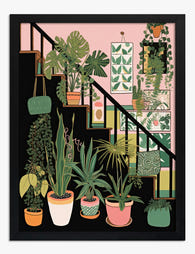
Affiche escalier botanique
Translation missing: fr.products.product.sale_price À partir de €14,95€24,95 -

Toile escalier végétal
Translation missing: fr.products.product.sale_price À partir de €54,95€91,95 -

Affiche bouquet de ballons en forme de cœur à l’aquarelle
Translation missing: fr.products.product.sale_price À partir de €16,95€23,95 -
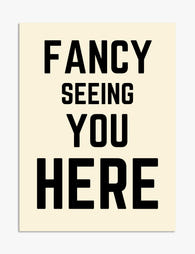
Affiche typographique message d'accueil chic
Translation missing: fr.products.product.sale_price À partir de €14,95€24,95 -

Affiche oh hi bleu doux
Translation missing: fr.products.product.sale_price À partir de €14,95€24,95 -

Toile chats curieux à la porte rose
Translation missing: fr.products.product.sale_price À partir de €54,95€91,95 -

Toile bouquet de ballons en forme de cœur à l’aquarelle
Translation missing: fr.products.product.sale_price À partir de €64,95€92,95 -

Toile oiseaux bleus et fleurs ivoire
Translation missing: fr.products.product.sale_price À partir de €54,95€91,95 -

Affiche carte Lucky Heart aux cœurs roses
Translation missing: fr.products.product.sale_price À partir de €14,95€24,95 -

Toile typographique salutations en rouge sur rose poudré
Translation missing: fr.products.product.sale_price À partir de €54,95€91,95 -

Toile escalier végétal
Translation missing: fr.products.product.sale_price À partir de €54,95€91,95 -

Affiche câlins bienvenus ici
Translation missing: fr.products.product.sale_price À partir de €14,95€24,95


Plus de The Frame

Boho Sun Wall Art: How to Nail the Look Without...
Boho sun art has a reputation problem. Done badly, it screams student halls and macramé overload. Done well, it's one of the warmest, most grounding aesthetics you can put on...

Every Animal in William Morris's Designs: The C...
Most people know the thrush in Strawberry Thief and stop there. But Morris's wider body of work contains foxes, hares, peacocks, ravens, lions, herons, woodpeckers, deer, and doves, often half-buried...

Countryside Decor Ideas: How to Bring Rural Cal...
Countryside art has quietly become one of the most versatile choices in modern interiors. Not the chintz-and-bunting version, but the kind of soft, considered pastoral scenes that bring the outside...