
 Ordina oggi, consegna il
 Art Print vs Poster: Why the Difference Actually Matters for Your Walls
The honest guide to paper weight, ink longevity, and why your old posters always end up in the bin.


You've probably owned a poster that looked great for a year, then quietly turned tragic. Yellowed corners, a slight ripple across the middle, colours that have shifted from vibrant to vaguely sad. The difference between an art print and a poster isn't snobbery, it's physics, and it shows up on your wall whether you want it to or not.
The poster problem: why that print from five years ago looks terrible now
Pull a poster out of a drawer that you bought five years ago. Hold it up to the light. The blacks have gone slightly grey, the bright pinks have drifted toward orange, and the paper itself feels limper than you remember. This isn't your imagination, and it isn't bad luck.
Posters are designed to be temporary. They're printed on thin paper, usually between 100 and 150 GSM, using dye-based inks that bond loosely with the paper fibres. Dye inks are bright and cheap to produce, but they're chemically unstable. Light, humidity, and even ambient air slowly break them down, and there's nothing you can do about it.
Most posters start showing visible fading within two to five years. Direct sunlight accelerates this dramatically, but even a poster on a north-facing wall in a dry room will lose colour fidelity over time. The paper itself absorbs moisture, expands and contracts with temperature, and starts to wave. Frame it behind glass and every imperfection becomes a tiny shadow you can't unsee.

This is the experience that makes people Google "difference between art print and poster" in the first place. Once you've been burned, you start asking what you're actually paying for when something costs more.
Paper: thick matte art stock vs thin glossy poster paper
Paper weight is measured in GSM (grams per square metre), and it's the single fastest way to spot the difference between a poster and a proper art print before you've even looked at the image.
A standard poster sits at 100 to 150 GSM. It feels like the cover of a glossy magazine. Hold it by one corner and it flops. Roll it up and it stays curled for weeks. Most posters also have a glossy or semi-gloss finish, which looks punchy in product photos but creates significant glare in real rooms, especially anywhere near a window or overhead light.
Fine art prints are printed on stock between 200 and 310 GSM, sometimes heavier. The paper feels substantial in your hands, almost like a thin card. It holds its shape, doesn't curl, and lies flat against a frame backing without any persuasion. A matte finish (which is what we use) absorbs light rather than reflecting it, so you see the image, not the ceiling lamp.
That thickness matters for a less obvious reason too. Thick paper has tooth, a subtle texture that catches ink in a way thin poster paper can't. Detail looks sharper, gradients look smoother, and dark areas have actual depth rather than looking like flat blocks of colour.
What 200+ GSM actually feels like
If you've never held a proper art print, the closest comparison is a high-quality wedding invitation or the inside cover of an expensive hardback book. There's a quiet confidence to it. You can tell, without thinking about it, that this is something built to last.
Ink: why giclée printing lasts centuries (literally)
Giclée (pronounced "zhee-clay") is a French word that, in plain English, means "to spray." It refers to a high-resolution inkjet process that uses archival pigment inks rather than the dye-based inks found in posters and standard home printers.
The difference between pigment and dye is chemical. Dye inks dissolve into liquid and soak into the paper, which is why they're prone to fading: the colour molecules are exposed and unstable. Pigment inks are made of solid colour particles suspended in liquid, which sit on top of the paper and bond to its surface. Those solid particles are far more resistant to UV light, oxidation, and humidity.
Independent testing by archival labs (the same ones museums use to rate artwork) puts quality giclée prints with pigment inks at 75 to 100+ years of fade resistance under normal indoor conditions. Our own prints use water-based pigment inks rated to last hundreds of years even in direct sunlight, which is why we can offer a UV-protective acrylic glaze on framed pieces and not worry about it.
Posters, by comparison, are typically printed on offset presses or large-format dye printers. The economics demand speed and volume, which means cheaper inks, less colour calibration, and no archival rating at all. They're not trying to last. They're trying to be cheap.
Colour and detail: what you actually see on the wall
This is the part you can't fully appreciate until you've seen the two side by side. A giclée print on thick matte paper has a depth that a poster simply can't match, and it's not a subtle difference once you know what to look for.
Pigment inks reproduce a wider colour gamut, which means more accurate skin tones, richer blacks, and the ability to render subtle gradients without banding. A sunset on a poster looks like three or four stripes of orange. The same sunset on a giclée print looks like an actual sky, with hundreds of tonal shifts between the colours.

Detail follows the same rule. Because giclée printers can lay down ink at extremely high resolutions (usually 1440 dpi or higher) onto paper that holds the ink crisply, fine details stay sharp. Brush strokes in a painting reproduction look like brush strokes. Texture in a photograph looks like texture. On a poster, those same details get muddied or lost entirely.
This is one reason our abstract art prints and vintage art prints reward looking at them up close. The detail is genuinely there, not just suggested.
Framing: why posters buckle and proper art prints don't
Here's where the gap becomes really obvious, and where most people first realise they've made the wrong choice.
Thin poster paper is a nightmare to frame. It buckles. It ripples. It picks up every imperfection in the backing board, and it reacts visibly to any change in humidity. Hang a framed poster in a kitchen, a bathroom, or any room with variable temperature, and within months you'll see waves running across its surface. Behind glass, those waves cast tiny shadows that catch the light at every angle.
Mounting a poster properly requires either dry mounting (gluing it to a rigid board, which destroys the poster permanently) or hinge mounting with archival tape and a perfectly cut mat, both of which cost more than most posters do. So most people just shove the poster behind glass and hope, and it almost always disappoints.
Art prints on thick stock don't have this problem. The paper is rigid enough to lie flat against a backing without any mounting at all. It resists humidity. It doesn't ripple. When framed properly, it stays looking exactly the way it did the day it arrived.
This matters even more when frames and prints ship separately, which is the standard in a lot of the market. Prints get rolled, paper gets stressed, and frames arrive in flat-pack boxes that need assembling. By the time you've fitted everything together at home, alignment is off, the print has a crease, and the whole thing looks slightly amateur.
We ship our framed prints in one box, properly fitted, ready to hang straight out of the packaging. The frames are solid FSC-certified wood (no MDF, no veneer), the glaze is UV-protective acrylic rather than glass (lighter, safer, doesn't shatter), and the fixtures are already attached. You hang it on a screw and walk away.
Is the price difference worth it? (Spoiler: yes, and here's the maths)
This is where most comparison articles wave their hands and say "it depends." We'd rather just do the maths.
A typical poster costs £10 to £20. Let's call it £15. Lifespan, with normal indoor conditions and a frame, is realistically three years before fading and buckling become noticeable. That's £5 per year of enjoyment.
A quality framed art print at the same size costs £75 to £120. Let's call it £90. Lifespan, with archival pigment inks and proper framing, is 75 to 100+ years. Even if you stop loving it after 20 years and replace it, you've spent £4.50 per year. If you keep it for 50 years (the lifespan of a marriage, a house, a generation), you've spent £1.80 per year.
The art print is cheaper per year of enjoyment. It looks better the entire time. It doesn't need replacing. It doesn't go in a landfill. The "premium" you're paying is actually a discount, you just pay it upfront.
Where the price difference actually comes from
It helps to know what you're paying for, because the price gap isn't arbitrary. Pigment inks cost roughly five to ten times more than dye inks per millilitre. Archival paper at 250+ GSM costs significantly more per sheet than poster stock. Small-batch giclée printing is slower and more labour-intensive than mass offset printing. FSC-certified solid wood frames cost more than MDF with a printed wood-effect wrap.
You're not being charged extra for vibes. You're being charged extra for materials and processes that genuinely cost more, and the result is something that lasts decades instead of dropping off after a couple of years.

This is also why affordable art prints at fine-art quality exist at all. The economics work because the materials are genuinely better, not because someone's marking up a poster.
When a poster is fine and when it's not
We're not anti-poster. There are situations where a poster is exactly the right call, and pretending otherwise would be silly.
A poster is fine when:
- You're decorating a temporary space (university halls, a one-year rental, a kid's bedroom they'll redecorate in two years).
- You're testing out a style or a particular artist before committing.
- You're decorating a high-turnover space where things get damaged anyway.
- The image is genuinely meant to be disposable: a gig poster, a film poster bought as a souvenir, a print from a one-off event.
- You're papering a wall in a teenager's bedroom and quantity matters more than longevity.
A poster is not fine when:
- You're decorating a room you actually live in, the lounge, the bedroom, the dining room.
- You're framing it. The cost of a decent frame instantly outweighs any savings on the print itself.
- You want it to look as good in five years as it does today.
- It's a gift. Nobody wants to receive something that'll fade before the next birthday.
- The space gets any direct sunlight at all.
The honest test is this: if you'd be annoyed when it starts looking bad, buy the art print. If you'd genuinely shrug and replace it, a poster is fine.
Common mistakes worth avoiding
Three traps catch people regardless of which option they choose.
First, glossy finish in a bright room. Glossy paper looks rich in catalogues but creates serious glare anywhere near windows or overhead lighting. Matte is almost always the better choice for actual rooms.
Second, buying from a low-resolution file. A beautiful image at 72 dpi will look pixelated at A2 size no matter how good the paper is. Reputable sellers will tell you the maximum size a file supports. If they don't, ask.
Third, ignoring frame compatibility. Standard poster sizes (A2, A1, 50x70cm) fit standard frames. Non-standard sizes mean custom framing, which can cost more than the print itself. Worth checking before you fall in love with something at an awkward dimension.

Care that actually matters
"Avoid direct sunlight" gets repeated everywhere, but here's what it actually means. Direct sunlight is sunlight that lands on the print itself for more than an hour or two a day. Indirect light, even bright indirect light, is generally fine for archival pigment prints with UV-protective glazing. You don't need to keep your art in a cave.
Humidity matters more than people realise. Bathrooms and kitchens with poor ventilation are the worst environments for any paper-based art. If you want art in a humid room, canvas is a more forgiving option because the structure handles moisture better than paper does.
For framed prints, dust the frame and glaze occasionally with a soft dry cloth. Don't use glass cleaner directly on acrylic glazing, it can cloud the surface. That's basically it. Quality art prints are extraordinarily low maintenance.
The honest takeaway
Buy the poster when the stakes are low and the timeline is short. Buy the art print when you actually live with it. Once you've held a 250 GSM matte giclée print in your hands, framed properly in solid wood, the question stops being "is it worth the difference" and starts being "why did I ever bother with the cheap stuff." If you're upgrading a room you spend real time in, browse our modern art prints at the size you'd actually frame, in matte, and let the maths take care of the rest.

Prodotti Fab presentati in questo blog
-

Tela fiori bianchi stile vintage su sfondo nero
Translation missing: it.products.product.sale_price A partire da CHF 61.00CHF 87.00 -

Poster gara ciclistica vintage
Translation missing: it.products.product.sale_price A partire da CHF 16.00CHF 22.00 -

Tela gara ciclistica d'epoca
Translation missing: it.products.product.sale_price A partire da CHF 61.00CHF 87.00 -

Poster/tela ogni passo conta
Translation missing: it.products.product.sale_price A partire da CHF 61.00CHF 87.00 -

Poster legami significativi
Translation missing: it.products.product.sale_price A partire da CHF 16.00CHF 22.00 -

Poster tigri giocose, Porto su sfondo rosso
Translation missing: it.products.product.sale_price A partire da CHF 16.00CHF 22.00 -

Poster ciclismo vintage
Translation missing: it.products.product.sale_price A partire da CHF 16.00CHF 22.00 -

Poster pesca giocosa
Translation missing: it.products.product.sale_price A partire da CHF 16.00CHF 22.00 -

Poster energia inestimabile – ritratto classico contemporaneo
Translation missing: it.products.product.sale_price A partire da CHF 16.00CHF 22.00 -

Poster Saint-Tropez moderno
Translation missing: it.products.product.sale_price A partire da CHF 16.00CHF 22.00 -
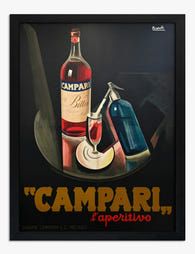
Poster Campari Bitter vintage aperitivo italiano
Translation missing: it.products.product.sale_price A partire da CHF 16.00CHF 22.00 -

Poster astronomico vintage Adler Planetarium
Translation missing: it.products.product.sale_price A partire da CHF 16.00CHF 22.00 -

Poster stai facendo bene
Translation missing: it.products.product.sale_price A partire da CHF 16.00CHF 22.00


Di più da The Frame

Vintage Art Prints Explained: From Botanical to...
Vintage art is one of the most loved categories in wall decor, and one of the most loosely defined. Botanicals, travel posters, oil portraits and psychedelic 1970s graphics all get...

7 Ways to Style William Morris Tree Prints in Y...
Tree of Life. Woodpecker. The towering, tangled branches that made Morris famous. These prints have a vertical pull and a visual density that other Morris designs don't, which means hanging...

Why Art Prints Make the Most Meaningful Housewa...
Most housewarming gifts get consumed, regifted, or shoved in a cupboard within a month. Art does something different. It hangs on a wall in the new home for years, quietly...