
 Bestel vandaag, levering vóór
 De beste botanische prints voor je woonkamer (én precies waar je ze ophangt)
Exactly what size to buy, where to hang it, and which frame to pick for a living room you'll actually love.


Plantenprints zijn de meest vergevingsgezinde kunst die je in een woonkamer kunt ophangen. Ze werken in bijna elke stijl, ze raken niet gedateerd en ze brengen zachtheid in een ruimte zonder je vast te leggen op één enkele trend. De valkuil is dat de meeste mensen ze te klein kopen, te hoog hangen en de verkeerde lijst kiezen.
Waarom plantenprints de ultieme veilige keuze voor de woonkamer zijn
Botanische kunst is al zo’n 400 jaar een vaste waarde in huizen, en dat zegt iets over haar blijvende kracht. De oorspronkelijke Victoriaanse botanische illustraties waren in wezen wetenschappelijke documenten, en precies die combinatie van nauwkeurigheid en schoonheid maakt dat ze nog steeds overtuigen naast een moderne fluwelen bank of een rotan stoel uit de jaren 70.
Waarom ze specifiek in woonkamers zo goed werken: groen is neutraal. Salie, varen, olijf, eucalyptus—geen van deze tinten botst met je bestaande palet zoals een gedurfd abstract werk dat kan doen. Een bladprint voelt zich thuis naast een marineblauwe bank, een crèmekleurige bouclé fauteuil of een chocoladebruine leren clubfauteuil, zonder dat een van die stukken ‘verkeerd’ gaat ogen.
Ze lossen ook het ‘kunststress’-probleem op. Je hoeft een print van een fiddle leaf fig niet te verdedigen op een etentje. Niemand gaat vragen wat het betekent.
De enkele statementprint: kies een blikvanger boven je bank
De blikvanger boven de bank is veruit de meest gestelde vraag in onze inbox, dus laten we concreet worden.
De breedteregel: Je kunstwerk moet tussen tweederde en driekwart van de breedte van je bank beslaan. Niet de helft. De helft is de meest gemaakte fout en precies waarom zoveel woonkamers aanvoelen alsof de kunst er losjes en gegeneerd bij hangt, op de verkeerde plek.
- Voor een 180cm (VK driezits) of 84-inch (VS-standaard) bank: mik op een print van 120 tot 140cm breed, of een set die samen die breedte haalt.
- Voor een 220cm (VK grote driezits) of 96-inch bank: mik op 150 tot 165cm kunstbreedte.
- Voor een compacte tweezits van 160cm: 100 tot 120cm werkt prachtig.
De hoogteregel: De onderrand van de lijst moet 15 tot 25cm boven de bovenkant van de bankleuning zitten. Hoger en hij verbreekt visueel de verbinding met het meubel. Lager en je tikt er met je hoofd tegenaan.
Voor één statementstuk duwen we je graag richting het grootste formaat dat comfortabel past. Een ingelijste botanische print van 70x100cm boven een driezits maakt indruk zonder te overheersen. Voor nog meer impact is een canvas van 100x150cm (het grootste dat we aanbieden) boven een lange bank ronduit filmisch.

Tropisch vs. minimal: plantenkunst matchen met de persoonlijkheid van je kamer
De grootste fout bij botanische wandprints is een stijl kopen die niet past bij de kamer die je al hebt. Gebruik dit als snelle diagnose.
Je kamer helt naar tropisch als:
- Er staan rotan-, webbing- of rieten meubels in de ruimte - Je bank is warm van toon (karamelkleurig leer, okergeel fluweel, crèmekleurige bouclé) - Je accenten zijn van terracotta, messing of warm hout - Je kamerplanten zijn bladerrijk en architectonisch (monstera, palm, bananenplant)Ga voor: gedurfde tropische bladeren, vintage botanische illustraties met crème- of sepiagrijze achtergronden, bananenblad, monstera, palmbladeren. Diep verzadigde groenen. Grotere formaten.
Je kamer helt naar minimal als:
- Je bank is grijs, antraciet of helder offwhite - De lijnen zijn strak en de materialen mat - Je hebt zwarte, chromen of licht eiken accenten - Het groen in de kamer is spaarzaam en sculpturaal (bijvoorbeeld één olijfboompje)Ga voor: lijntekeningen van bladeren, botanische studies van één stengel, eucalyptus, zachte salietinten op witte achtergronden. Veel witruimte rond het onderwerp. Duo’s en triptieken.
Je kamer is vintage of traditioneel als:
- Er ligt een Perzisch of kilim-kleed - Je hebt houten lambrisering, ophanglijsten of geprofileerde plinten - Meubels zijn van donker hout, antiek of rijk aan patinaGa voor: 19e-eeuwse botanische platen, de esthetiek van wetenschappelijke illustraties, herbariumexemplaren. Vaak het mooist als sets van drie of zes.
Maathulp: welke afmetingen werken voor standaard VK- en VS-woonkamermuren
Een praktische referentie in plaats van vage adviezen.
Lege wand (geen meubel eronder), VK-woonkamer:
- Kleine wand (1,5 m breed): één print 50x70cm, of een verticale set van 30x40cm
- Middelgrote wand (2 tot 2,5 m): één 70x100cm, of een triptiek van 50x70cm
- Grote wand (3 m+): één canvas van 100x150cm, of een raster van vier prints 50x70cm
Boven een bank, VS-woonkamer:
- Loveseat (60 inch): één print 24x36 inch, of een paar 16x24
- Standaardbank (84 inch): één stuk van 40x60 inch, of een paar 24x36
- Hoekbank of grote bank (96+ inch): één extra groot stuk of een triptiek die 60 inch beslaat
Nis of schouwmuur:
Meet de nisbreedte en trek 20cm af. Dat is je maximale printbreedte. Een staande print van 50x70cm past op de meeste VK-schouwmuren perfect. Ga niet de strijd aan met een liggende print; staande formaten winnen bijna altijd in krappe ruimtes.
Boven een console of dressoir:
Het kunstwerk moet aan beide kanten 5 tot 10cm smaller zijn dan het meubel. Bij een dressoir van 120cm is dat een print van ongeveer 100 tot 110cm breed.
De kleur van de lijst is belangrijker dan je denkt
Mensen piekeren eindeloos over de print en kiezen de lijst in drie seconden. Dat is omgekeerd. Juist de lijst bepaalt of de print bedoeld of willekeurig aanvoelt.
Zwarte lijsten: De standaard voor Scandi, modern en minimal. Ze creëren contrast en scherpte tegen lichte muren. Kies zwart als je kamer al zwarte accenten heeft (een zwarte vloerlamp, een zwart omlijnde spiegel, donkere raamkozijnen). Zwart kan zwaar ogen in kamers met weinig licht—houd daar rekening mee.
Naturel eiken of licht hout: De juiste keuze voor boho, coastal, Japandi en warm-minimal interieurs. Verzacht de look en combineert prachtig met linnen, jute en rotan. Als je kamer warm en tonaal is, is eiken bijna altijd het antwoord.
Witte lijsten: Ondergewaardeerd en briljant voor gelaagde gallerywanden waar je wilt dat de kunst iets terugwijkt en de compositie de hoofdrol krijgt. Werkt bijzonder goed met lijntekeningen en lichte botanicals.
Walnoot of donker hout: Voor traditionele kamers, bibliotheken en ruimtes met antieke meubels. Ze geven botanische prints die 19e-eeuwse herbariumuitstraling.
Een opmerking over het materiaal van je lijst: veel ‘houten’ lijsten op de markt zijn MDF met een houtlook-folie. Die trekken krom in vochtige kamers en krijgen binnen een jaar beschadigde hoeken. Massieve, FSC-gecertificeerde houten lijsten kosten meer, maar maken het verschil tussen kunst die duur oogt en kunst die eruitziet alsof het als bouwpakket kwam. Onze ingelijste prints gebruiken ook UV-beschermende acrylaatbeglazing in plaats van glas, waardoor er geen spiegeling is door de kamer en de inkten niet vervagen—zelfs niet in een zonnige, op het zuiden gelegen woonkamer.

Gallerywanden die werken met botanische prints
Gallerywanden gaan mis als er geen onderliggende structuur is. Dit zijn vier lay-outs die wél werken voor planten-wandkunstideeën, met echte tussenruimtes.
De klassieke triptiek
Drie prints van identiek formaat, in een rij gehangen met 5 tot 8cm ertussen. Werkt het best boven een bank of dressoir. Gebruik drie verschillende maar verwante botanicals (bijv. drie verschillende varens) in plaats van drie willekeurige planten. Totale breedte volgt de tweederderegel voor de bank.Het 2x2-raster
Vier prints van identiek formaat in een vierkant, 5cm tussenruimtes. Wiskundig, rustig, perfect voor minimal kamers. Gebruik vier prints van dezelfde illustrator of serie zodat ze als een echte set voelen. Hang gecentreerd op de wand, niet gecentreerd op de bank, als dat twee verschillende punten zijn.Het asymmetrische duo
Eén grote print (70x100cm) links, een gestapeld paar kleinere prints (elk 40x50cm) rechts. Gaten van circa 5cm. Oogt moeiteloos—wat betekent dat het juist best lastig is om goed te krijgen. Het helpt om het eerst op de vloer uit te leggen.De salonhang
Zes tot negen prints in wisselende formaten, organisch gerangschikt. Regels: houd lijstkleuren consistent (varieer in formaat, niet in lijst), houd de tussenruimtes ruwweg gelijk (5 tot 7cm), en behandel het geheel als één rechthoek bij het positioneren. Botanische prints lenen zich hier goed voor omdat het kleurenpalet samenhangend blijft, zelfs als de onderwerpen variëren.Een truc die je wilt kennen
Knip papieren sjablonen op het formaat van elke lijst en plak ze met kneedgum (Blu-Tack) op de muur voordat je boort. Laat het 48 uur hangen. Schuif ze rond. Klinkt omslachtig, maar het bespaart je het dichten van verkeerde gaten.Veelgemaakte fouten om te vermijden
Te klein kopen. Een print van 30x40cm boven een driezitsbank oogt als een postzegel. Ga groter dan veilig voelt.
Te hoog hangen. Het midden van het kunstwerk hoort in de meeste woonkamers op ongeveer 145 tot 150cm vanaf de vloer (ooghoogte voor iemand van gemiddelde lengte). Boven meubels geef je voorrang aan de 15 tot 25cm afstand tot de bankleuning.
Botsen met je echte planten. Heb je een enorme monstera in de hoek, hang dan niet óók een gigantische monstera-print ernaast. Kies een contrasterende plant of ga abstracter.
Verkeerde beeldverhouding. Een liggende print op een hoge, smalle muur botst met de architectuur. Match de oriëntatie van de print met de oriëntatie van de muur.
Goedkope inlijsting die goede kunst verpest. Kromgetrokken lijsten, slordig gemonteerde prints, glas dat alles weerspiegelt—dat zijn de issues die een kunstwerk van £100 laten ogen als iets van een tientje. Oplossing: koop het ingelijst-en-gemonteerd als één geheel in plaats van print en lijst los te zoeken.

Prints combineren met echte kamerplanten
Een paar regels waar we bij zweren voor decoreren met botanische prints als je ook echt groen in de kamer hebt.
Herhaal, dupliceer niet. Echo de vormentaal (ronde bladeren, stekelige bladeren, hangende bladeren) zonder exact dezelfde soort als print te gebruiken.
Let op je zichtlijnen. Positioneer geen grote plant direct vóór een print. De bladeren bedekken het onderste derde en ondermijnen de hele compositie.
Drie tot vijf planten is de sweet spot. Daarboven weet je oog niet meer waar te kijken en verdwijnt de kunst. Ben je een fervent plantverzamelaar, houd de kunst dan eenvoudiger en laat de planten de show stelen.
Licht, canvas en de praktische kant
Plantenprints in een zonnige, op het zuiden gelegen woonkamer hebben UV-bescherming nodig, anders verschuift het groen binnen een paar jaar naar geel. Goedkope prints vervagen snel. Zoek naar archiefwaardige inkten (ook wel pigment- of giclée-inkten) en UV-beschermende beglazing.
Canvas versus papier is een echte keuze en het overwegen waard. Canvas werkt goed in vochtige ruimtes (keukens, badkamers aan de woonkamer, serres) omdat er geen glas beslaat en geen papier kan golven. Het is ook lichter, wat telt als je grote stukken aan gipsplaat hangt. Keerzijde: canvas heeft een textuur, waardoor zeer fijne lijntekeningen net iets minder scherp kunnen ogen dan op mat papier. Voor gedurfde tropische bladeren: canvas. Voor delicate Victoriaanse botanische illustraties: ingelijst papier.
Onze topkeuzes voor plantenprints in woonkamers van nu
In plaats van individuele prints te noemen, is dit wat op dit moment de moeite waard is binnen de bredere categorie woonkamerwandkunst.
Voor moderne, minimal kamers: Eenvoudige eucalyptus- of olijftakprints in 70x100cm, in een zwarte of eiken lijst. Eén boven de bank, verder niets op die muur.
Voor boho en warm-minimal: Een triptiek van prints in geperste-bladstijl (varen, vijg, palm) in eiken lijsten van elk 50x70cm.
Voor traditionele en landelijke interieurs: Een salonhang van zes vintage botanische illustraties in walnootlijsten, mix van 30x40cm en 40x50cm.
Voor een kleine woonkamer of studio: Probeer geen gallerywand te maken. Eén goed geproportioneerd statementstuk (50x70cm of 70x100cm) boven de bank, ingelijst in eiken of zwart. Dat voelt rustiger en chiquer dan een drukke samenstelling.
Voor een open woonruimte: Ga groot. Een canvas van 100x150cm met één botanisch onderwerp bakent de loungezone af en vertelt het oog waar het woongedeelte begint.

Meet je muur vóórdat je gaat shoppen, maak het formaat na met krant op de muur getapet en kies vervolgens voor een print die nét te groot voelt in plaats van nét te klein. Die ene beslissing doet meer voor je woonkamer dan welke andere stylingkeuze dan ook dit jaar.

Fab-producten in dit blog
-

Poster botanische potplanten op plank, gele achtergrond
Aanbiedingsprijs Vanaf £11.95£19.95 -

Poster boho vazen met kamerplanten
Aanbiedingsprijs Vanaf £11.95£19.95 -

Canvas eclectische binnenjungle
Aanbiedingsprijs Vanaf £49.95£74.95 -

Canvas botanische trap met kamerplanten
Aanbiedingsprijs Vanaf £49.95£74.95 -

Poster Brits botanisch landschap
Aanbiedingsprijs Vanaf £11.95£19.95 -

Poster overloop met kamerplanten
Aanbiedingsprijs Vanaf £11.95£19.95 -

Canvas moderne botanische lijntekening van kamerplant
Aanbiedingsprijs Vanaf £49.95£74.95 -

Canvas lichtgroene botanische bloemen
Aanbiedingsprijs Vanaf £49.95£74.95 -
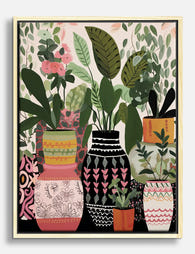
Canvas botanische vazen in boho-stijl
Aanbiedingsprijs Vanaf £49.95£74.95 -

Poster groene kamerplanten op geel
Aanbiedingsprijs Vanaf £11.95£19.95 -

Poster botanische kamerplanten in boho-stijl
Aanbiedingsprijs Vanaf £11.95£19.95 -

Canvas abstracte plant in warme tinten
Aanbiedingsprijs Vanaf £49.95£74.95 -

Canvas levendige kamerplanten
Aanbiedingsprijs Vanaf £49.95£74.95 -

Poster boho botanisch met planten in potten
Aanbiedingsprijs Vanaf £11.95£19.95 -

Canvas zonnige kamerplant op de vensterbank
Aanbiedingsprijs Vanaf £49.95£74.95 -

Poster botanische bloem in modern groen en wit
Aanbiedingsprijs Vanaf £11.95£19.95 -

Canvas botanische bloemen in groen en ivoor
Aanbiedingsprijs Vanaf £49.95£74.95 -
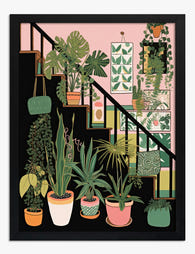
Poster botanische trap met weelderig groen
Aanbiedingsprijs Vanaf £11.95£19.95 -

Poster moderne botanische bladeren in groen
Aanbiedingsprijs Vanaf £11.95£19.95 -

Poster botanisch stilleven met terracotta vaas
Aanbiedingsprijs Vanaf £11.95£19.95


Meer van The Frame

Whimsical art vs. quirky art: wat is het verschil?
Als je ooit in de war raakte tijdens het zoeken naar speelse wandkunst en je je afvroeg of die aangeklede vosprint nu whimsical, quirky of iets heel anders is, dan...

Vintage vs moderne bloemenprints: hoe kies je?
Beide stijlen heten bloemenkunst, maar ze gedragen zich op de muur precies tegenovergesteld. Vintage botanicals fluisteren, vormen groepen en leunen op architectonisch detail. Moderne bloemen schreeuwen, staan op zichzelf en...

De beste hondenkunst per ras, van teckels tot r...
Hondenkunst kent een lange geschiedenis, van Egyptische grafschilderingen van windhonden tot Landseers Victoriaanse retrievers, en elk ras draagt zijn eigen beeldtaal. De kunst om een print te kiezen waar je...