
 Beställ idag, leverans senast
 Så bygger du en reseinspirerad tavelvägg som känns genomtänkt – inte kaotisk
A systematic method for turning your scattered destination prints into a wall that looks designed, not collected.


De flesta reseinspirerade tavelväggar misslyckas av samma skäl: de byggs en bild i taget, utan plan. Resultatet blir ett ojämnt hopplock av semesterminnen som liknar en anslagstavla snarare än ett genomtänkt designval. Den här guiden ger dig en ram att jobba efter, oavsett om du börjar från noll eller räddar en vägg som redan spårat ur.
Varför många reseinspirerade tavelväggar ser röriga ut – och hur din slipper det
Problemet är inte motiven. Det är att reseväggar växer fram över tid. Du ramar in en Lissabon-bild, lägger till ett Tokyo-tryck sex månader senare och klämmer in en Marrakech-affisch du hittade på en marknad. Varje del valdes med kärlek. Ingen valdes med de andra i åtanke.
En sammanhållen tavelvägg är motsatsen. Varje del förtjänar sin plats för att den delar något med resten: en färgpalett, en ramfinish, en passepartoutfärg, ett tonomfång, en tidsperiod. Den där gemensamma nämnaren är det ögat tolkar som genomtänkt, långt innan du registrerar vad de enskilda motiven föreställer.
Lösningen är att sluta tänka som en samlare och börja tänka som en kurator. En kurator väljer först en röd tråd och plockar verk som passar den. Du kan göra samma sak baklänges: se över vad du redan äger, hitta tråden som löper genom det mesta och låt den styra allt annat.

Välj en röd tråd: färgpalett, stil eller tidsperiod
Innan du köper ett enda nytt tryck, välj en av dessa tre röda trådar. De står i ordning efter hur förlåtande de är.
Färgpalett. Den enklaste enaren. Bestäm om väggen ska dra åt varmt (terracotta, ockra, solblekta rosa toner, dämpade gröna) eller kallt (havets blå, skiffergrått, dimvitt). Gå sedan igenom dina motiv. Ett Santorini-foto och en bild av ett tempel i Kyoto kan komma från varsin ände av världen men dela samma urtvättade blå toner – och det räcker för att de ska sjunga ihop. Krockar ett tryck, lägg det åt sidan för en annan vägg.
Stil. Välj ett visuellt språk: bara fotografi, bara illustration, bara vintage-reseaffischer eller bara linjeteckningar. Att blanda stilar går (vi kommer till det), men om du är ny på tavelväggar eliminerar en enda kategori 80% av risken för kaos.
Tidsperiod. En vägg med reseaffischer från 1920-talet i olika länder läses som en samling. Det gör också en vägg med samtida, minimalistiska stadsprints. Tidsperioden sköter enandet åt dig eftersom grafiska konventioner under ett givet decennium delar mer än du tror.
Om du inte kan bestämma dig, välj färgpalett. Det är mest flexibelt och lättast att utgå ifrån bland motiv du redan älskar.
Formeln för layout: ankare, satelliter och mellanrum
Varje lyckad tavelvägg har ett ankare. Det här är den största tavlan, och den sätter väggens visuella tyngdpunkt. Utan ett ankare vet inte blicken var den ska landa – och väggen känns som brus.
Välj ditt ankare
Ditt ankare ska vara din största tavla, gärna runt 50×70 cm eller 70×100 cm beroende på väggens storlek. Det bör också vara verket med mest visuell tyngd: mörkare toner, tätare komposition eller tydligast fokuspunkt. Ett dimmigt bergslandskap funkar. En ljus, luftig strandscen gör det sällan.
Placera ankaret lite utanför centrum, inte exakt mitt. Ungefär en tredjedel in från ena sidan ger asymmetri som upplevs mer sofistikerad än perfekt symmetri.
Lägg till satelliter
Satelliterna är de mindre verken som kretsar kring ankaret. De bör vara ungefär hälften till två tredjedelar av ankarets storlek. Så om ditt ankare är 70×100 cm fungerar 30×40 cm eller 40×50 cm bra som satelliter.
Fördela den visuella tyngden över upphängningen. Har du ett mörkt, livligt motiv uppe till vänster, balansera med ett annat mörkare verk nere till höger. Lättare, luftigare motiv hamnar däremellan. Tänk att du lastar en bricka: tunga saker sprids ut, inte staplas på ena sidan.
Mellanrum
Behåll 5–7 cm mellan varje ram. Tajtare än så ser trångt ut. Glesare än så läses upphängningen som separata motiv snarare än en helhet. Håll avståndet konsekvent rakt igenom. Ojämt avstånd är en av de vanligaste orsakerna till att tavelväggar ser amatörmässiga ut.
Sikta på ett udda antal: 3, 5, 7 eller 9. Udda tal skapar naturlig visuell balans eftersom ögat inte kan dela dem jämnt, utan fortsätter röra sig över helheten i stället för att låsa på par.
Vilka ramfinishar fungerar bäst till resebilder
Ramfinishen är där många reseväggar kollapsar. Att blanda ek, svart, guld och vitt är det snabbaste sättet att få vilken samling som helst att se rörig ut, oavsett hur bra motiven är.
Välj en finish och håll fast vid den. Så väljer du:
Enbart svart. Modernt, grafiskt, får färgerna att poppa. Bäst för samtida fotografi, djärva grafiska stadsprints och när du vill att bildspråket ska kännas aktuellt. Svarta ramar fungerar särskilt bra i rum med vita eller ljusgrå väggar.
Enbart naturträ. Varmare, mer eklektiskt, lite bohemiskt. Bäst för landskapsfotografi, vintageinspirerade motiv och varmare färgpaletter. Träramar mjukar upp formaliteten i en tavelvägg och passar vardagsrum, hallar och sovrum med linne, rotting eller jordiga toner.
Enbart vitt. Klassiskt galleriuttryck, mycket rent, låter motivet göra jobbet. Bäst för motiv med stark färg eller detalj som du vill frilägga. Vita ramar försvinner mot vita väggar, vilket får motiven att kännas som svävande fönster.
Passepartouten (papperskanten runt motivet inne i ramen) är din andra enande faktor. Även om dina motiv varierar i stil ger en konsekvent creme- eller brutvit passepartout i varje ram omedelbar sammanhållning. Vi använder passepartout i våra inramade tryck just av den anledningen: den skapar andrum och disciplinerar helheten.
För reseväggar rekommenderar vi särskilt enbart svart eller enbart naturträ. Båda hanterar mixen av himlar, arkitektur och landskap som resebilder ofta rymmer utan att konkurrera med motiven. Utforska vår kollektion med reseprints för att se hur samma motiv läses olika i respektive finish.

Rätt storlek i rummet (tvåtredjedelsregeln i praktiken)
Här är en regel som professionella inredare tillämpar nästan utan att tänka: en tavelvägg bör spänna över ungefär två tredjedelar av möbeln under.
Är soffan 240 cm bred, bör tavelväggen vara runt 160 cm bred. Ovanför ett 120 cm brett konsolbord siktar du på cirka 80 cm väggkonst. Är den smalare ser väggen ofullständig ut. Är den bredare börjar upphängningen svälja möbeln.
För väggar utan möbel under (t.ex. i en hall eller trapphus), använd själva väggen som referens. Fyll ungefär 50–60% av väggens synliga yta och lämna generösa marginaler runtom.
Hänghöjd
Mitten av din upphängning bör ligga ungefär 145–150 cm från golvet. Det är standardhöjd för gallerihängning eftersom det placerar den visuella tyngdpunkten i genomsnittlig ögonhöjd.
Om väggen sitter ovanför en soffa, strunta i ögonhöjdsregeln och lämna i stället 15–25 cm fritt mellan soffryggens överkant och nederkanten på din lägsta ram. Närmare känns trångt. Längre ifrån och konsten svävar bort från möbeln.
Så planerar du upphängningen innan du tar fram hammaren
Det här är det enskilda steget som skiljer genomtänkta tavelväggar från kaotiska. Planera allt innan du slår i första spiken.
Metoden med pappersmallar
Klipp för varje ram ut en bit brunt kraftpapper eller tidningspapper i exakt ramstorlek. Skriv motivnamnet på varje. Lägg sedan ut dessa pappersmallar på golvet och behandla golvet som din vägg.
Flytta runt dem. Testa ankaret på olika positioner. Prova udda antal (5, sedan 7) och känn vad som blir balanserat. Ta bilder ovanifrån så att du kan granska upphängningen objektivt. Bilder avslöjar obalanser som ögat missar på plats.
När du är nöjd med golv-layouten, flytta mallarna till väggen med lågvidrig maskeringstejp. Låt dem sitta i 24 timmar. Gå förbi väggen vid olika tider på dagen. Justera vid behov.
Först därefter markerar du spikhålen (mät var upphängningsbeslaget sitter på baksidan av varje ram och markera den punkten genom pappret) och börjar borra.
Digitala alternativ
Om du hellre jobbar på skärm, fotografera din vägg rakt framifrån, lägg in bilden i ett gratis designverktyg och lägg på rektanglar i samma storlek som dina ramar. Det fungerar bra för proportioner men är inte lika exakt som fysiska mallar för slutlig placering.
Så mixar du vintage-reseposters med moderna destinationsmotiv
Det här är något många vill göra, och något som ofta blir fel. Vintageaffischer och modern fotografi samexisterar inte naturligt eftersom de talar olika visuella språk.
Tre regler får det att fungera:
Kräv konsekventa ramar. Vilken finish du än har valt gäller den för varje verk. Inga undantag för den där fantastiska vintagepostern som förtjänar en guldram. Ramen är den stora utjämnaren.
Matcha passepartoutens färg. En cremefärgad passepartout runt varje motiv, både vintage och modernt, bygger en visuell bro. Ögat läser passepartouten före motivet och konsekventa passepartouter signalerar att verken hör ihop.
Balansera tidsperioderna i placeringen. Klustra inte alla vintageverk på ena sidan och alla moderna foton på den andra. Varva dem över helheten så att ingen era dominerar. Vår kollektion med vintageprints parar förvånansvärt väl med samtida stadsverk när du följer de här reglerna.
Ett bra knep: Om en vintageposters färgpalett avviker kraftigt från allt annat (tänk klarröda 60-talskampanjer mot dämpad modern fotografi), byt till en vintagebild i toner som matchar bättre. Eller konvertera dina moderna foton till svartvitt. På tal om det.
Nödutgången: svartvitt
Om du har svårt att förena disparata destinationer, gör alla fotografiska motiv svartvita. Omedelbar sammanhållning. Grekiska kusten, en gata i Tokyo, en port i Marrakech – i svartvitt delar de ett tonalt språk som färg inte kan leverera. Det fungerar särskilt bra i monokroma interiörer och i rum med starka befintliga färger du inte vill konkurrera med.

Vanliga misstag med tavelväggar – och hur du löser dem
Om din vägg redan ser rörig ut beror det nästan alltid på något av följande.
Ramar i för många finishar
Lösningen: byt ramar, inte motiv. Välj en finish, håll fast vid den och rama om allt. Det är den mest effektfulla förändringen du kan göra. Våra inramade stadsprints levereras med ramen redan monterad, vilket eliminerar skevhet och felpassning som ofta uppstår med separata ramar och tryck.
För många storlekar, inget ankare
Lösningen: identifiera ditt största motiv och låt det bli ankaret – eller köp ett större verk (60×80 cm eller 70×100 cm) som kan ta den rollen. En vägg med många likstora, små motiv läses som ett rutnät, inte som en gallerivägg, och saknar visuell hierarki.
Ojämt mellanrum
Lösningen: ta ner allt och häng upp igen med 5–7 cm mellan varenda ram, uppmätt med linjal. Det är tidskrävande men förvandlande.
För många motiv
En vägg med 11 ramar är inte ett galleri – det är ett collage. Redigera skoningslöst. Plocka bort de svagaste verken och förvara dem. En ren upphängning med 5 starka motiv slår en stökig med 11 mediokra varje gång.
Visuell tyngd klustrad på ena sidan
Lösningen: fotografera väggen i svartvitt med mobilen. Det avslöjar tonobalans direkt. Om ena sidan ser mörkare eller tätare ut, byt plats på ett livligt motiv och ett lugnare från motsatt sida.
Ankaret placerat för perfekt centrerat
En symmetrisk upphängning kring ett dödligt centrerat ankare ser formell men platt ut. Skjut ankaret en tredjedel in från ena kanten och bygg sedan asymmetriskt utåt. Förplanerade set för väggkonst är redan designade med den asymmetrin om du vill slippa planeringen.

Så börjar du
Plocka ner alla reseprints du äger. Lägg dem på golvet. Gruppera efter färgpalett och identifiera den tråd som löper genom de starkaste fem eller sju. Det är din tavelvägg. Resten får lagras, ges bort eller flytta till ett annat rum.
Bestäm dig sedan för en enda ramfinish, en enda passepartoutfärg och en layout med pappersmallar innan du rör väggen. Disciplinen i planeringen är det som får den färdiga väggen att se självklar ut.

Fab-produkter som visas i denna blogg
-

Canvastavlor att resa gör dig rikare
Försäljningspris Från €65,95€93,95 -
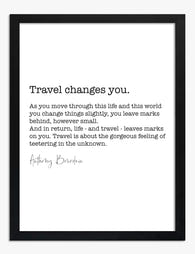
Poster att resa förändrar dig – citat i svartvitt
Försäljningspris Från €16,95€23,95 -

Poster travel – berika din värld
Försäljningspris Från €16,95€23,95 -

Poster medelhavskustens gränd
Försäljningspris Från €16,95€23,95 -

Canvastavlor naturskön cykeltur
Försäljningspris Från €65,95€93,95 -

Poster vinterstad i julstämning
Försäljningspris Från €16,95€23,95 -

Canvastavlor vinter i Jackson Hole
Försäljningspris Från €65,95€93,95 -

Poster färgglatt landskap med kullar
Försäljningspris Från €16,95€23,95 -

Canvastavlor Jackson Hole vinterlandskap
Försäljningspris Från €65,95€93,95 -

Poster stapel med färgglada vintage-resväskor
Försäljningspris Från €16,95€23,95 -

Canvastavlor färgglad resväskstapel
Försäljningspris Från €65,95€93,95 -

Canvastavlor vandring uppför grässlänt – svartvit skiss
Försäljningspris Från €65,95€93,95 -

Poster Cinque Terre kustvy
Försäljningspris Från €16,95€23,95


Mer från The Frame

Rom vs Venedig vs Florens: så väljer du italien...
Rom, Venedig och Florens gör sig fantastiskt på bild, men de beter sig inte likadant på en vägg. Varje stad har sin egen palett, sin egen känsloregister och sina egna...

Matcha kattkonst med din egen katt: päls, poser...
Någonstans mellan ett specialbeställt porträtt för £300 och ett slumpmässigt tryck av en generisk rödtabby finns den gyllene medelvägen: färdig kattkonst som faktiskt ser ut som din katt. Den här...

Det vuxna sättet att styla lekfull väggkonst
Lekfullhet har ett imageproblem. Den hamnar lätt i samma fack som spjälmobiler och studentkorridorsaffischer, när några av de mest intressanta vuxna interiörerna i själva verket lutar tungt mot lekfull konst....