Djur kan bära ett helt rum på ett sätt som abstrakt konst ofta inte kan – en hare mitt i en rörelse, en häger vid en spegelblank sjö, en hund som möter din blick. Den här samlingen rymmer allt: måleriska naturmotiv, djärva grafiska figurer och stillsammare studier av fjädrar och päls. Om du redan vet vad du är ute efter, börja med vintage djurposter för värme, moderna djurposter för ren färg, eller kattposter om det är ett särskilt ansikte du jagar.
De flesta tavelväggar med djur misslyckas av en anledning: man väljer tryck man älskar var för sig, hänger dem tillsammans och får något som liknar en skolkorridor på lågstadiet. Lösningen...
Svartvit konst är inte frånvaron av färg — det är närvaron av ljus, skugga, textur och känsla. Lär dig hur svartvita prints kan ge dramatik, djup och lugn utan att...
Vilken poster med djur ska du välja?
Kort om hur du väljer motiv, inramad eller utan ram, rätt höjd för upphängning, leverans och returer.
What are vintage natural history animal prints, and which classic illustrators inspired the style?
Vintage natural history animal prints are decorative reproductions styled after 18th and 19th century scientific plates, when naturalists documented species through engravings and hand-colored lithographs before photography. Expect precise anatomical detail, a specimen-like pose, soft aged paper tones and often a handwritten-look Latin name. The look draws on illustrators such as John James Audubon, whose Birds of America and Quadrupeds of North America set the standard, plus John Gould, Edward Lear, Buffon's Histoire Naturelle plates and Ernst Haeckel. For a collected, cabinet-of-curiosities feel, hang three or more in matching frames; framed or unframed options suit safari, farmhouse and woodland themes alike.
How do I mix different animal prints without my home looking like a zoo?
Give the group one unifying thread so the animals read as a collection rather than a menagerie. Choose a single art style or shared palette, such as all black and white line work or all warm earth tones, and repeat one frame color throughout. Limit each wall to two or three species, then vary scale so one large piece anchors smaller ones. Leave generous spacing, keep surrounding walls and furnishings neutral, and slip in a landscape or botanical print to break up the theme.
Which woodland animal prints suit a neutral, earthy color scheme?
Deer and stag, fox, hare, owl, hedgehog and badger prints work best, especially watercolor or vintage field-guide styles rendered in warm taupe, tawny brown, ochre, terracotta, muted sage and cream. Current interiors favor exactly these grounded, nature-drawn neutrals layered with wood, stone and linen, so soft-background woodland art blends in rather than competing. Choose pieces whose darkest tone echoes something already in the room, like a walnut shelf or clay vase, and repeat one animal or palette across two or three frames for a calm, cohesive wall.
Which animals should I pick for a safari-themed room, and are the Big Five the best choice?
The Big Five (lion, leopard, elephant, rhino, and African buffalo) work well as an instantly recognizable set, but remember the label came from hunting difficulty, not visual variety, so a mixed group usually decorates better. Add giraffe and zebra for tall vertical shapes and graphic pattern, and consider the Big Seven idea, which adds southern right whale and great white shark, when you want something less predictable. For nurseries, stick to one animal per wall in a repeated palette, and keep the look tidy by choosing all framed or all unframed pieces.
Which animal art prints work best in a living room?
For living rooms, we'd steer you towards wildlife art prints with a bit of drama: think a large-format highland cow, a moody black and white elephant portrait, or a painterly hare. A single 70x100cm framed print centred above the sofa is the easiest way to make a blank wall feel finished. Go for a black or natural oak frame to anchor the piece, and pick a subject with tonal range that can pull together your cushions and rug. Safari animal prints in muted, earthy palettes are especially good at warming up neutral rooms without overwhelming them.
Are animal prints still in style for 2025 and 2026?
Absolutely, and they're not going anywhere. Animal art has shifted away from generic safari photography towards more artistic, illustrative, and abstract treatments. Bold, graphic wildlife portraits, vintage-style botanical-meets-animal compositions, and black and white animal prints with high contrast are all trending hard right now. The key is choosing pieces that feel intentional rather than decorative. Our modern animal art prints are giclée-printed on thick matte paper with museum-grade inks, so the detail and colour depth give them a collected, gallery-worthy feel that cheap posters simply can't match.
How do I choose animal prints for a nursery without it looking childish?
The trick is to pick animal artwork with a soft, pared-back palette rather than cartoon-bright primaries. Watercolour safari animals, pencil-sketch woodland creatures, or gentle pastel portraits all grow with the room beautifully. For size, a set of three small framed prints (around 30x40cm each) arranged in a row above the cot hits the sweet spot. Our frames are solid FSC-certified wood and ship with the print already fitted and ready to hang, so you're not wrestling with assembly at 2am. Because everything arrives in one box, properly mounted with UV-protective glazing, the prints won't fade even if the nursery gets strong afternoon light.
Should I go for black and white or colour animal art prints?
It depends on what's already happening in the room. If your space has a lot of texture and pattern (think a busy gallery wall or patterned wallpaper), black and white animal prints will cut through the noise and feel intentional. If the room is fairly minimal with neutral walls and simple furniture, a colour wildlife print becomes the focal point and adds warmth you'd otherwise have to get from soft furnishings. Our favourite move: a large colour statement piece flanked by two smaller black and white animal prints. The matte paper we use has zero glare, so both colour and monochrome artwork looks rich and detailed even in bright rooms.
Which animals are most popular in wall art right now?
Highland cows are still the reigning champion, closely followed by hares, stags, and big safari cats like leopards and lions. For nurseries, elephants, giraffes, and zebras dominate. There's also been a real surge of interest in British wildlife: foxes, owls, and kingfishers in particular. The most popular animal wall art tends to be portraits with strong eye contact, because they create an immediate connection and give a room personality. If you're buying a gift and aren't sure of someone's taste, you genuinely can't go wrong with a beautifully framed highland cow or hare.

 Beställ idag, leverans senast


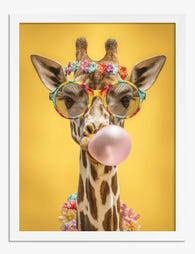


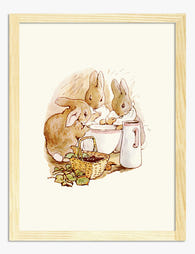


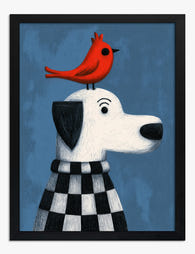
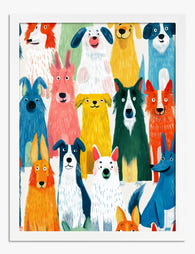












 Vilken poster med djur ska du välja?