
 Beställ idag, leverans senast
 Every Animal in William Morris's Designs: The Complete Guide
A complete field guide to every fox, thrush, hare, and heron hidden inside Morris's tangled botanical worlds.


Most people know the thrush in Strawberry Thief and stop there. But Morris's wider body of work contains foxes, hares, peacocks, ravens, lions, herons, woodpeckers, deer, and doves, often half-buried in foliage and frequently drawn not by Morris himself but by his collaborator Philip Webb. This is the complete catalogue.
Why Animals Mattered So Much to William Morris
Morris's animals are not decorative filler. They are a political statement dressed up in leaves.
By the 1860s, England's countryside was being chewed up by industrialisation, and Morris, a committed socialist by the 1880s, saw the disappearance of rural life as a moral catastrophe. His designs deliberately featured the wildlife he could see from his own gardens at Red House and Kelmscott Manor: thrushes raiding the strawberry beds, hares in the long grass, herons at the river. This was the Arts and Crafts movement's animal vocabulary, rooted in the local and the observed.
You will not find tigers, elephants, or birds of paradise in Morris's work. That absence is the argument. While Victorian decorative arts were obsessed with exotic spoils from empire, Morris insisted that English fields and hedgerows were worth as much attention as any Indian jungle. His william morris nature motifs are essentially a love letter to a countryside he believed was being destroyed.

The Fox: England's Countryside Spirit in Thread and Ink
The fox is the most charismatic animal in Morris's catalogue, and it appears most famously in The Forest tapestry of 1887. This is the design where Morris's animal work reaches full expression: a single horizontal composition featuring a lion, peacock, fox, hare, and raven, all woven into a dense tangle of acanthus leaves and English wildflowers.
Philip Webb designed the animals. This collaboration is the single most under-explained fact in Morris scholarship. Morris drew the botanicals he was famous for, but when an animal was needed, he handed the job to Webb, an architect and naturalist with a precise hand for creatures. John Henry Dearle, Morris's chief designer at the firm, also contributed animals to later Morris & Co. pieces, which is why attribution can get confusing.
The fox in The Forest is alert, slightly hunched, painted with the kind of anatomical honesty that distinguishes Webb's work from purely decorative animal art. It is unmistakably an English fox, not a heraldic one. If you want to explore prints featuring this motif, the William Morris fox art prints collection is the obvious starting point.
The Forest tapestry also carries Morris's inscription about the woven creatures being part of the wild wood, which sets the tone for how he wanted these animals understood: not as trophies or symbols, but as inhabitants.
Birds in Morris's Work: From Strawberry Thief to the Heron
Birds are the largest category of animals across Morris's william morris textile designs animals. The earliest example is Trellis (1862), Morris's very first wallpaper, where Webb drew birds perched on a rose trellis Morris had designed. This was the founding template: Morris does plants, Webb does fauna.
The Thrushes of Strawberry Thief
Strawberry Thief (1883) is the most famous animal design in the entire Morris catalogue. The story is well documented: Morris watched thrushes stealing strawberries from the kitchen garden at Kelmscott Manor and was equal parts charmed and irritated. He turned the irritation into a textile.
The design features four thrushes in a symmetrical arrangement, each clutching a strawberry, surrounded by carnations and curling foliage. It was Morris's most technically ambitious indigo-discharge print, and it remains the design most reproduced today.
Peacocks, Ravens, and Doves
Peacocks appear in The Forest and in several Morris & Co. tapestries, but Morris used them sparingly. Unlike Art Nouveau designers who fetishised the peacock as a symbol of decadent beauty, Morris treated his peacocks naturalistically, as one bird among many.
Ravens feature in The Forest alongside the fox, perched in a way that suggests Webb had been watching real birds rather than copying heraldic patterns. Doves appear in several embroidered panels and in the Bird woven wool hanging of 1878, which Morris hung in his own drawing room at Kelmscott House.
Herons, Woodpeckers and Songbirds
The Woodpecker tapestry (1885) is one of Morris's rare solo animal compositions, designed entirely by him. The woodpecker references the Roman myth of Picus, a king transformed into a bird by the sorceress Circe, and Morris wove an accompanying verse into the design. It is one of the few times he reached for mythology rather than observation.
Herons appear in the Bird and Anemone print and in several later Dearle-led designs. Songbirds, often unspecified by species, populate dozens of smaller patterns including Bird and Pomegranate and Brother Rabbit. If birds are your particular interest, the William Morris bird art prints collection covers most of the major designs.

Rabbits, Hares, and the Smaller Creatures
Brother Rabbit (1882) is Morris's most playful design and the one most people overlook. It features pairs of rabbits facing each other in a symmetrical pattern, alongside small birds and stylised foliage. The name comes from the Uncle Remus stories that were popular in England at the time, and Morris's daughter May was reportedly fond of them.
The rabbits are flatter and more stylised than the animals in The Forest, partly because the design was conceived as an indigo-discharge print rather than a tapestry. There is less anatomical detail, more pattern logic.
Hares appear in The Forest tapestry and in several embroidered panels. Webb's hare is sitting upright, ears alert, drawn with the same naturalism as his fox. Morris and Webb both knew their hares from country walks, and it shows.
Deer make occasional appearances in later Morris & Co. tapestries, often attributed to Dearle rather than Morris himself. There are no insects beyond decorative butterflies in a handful of embroideries, no fish, no domesticated farm animals beyond the occasional sheep in pastoral tapestries. The absences are as deliberate as the inclusions.
How Morris Hid Animals Inside Dense Botanical Patterns
The defining feature of Morris's animal work is that the animals are rarely the obvious focal point. They are embedded in foliage so dense that you can live with the pattern for weeks before spotting every creature.
This was deliberate. Morris believed a pattern should reward sustained attention rather than shouting for it. He wanted his wallpapers and textiles to function the way a real hedgerow does: layered, surprising, hiding things in plain sight.
How to actually spot them
A few practical tips for reading Morris's animal designs:
- Look for symmetry breaks. Morris's botanical patterns are usually mirrored or rotated. An animal often sits where the symmetry deliberately fails.
- Follow the negative space. Animals tend to occupy the small gaps between large leaves, not the centres of motifs.
- Watch for eyes. Webb almost always drew a clear eye, even on the smallest bird. Once you spot one, the rest of the animal resolves.
- Check the corners of repeats. In Brother Rabbit and Strawberry Thief, animals are positioned at the edges of each pattern repeat, which is why they appear to multiply across a wall.
This embedded quality is part of what makes william morris animal patterns so good in modern interiors. They never dominate a room the way a single bold motif would. They reveal themselves slowly.

The Difference Between Morris's Animal Designs and Art Nouveau
Morris is constantly lumped in with Art Nouveau, and the distinction matters because the animal work is where the two movements diverge most sharply.
| Morris and Arts and Crafts | Art Nouveau | |
|---|---|---|
| Animals chosen | Local English wildlife: thrushes, foxes, hares | Exotic and symbolic: peacocks, dragonflies, serpents |
| Drawing style | Naturalistic, observational, anatomically grounded | Sinuous, elongated, decorative |
| Composition | Animals embedded in botanical patterns | Animals as central, dominant focal points |
| Philosophy | Rooted in countryside, craft, anti-industrial values | Urban, modern, decadent, theatrical |
| Colour | Earthy, vegetal dyes, muted | Often jewel-toned, metallic, high contrast |
Art Nouveau peacocks strut. Morris's peacocks stand in a hedge. Art Nouveau dragonflies become jewellery. Morris's butterflies stay on the leaves. The arts and crafts movement animals are observed creatures. Art Nouveau animals are symbols.
This is also why Morris's animal prints tend to work in a wider range of interiors than Art Nouveau pieces do. They sit comfortably in country cottages, modern flats, and traditional drawing rooms because they were never designed to be theatrical in the first place.
Choosing the Right William Morris Animal Print for Your Home
If you have read this far, you probably have a sense of which Morris animal speaks to you. A few practical pointers for choosing one to actually live with.
Match the animal to the room
Strawberry Thief and Brother Rabbit are playful, busy, and full of small detail. They work brilliantly in kitchens, breakfast rooms, and children's bedrooms where you want a bit of life and colour. The classic indigo and red colourway holds its own against painted cabinetry.
The Forest and The Woodpecker are more sombre, more tapestry-like, and built for rooms with weight: studies, dining rooms, hallways with good ceiling height. A 70x100cm framed print of The Forest over a sideboard reads almost like an heirloom.
Bird prints like Bird and Anemone sit happily almost anywhere. They are the easiest Morris animal designs to live with because they are quiet.
Framed or unframed
Morris's animal designs reward the polish of framing. The dense botanical detail looks sharper inside a frame, and the slight depth a frame adds gives the pattern room to breathe.
A solid wood frame with UV-protective acrylic glaze keeps the colours stable even on a sunny wall, which matters because Morris's reds and indigos are exactly the pigments that fade fastest in cheap prints. The acrylic glaze is also lighter than glass, which is why a large framed Morris print can be hung on a single picture hook rather than needing two anchors.
Canvas works well for the bigger tapestry-style designs like The Forest, where the woven original was never behind glass anyway. A 100x150cm canvas of The Forest feels closer to the original textile than a framed paper print would.
Sizing
A few rules that hold up across most rooms:
- Above a sofa: aim for a print roughly two thirds the width of the sofa. For a standard three-seater, that means 70x100cm minimum.
- Above a bed: match the width of the headboard or come slightly narrower.
- In a hallway or stairwell: smaller prints (40x50cm or 50x70cm) in a series work better than one large piece.

Where to start
The full William Morris art prints collection includes the major animal designs alongside the purely botanical work, which is useful if you want to pair an animal print with a quieter floral. For broader inspiration beyond Morris, the animal art prints collection covers contemporary work in a similar naturalistic spirit.
Morris's animals are easy to miss and impossible to forget once you have spotted them. Spend ten minutes with The Forest or Strawberry Thief before you buy anything. Decide which creature you want to live with, then pick the design that frames it best. The pattern around it will reveal itself in time, which is exactly how Morris meant it to work.

Fab-produkter som visas i denna blogg
-

Poster räv bland vildblommor i William Morris-stil
Translation missing: sv.products.product.sale_price Från €16,95€23,95 -

Poster botanisk fjäril i William Morris-stil
Translation missing: sv.products.product.sale_price Från €16,95€23,95 -

Poster räv i William Morris-stil
Translation missing: sv.products.product.sale_price Från €16,95€23,95 -

Poster William Morris två påfåglar och blommor
Translation missing: sv.products.product.sale_price Från €16,95€23,95 -

Poster räv inspirerad av William Morris
Translation missing: sv.products.product.sale_price Från €16,95€23,95 -

Canvastavlor räv bland vildblommor i William Morris-stil
Translation missing: sv.products.product.sale_price Från €65,95€92,95 -

Canvastavlor räv med blommönster i William Morris-stil
Translation missing: sv.products.product.sale_price Från €65,95€92,95 -

Poster tiger och blomstermotiv i William Morris-stil
Translation missing: sv.products.product.sale_price Från €16,95€23,95 -
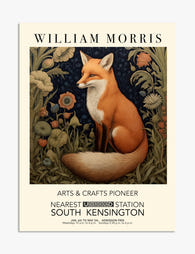
Poster röd räv bland blommor – William Morris-inspirerad
Translation missing: sv.products.product.sale_price Från €16,95€23,95 -

Poster William Morris med fåglar
Translation missing: sv.products.product.sale_price Från €16,95€23,95 -

Poster räv med blommönster – inspirerad av William Morris
Translation missing: sv.products.product.sale_price Från €16,95€23,95 -

Poster fåglar av William Morris
Translation missing: sv.products.product.sale_price Från €16,95€23,95 -

Poster kanin bland botaniska motiv i William Morris-stil
Translation missing: sv.products.product.sale_price Från €16,95€23,95 -

Canvastavlor rävmotiv inspirerat av William Morris
Translation missing: sv.products.product.sale_price Från €65,95€92,95 -

Poster botaniskt fågelmotiv i William Morris-stil
Translation missing: sv.products.product.sale_price Från €16,95€23,95 -

Canvastavlor William Morris påfåglarnas elegans
Translation missing: sv.products.product.sale_price Från €65,95€92,95 -

Poster räv i William Morris-stil
Translation missing: sv.products.product.sale_price Från €16,95€23,95 -

Poster Morris Fox i vild trädgård
Translation missing: sv.products.product.sale_price Från €16,95€23,95 -
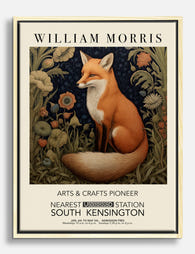
Canvastavlor röd räv bland ängsblommor i William Morris-stil
Translation missing: sv.products.product.sale_price Från €65,95€92,95


Mer från The Frame

Countryside Decor Ideas: How to Bring Rural Cal...
Countryside art has quietly become one of the most versatile choices in modern interiors. Not the chintz-and-bunting version, but the kind of soft, considered pastoral scenes that bring the outside...

Arts and Crafts Animal Prints: The Victorian De...
The Arts and Crafts revival: why Victorian animal prints are trending again Scroll through any interior design hashtag right now and you'll see them everywhere: hares peering through curling foliage,...

You're Overthinking Your Arts and Crafts Galler...
Most gallery wall advice assumes you're working with clean, simple imagery. Photographs. Line drawings. Quiet little prints with breathing room baked in. Arts and Crafts prints are the opposite of...