
 Beställ idag, leverans senast
 How to Build a Butterfly Gallery Wall That Looks Curated, Not Cluttered
The difference between a wall that looks designed and one that looks like you panicked at the hardware store.


You've bought the prints. Or you're about to. Either way, you're now standing in front of a blank wall wondering how on earth to turn three or five or seven butterfly prints into something that looks intentional, instead of like a teenager's bedroom from 2008.
Good news: gallery walls are mostly planning, not skill. Follow the steps below and you'll end up with a wall that looks curated by someone who knows what they're doing. Because by the end of this, you will.
Start with the wall
Before you think about prints, look at the wall itself. Measure it properly with a tape measure (not your outstretched arms) and write down the height and width in centimetres. You're looking for the usable area, not the full wall, so subtract anything blocked by furniture, radiators, or light switches.
A useful rule from professional picture hangers: your gallery wall should occupy roughly two-thirds to three-quarters of the width of the furniture beneath it. So a 200cm sofa wants a gallery arrangement around 130 to 150cm wide. Anything narrower looks marooned. Anything wider looks like it's trying too hard.
Now choose a layout style. There are three that work well for butterflies:
- Grid: Equal-sized prints in a clean rectangle. Looks museum-like, calm, deliberate.
- Salon-style: Mixed sizes arranged organically around an anchor piece. More personality, more forgiving.
- Linear row: Three or four prints in a single horizontal line. Brilliant for hallways and above narrow consoles.
Grid suits formal rooms and modern interiors. Salon-style suits bedrooms, reading nooks, and anywhere you want warmth. Linear works where the wall is wider than it is tall.

How many prints you actually need
Fewer than you think. Almost everyone overshoots.
For a standard wall above a sofa or bed (around 180 to 200cm wide), three to five prints is the sweet spot. For a smaller wall above a console or chest of drawers, three is often plenty. A larger wall in a hallway or stairwell can take seven to nine, but only if you've got the discipline to keep them tonally connected.
The instinct when you're nervous is to keep adding. Don't. A gallery wall fails when it feels crowded, not when it feels sparse. Empty wall around your prints is what makes them feel curated rather than crammed.
If you're working with a butterflies wall art set, the curation is done for you, which removes a lot of the second-guessing. If you're building from individual butterfly prints for wall displays, start with one anchor piece you genuinely love and build outward from there.
Mixing sizes for visual interest
A grid of identical prints looks crisp but a bit clinical. A mix of sizes looks designed.
The trick is hierarchy. You want one or two larger prints doing the heavy lifting, with smaller prints supporting them. A reliable pairing is 50x70cm alongside 30x40cm: the larger size anchors the composition, the smaller adds rhythm without competing.
For a five-print salon-style wall, try this combination:
- One 60x80cm anchor (your largest, most striking butterfly)
- Two 40x50cm prints flanking or stacked
- Two 30x40cm prints filling the smaller gaps
Avoid having three prints all the same size unless they're arranged in a deliberate row. Three equal prints scattered randomly look indecisive. Two equal prints work as a pair. One big print plus several smaller prints reads as intentional.
Frame consistency: pick one and stick with it
This is the single biggest difference between a wall that looks curated and one that looks chaotic. Frame finish consistency.
Pick one frame finish for the entire gallery. Black, white, or natural oak. Then commit. Mixing all three is the fastest way to make a wall feel cluttered, even if every individual print is beautiful.
Our take on which to choose:
- Black frames suit colourful butterfly illustrations, vintage scientific plates, and rooms with a moodier palette. They sharpen the imagery.
- White frames disappear against pale walls and let the butterflies feel light and airborne. Best for bright bedrooms and minimalist spaces.
- Natural oak softens everything and works beautifully with botanical themes, sage and cream interiors, and any room with wood furniture.
Whatever you pick, make sure your frames actually look the same. Not "both kind of black." The same. This is where cheap framing falls apart, with frames arriving in slightly different shades or warping after a few weeks. Solid wood frames hold their finish; MDF and veneers don't. Our framed prints are made from FSC-certified solid wood with UV-protective acrylic glaze (which also means no dangerous glass and no glare), and they ship pre-fitted in one box so the frame and print arrive together, properly assembled.

The newspaper trick: lay it out before you drill
Do not, under any circumstances, start drilling holes based on a vague mental image. There is a better way and it costs nothing.
Take sheets of newspaper or brown parcel paper and cut them to the exact dimensions of each frame (including the frame itself, not just the print). Label each piece with the frame size. Then use low-tack masking tape to stick them to the wall in your planned arrangement.
Live with it for a day. Walk past it, sit on the sofa, see it from the doorway. You'll know within an hour whether the layout works. Move the paper around as much as you like. This is the stage where you make all your mistakes, before any nail goes in.
When you're committed to the layout, mark the hanging point on each piece of paper (measure where the picture hook will sit on the back of each frame, then transfer that to the paper). Drill or hammer through the paper, then tear it away. Your holes will be exactly where you want them.
For renters or anyone nervous about commitment, removable adhesive strips work brilliantly with lightweight prints and small to medium frames. Test the layout for a week before going permanent.
Spacing, height, and the eye-level rule
Three numbers to remember:
- 5 to 8cm between frames. Closer than 5cm looks cramped. Wider than 8cm and the wall stops reading as a single composition and starts looking like separate prints sharing a postcode.
- 15 to 20cm above furniture. Hang too low and the prints look like they're being swallowed by the sofa. Hang too high and they float disconnected from the room.
- Centre point at 145 to 152cm from the floor. This is gallery eye-level. Not the bottom of the prints, not the top, but the visual centre of the whole arrangement.
That last number is the one most people get wrong. The instinct is to hang things too high, especially above sofas. If you measure from the top of the sofa upwards, you'll end up with art near the ceiling. Always measure from the floor and aim for that 145 to 152cm centre point.
For galleries above sofas, the centre of the arrangement should sit roughly 20cm above the back of the sofa. That's the visual sweet spot.
Adding non-butterfly prints to deepen the theme
A gallery wall of nothing but butterflies can start to feel like a museum diorama. Mixing in complementary prints adds depth without diluting the theme.
The two categories that work best are botanicals and broader nature studies. Vintage botanical illustrations, pressed flower studies, fern prints, and moth or beetle plates all sit naturally alongside butterflies because they share the same visual language: scientific illustration, natural history, organic form.
A good ratio is roughly 60/40. Sixty percent butterflies, forty percent supporting nature prints. This keeps the butterfly theme dominant while giving the wall variety. Browse botanical art prints and nature art prints for pieces that share a similar palette and illustration style.
A word on colour distribution. If your butterflies are heavy on warm tones (oranges, reds, yellows) on one side and cool tones (blues, purples, greens) on the other, the wall will feel lopsided. Distribute your colours evenly across the arrangement. Don't clump all the blue butterflies together. The eye should travel naturally across the wall without snagging on a colour cluster.

Common mistakes that scream amateur
A quick checklist of what not to do:
- Frames too far apart. Anything wider than 8cm of spacing breaks the composition.
- Hanging too high. The number one mistake. Drop it down.
- Mismatched finishes. Three black frames and one white one will always look like a mistake.
- Too many small prints. A wall of nothing but 30x40cm prints lacks hierarchy. You need at least one larger anchor.
- Identical spacing in a salon arrangement. Salon-style is meant to feel organic. Equal gaps everywhere makes it look like a failed grid.
- Ignoring the room. A delicate butterfly grid above a hulking leather sectional looks underweight. Match the visual mass of the wall to the furniture.
Where to hang butterfly prints in different rooms
The same arrangement reads completely differently depending on where it lives.
Bedrooms suit softer arrangements. Above the bed, go for symmetry: a balanced grid or a pair of vertical columns flanking the headboard. Lighter, paler butterfly illustrations work best here, especially in white or oak frames.
Living rooms can take more drama. Above a sofa, a salon-style arrangement with one large anchor print works beautifully. This is where colourful, high-contrast butterfly artwork earns its keep.
Hallways are perfect for linear rows. Three or four medium prints in a horizontal line at eye level draw you through the space. Keep the frames identical here; the repetition is what makes hallway galleries feel architectural.
Dining rooms and home offices can handle grids. The formality of a 2x3 or 3x3 grid of butterfly plates suits rooms where people sit and look at one wall for extended periods.
Picks for different room sizes
Some pairings we keep coming back to when building the best butterfly wall art gallery walls:
Small wall (under 120cm wide): Three 30x40cm prints in a clean row, or a single 50x70cm anchor flanked by two 30x40cm prints. Keep it simple.
Medium wall (120 to 200cm): Five-print salon arrangement. One 60x80cm anchor, two 40x50cm, two 30x40cm. Mix butterflies with one or two botanical prints for depth.
Large wall (over 200cm): Seven to nine prints in a salon arrangement, or a 3x3 grid of identical 40x50cm prints. For grids, consistency is everything; pick prints from the same illustrator or series so the visual style holds together.
Stairwells: Follow the line of the staircase with a stepped arrangement. The centre of each print should sit at eye level for someone climbing the stairs, which means each frame is hung slightly higher than the last.

A final thought
The wall that looks effortless took the most planning. Spend an hour with newspaper and masking tape before you spend ten minutes with a drill. Pick one frame finish. Resist the urge to add one more print.
Get those three things right and the rest takes care of itself.

Fab-produkter som visas i denna blogg
-

Canvastavlor fjärilar i vintagefärger
Translation missing: sv.products.product.sale_price Från 734.00 kr1,049.00 kr -

Poster Klimts förtrollande fjärilar
Translation missing: sv.products.product.sale_price Från 184.00 kr263.00 kr -
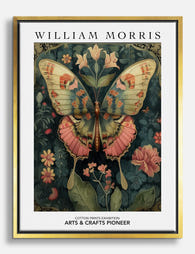
Canvastavlor fjäril i William Morris-stil
Translation missing: sv.products.product.sale_price Från 734.00 kr1,049.00 kr -

Canvastavlor elegant fjärilsmotiv i William Morris-stil
Translation missing: sv.products.product.sale_price Från 734.00 kr1,049.00 kr -

Canvastavlor fjäril och blommor i William Morris-stil
Translation missing: sv.products.product.sale_price Från 734.00 kr1,049.00 kr -

Canvastavlor fjäril i William Morris-stil
Translation missing: sv.products.product.sale_price Från 734.00 kr1,049.00 kr -

Poster livfullt landskap av Gustav Klimt
Translation missing: sv.products.product.sale_price Från 184.00 kr263.00 kr -

Poster fjärilar i trädgård av Paul Gervais
Translation missing: sv.products.product.sale_price Från 184.00 kr263.00 kr -

Canvastavlor Klimts fjärilsdröm
Translation missing: sv.products.product.sale_price Från 734.00 kr1,049.00 kr -

Poster vit fjäril i blomsterprakt
Translation missing: sv.products.product.sale_price Från 184.00 kr263.00 kr -

Canvastavlor Klimts förtrollade fjärilar
Translation missing: sv.products.product.sale_price Från 734.00 kr1,049.00 kr -

Canvastavlor fjäril och blommor i William Morris-stil
Translation missing: sv.products.product.sale_price Från 734.00 kr1,049.00 kr -

Canvastavlor Klimts fjärilsdröm
Translation missing: sv.products.product.sale_price Från 734.00 kr1,049.00 kr -

Poster fjäril i blommönster
Translation missing: sv.products.product.sale_price Från 184.00 kr263.00 kr -

Canvastavlor fjärilar och blommor av William Morris
Translation missing: sv.products.product.sale_price Från 734.00 kr1,049.00 kr -

Canvastavlor fjäril i William Morris-stil
Translation missing: sv.products.product.sale_price Från 734.00 kr1,049.00 kr -

Poster fjärilsträdgård av William Morris
Translation missing: sv.products.product.sale_price Från 184.00 kr263.00 kr -
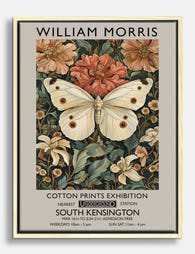
Canvastavlor fjäril av William Morris
Translation missing: sv.products.product.sale_price Från 734.00 kr1,049.00 kr -

Canvastavlor Klimts nattfjärilar
Translation missing: sv.products.product.sale_price Från 734.00 kr1,049.00 kr -

Poster Klimts skog i stjärnljus
Translation missing: sv.products.product.sale_price Från 184.00 kr263.00 kr


Mer från The Frame

Every Flower in William Morris's World: A Guide...
William Morris designed roughly 50 wallpapers and around 30 chintzes across his career, and almost every single one features a plant. If you've ever stood in front of a Morris...

What Colours Go With Bouquet Prints? Pairings I...
You've found a bouquet print you love. Now you need to know if it will actually work above your sofa, opposite that mustard armchair, next to the curtains you spent...

Boho Sun Wall Art: How to Nail the Look Without...
Boho sun art has a reputation problem. Done badly, it screams student halls and macramé overload. Done well, it's one of the warmest, most grounding aesthetics you can put on...