
 Beställ idag, leverans senast
 Creating a Gallery Wall with Matisse Prints: Sizes, Layouts, and Colour Pairings
Three exact layouts with measurements, frame recommendations, and palette tricks for a gallery wall you can hang this weekend.


Matisse's cut-outs are the rare bit of art history that works as hard in a modern flat as it does in a museum. The shapes are bold, the palettes are tight, and the compositions almost arrange themselves on a wall. This guide gives you the exact layouts, sizes, and spacing to build a Matisse gallery wall properly, not just inspiration.
Why Matisse prints are ideal gallery wall material
Most artists are difficult to group. Their works fight each other, the palettes clash, or the subjects pull in different directions. Matisse's late cut-outs (the period from roughly 1943 to 1954, when he made art with scissors and painted paper) have the opposite problem: they feel like they were designed to hang together.
There are three reasons for this. First, the shapes are graphic and flat, so they read clearly from across the room without competing for attention. Second, the palettes are restricted, usually two or three saturated colours against a neutral ground, which means any two Matisse prints share at least one colour by accident. Third, the compositions have built-in negative space, so they breathe instead of crowding each other.
This is why matisse cutouts prints work in groupings where a row of dense, detailed paintings would feel claustrophobic. You can hang four or five together and the wall still feels calm.

Choosing a layout: grid, salon hang, or triptych row
Pick the layout before you pick the prints. The shape of your wall and the furniture below it will dictate which of the three classic configurations works.
The grid
Four or six prints in perfect rows and columns, all the same size, all the same frame. This is the most forgiving layout because the symmetry does the heavy lifting. It suits modern interiors, above beds, and any wall where you want order over drama.
A 2x2 grid of 40x50cm framed prints occupies roughly 90x110cm of wall once you account for 5cm gaps. A 3x2 grid of the same size needs about 140x110cm. Measure your wall first, then work backwards.
The salon hang
Different sizes, different orientations, arranged in a loose but balanced cluster. This is the harder layout and the one most people get wrong. The trick is to anchor it with one larger print (usually 70x100cm) and orbit three to five smaller prints around it, keeping the outer edges of the whole arrangement roughly rectangular.
Salon hangs suit older homes, hallways, and walls where the surrounding architecture is already busy.
The triptych row
Three prints of identical size hung in a horizontal line. The cleanest, most graphic option, and the one that flatters Matisse cut-outs best because it mirrors the way Matisse himself often presented the cut-outs as sequences. A row of three 50x70cm framed prints, spaced 5cm apart, spans about 165cm, which sits beautifully above a standard three-seater sofa (typically 200 to 220cm wide).
Which sizes work together (and which combinations to avoid)
Size mismatch is the single most common gallery wall mistake. Two prints that are nearly the same size, say 30x40cm and 40x50cm, look like a mistake. Two prints that are clearly different sizes, like 30x40cm and 70x100cm, look intentional.
The rule: either match exactly, or contrast dramatically. Never almost-match.
For a uniform grid or triptych, use one size across the board. Our most-used combinations:
- 40x50cm x4 in a grid (compact walls, above consoles)
- 50x70cm x3 in a row (above sofas, beds, dining tables)
- 70x100cm x2 as a pair (large feature walls)
For a salon hang, use a clear hierarchy: one anchor at 70x100cm, two supporting prints at 50x70cm, and two accent prints at 30x40cm. The 2:1 ratio between sizes is what makes the eye read it as deliberate.
Avoid mixing more than three different sizes in one wall. Avoid pairing portrait and landscape orientations unless you're confident with salon hangs, and even then, keep the count even (two portraits, two landscapes) so the wall doesn't tilt visually.
Colour cohesion: pulling a palette from Matisse's shapes
Matisse cut-outs typically work with a palette of four to six colours: a ground (usually cream, white, or pale blue), two saturated primaries (often coral red and cobalt blue), and an accent or two (kelp green, mustard yellow, soft pink).
To build a cohesive gallery wall, pick prints that share at least one colour beyond the ground. If you choose a print with a coral red form, your second print should contain coral red somewhere too, even as a small accent. This is what stops a gallery wall looking like a colour swatch chart.
Here's a working method: lay your shortlisted prints out on the floor and squint. The colours that pop in every print are your gallery palette. The colours that appear in only one print are your accents, which you should then echo elsewhere in the room (a cushion, a vase, a book spine on a nearby shelf).
Warm Matisse prints, dominated by reds, pinks, and yellows, suit rooms with oak floors, cream walls, and linen upholstery. Cool Matisse prints, leaning into blues, greens, and turquoise, suit grey or white-painted rooms with cooler-toned furniture. Don't mix warm and cool prints in the same gallery wall unless they share a strong neutral ground.

Mixing Matisse with other artists and styles without it looking messy
You can mix Matisse with other artists, but only under specific conditions. The reason most attempts fail is that people pair Matisse with anything "abstract" and hope for the best.
What works: other mid-century abstract artists with similarly flat, graphic compositions. Think Calder mobiles in print form, Hilma af Klint geometrics, or contemporary abstract art prints that share Matisse's restricted palette. The link is graphic simplicity, not subject matter.
What doesn't work: realistic photography, dense oil paintings, anything with heavy texture or fine detail, or typography prints with strong fonts. These compete with the cut-outs instead of complementing them.
When mixing, follow the 60/40 rule: at least 60% of your gallery wall should be Matisse or Matisse-adjacent prints, and no more than 40% should be the mixed-in style. Anything closer to 50/50 reads as indecision.
If you want a curated mix already balanced for you, a pre-selected wall art set takes the guesswork out and guarantees the prints were chosen to sit together.
Frame consistency: why matching frames ties everything together
A gallery wall is held together by two things: spacing and frame consistency. The frames don't need to be identical, but they should belong to the same family.
Our recommendations for Matisse cut-outs:
Natural oak: the most flexible choice. Warm without being heavy, modern without being sterile. Works in almost any room and lets the colours of the cut-outs do the talking. Our default recommendation.
Black: graphic, confident, slightly formal. Best for cool-toned Matisse prints (blues, greens) and modern interiors with strong contrast. Avoid black frames in rooms with a lot of dark furniture, as the wall will start to feel heavy.
White: clean and gallery-like. Best when the cut-outs themselves have cream or white grounds, so the frame extends the negative space. Can disappear on white walls, which is sometimes the point.
We don't recommend brass or gold frames for Matisse cut-outs. The metallic finish fights with the saturated flat colour and pulls the eye away from the shapes.
Whichever finish you choose, use the same frame across the whole wall. Mixing oak and black frames almost never works, no matter what styling magazines say. The Matisse work is already doing the bold thing. The frames should recede.
A practical note: framed prints from Fab arrive with the print already fitted inside a solid FSC-certified wood frame, with UV-protective acrylic glaze and fixtures attached. The frame and print ship together in one box, properly fitted. This matters because the most common gallery wall disaster is buying prints and frames separately, then finding the print doesn't sit flush, the glass is fingerprinted, or the frame arrived warped.
Spacing, height, and alignment: the measurements that actually matter
This is where most gallery walls fall apart. The prints are fine, the palette is fine, but the spacing is uneven and the whole thing feels amateur. Three numbers solve almost every problem.
Spacing between prints
5cm for small to medium prints (up to 50x70cm). 7 to 8cm for larger prints (70x100cm and above). Consistency matters more than the exact figure. Whatever gap you pick, use it everywhere on the wall, both horizontally and vertically.
Height from the floor
The centre of your gallery wall (not the centre of the top print, the centre of the whole arrangement) should sit at 145 to 152cm from the floor. This is standard gallery hanging height and matches eye level for most adults.
For gallery walls above furniture, ignore floor height and use the furniture instead. Leave 15 to 20cm between the top of the sofa, console, or headboard and the bottom edge of the lowest frame. Closer than 15cm feels cramped. Further than 25cm and the art floats, disconnected from the furniture below.
Alignment
For grids and triptych rows, align the outer edges of the frames. For salon hangs, pick one horizontal line (usually the centre line of the anchor print) and keep at least one edge of every other frame touching that line, either above or below.
A no-mistakes trick
Before you put a single nail in the wall, cut each frame's outline from kraft paper or newspaper, write the print name on it, and tape the templates to the wall with low-tack masking tape. Move them around until the spacing looks right. Step back, take a phone photo, look at it on the screen. Only then do you commit to nail holes.

Our favourite three-print and five-print Matisse combinations
These are the groupings we keep coming back to. Use them as templates, swap in the prints you love most from our henri matisse art prints collection.
Three-print combinations (triptych row)
The Blue Nudes set: three of Matisse's iconic blue figure cut-outs in 50x70cm, framed in oak, hung 5cm apart. Spans 165cm. Perfect above a three-seater sofa or a king-size bed headboard.
Botanical row: three leaf and seaweed cut-outs in matching size and frame. Cooler palette, works beautifully in bathrooms (canvas is the better choice here if humidity is a concern) and bedrooms with sage or eucalyptus tones.
Warm contrast row: one coral red dominant print flanked by two predominantly cream or yellow prints. Best framed in black for graphic punch.
Five-print combinations (salon hang)
The classic anchor: one 70x100cm Blue Nude as the anchor, two 50x70cm botanical cut-outs to the right, and two 30x40cm small shape studies to the left. Builds asymmetric balance and works on any wall over 180cm wide.
Tonal grouping: five cut-outs all sharing a coral and cream palette, varied in size from 30x40cm to 70x100cm, arranged in a loose rectangle with the largest print off-centre. Suits living rooms with terracotta or warm neutral walls.
Two-row stack: top row of three 40x50cm prints, bottom row of two 50x70cm prints, all in matching oak frames. Reads as deliberate and architectural, fits well above sideboards and credenzas.
For something pre-curated, browse matisse shapes art style groupings already chosen to sit together.

The shortcut
If you remember nothing else: pick one layout, one frame finish, one consistent spacing, and prints that share at least one colour beyond the background. Build the kraft paper templates before you commit. Hang the centre of the arrangement at 145 to 152cm from the floor, or 15 to 20cm above whatever furniture sits below it. The rest is just choosing the prints you love most.

Fab-produkter som visas i denna blogg
-

Poster pappersutklipp i Matisse-stil
Translation missing: sv.products.product.sale_price Från 180.00 kr257.00 kr -

Canvastavlor Matisse pappersutklipp
Translation missing: sv.products.product.sale_price Från 720.00 kr1,029.00 kr -

Poster Matisse-inspirerade färgglada urklipp
Translation missing: sv.products.product.sale_price Från 180.00 kr257.00 kr -

Canvastavlor Matisse-inspirerade rosa pappersutklipp
Translation missing: sv.products.product.sale_price Från 720.00 kr1,029.00 kr -

Canvastavlor Matisse-inspirerade pappersutklipp i neutrala toner
Translation missing: sv.products.product.sale_price Från 720.00 kr1,029.00 kr -

Canvastavlor pappersklippt trädgård i Matisse-stil
Translation missing: sv.products.product.sale_price Från 720.00 kr1,029.00 kr -

Canvastavlor Matisse-inspirerade former
Translation missing: sv.products.product.sale_price Från 720.00 kr1,029.00 kr -

Poster Matisse-inspirerade pappersklipp
Translation missing: sv.products.product.sale_price Från 180.00 kr257.00 kr -

Poster Matisse-inspirerade pappersutklipp
Translation missing: sv.products.product.sale_price Från 180.00 kr257.00 kr -

Poster Matisse Muse organiska former
Translation missing: sv.products.product.sale_price Från 180.00 kr257.00 kr -

Canvastavlor Matisse-inspirerade utklippta former
Translation missing: sv.products.product.sale_price Från 720.00 kr1,029.00 kr -

Poster Matisse-inspirerad abstrakt konst i neutrala toner
Translation missing: sv.products.product.sale_price Från 180.00 kr257.00 kr -

Poster pastellfärgade pappersformer – inspirerad av Matisse
Translation missing: sv.products.product.sale_price Från 180.00 kr257.00 kr -
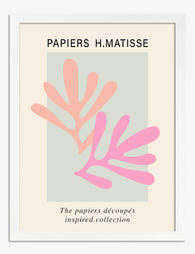
Poster rosa pappersklipp i Matisse-stil
Translation missing: sv.products.product.sale_price Från 180.00 kr257.00 kr -

Canvastavlor Matisse-inspirerade färgstarka pappersklipp
Translation missing: sv.products.product.sale_price Från 720.00 kr1,029.00 kr -

Canvastavlor gult abstrakt motiv i Matisse-stil
Translation missing: sv.products.product.sale_price Från 720.00 kr1,029.00 kr -

Poster Matisse-inspirerade pappersutklipp
Translation missing: sv.products.product.sale_price Från 180.00 kr257.00 kr -
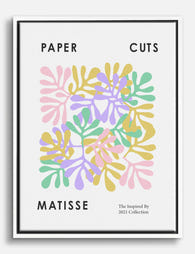
Canvastavlor Matisse-inspirerade pappersformer
Translation missing: sv.products.product.sale_price Från 720.00 kr1,029.00 kr -

Canvastavlor Matisse-inspirerat pappersklipp Joy
Translation missing: sv.products.product.sale_price Från 720.00 kr1,029.00 kr -
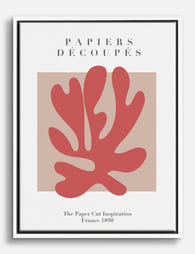
Canvastavlor rött pappersutklipp i Matisse-stil
Translation missing: sv.products.product.sale_price Från 720.00 kr1,029.00 kr


Mer från The Frame

You're Overthinking Your Colourful Gallery Wall
Most colourful gallery walls fail for the same reason: every print is shouting. You don't need ten bold pieces fighting each other, you need one or two that carry the...

Matching Prints for Your Bedroom: Sets That Mak...
You've been in the house six months. The lounge is sorted, the kitchen has its rhythm, and the bedroom walls are still completely bare. The reason is almost always the...

Why Do Most London Gallery Walls Look Like Tour...
A red phone box. A Beefeater. Big Ben in cartoon watercolour. You've seen this wall a hundred times, and it never looks like someone actually lives there. The good news...