
 Beställ idag, leverans senast
 Why William Morris Prints Look Brilliant in Modern Interiors
The more minimal your walls, the more impact a Morris print creates. Here's how to prove it.


William Morris has been quietly miscategorised for decades. His patterns get filed under "country cottage" or "Arts and Crafts revival" and rarely escape, which is a shame because his tree and botanical designs do their most striking work against clean, modern walls. This guide is about breaking that assumption with specifics.
The misconception: Morris is only for period homes
Walk into most homes featuring Morris prints and you'll find chintz sofas, dark wood, and floral curtains competing with floral wallpaper. The pattern disappears into a fog of similar pattern. That's not Morris's fault. It's the fault of styling him the way Victorians did, in rooms designed for gas lamps and dense layering.
Morris himself was a radical. He rejected the industrial sameness of his era and wanted his work to feel alive. The irony is that today's minimalist and Scandi-influenced interiors are arguably better suited to showing off his designs than the Victorian parlours he actually decorated. A William Morris tree print hung against a pale, uncluttered wall isn't a heritage gesture. It's a contrast play.
If you've avoided Morris because you think your flat is "too modern" for him, you've been listening to the wrong people.
Why ornate patterns thrive against clean, simple walls
There's a principle interior designers refer to as visual breathing room. The more detail a piece of art contains, the more empty space it needs around it to be read properly. Morris patterns are dense. They feature interlocking foliage, repeating tree forms, layered birds, twisting boughs. In a busy room, all of that detail collapses into noise.
Place that same print on a white, off-white, or pale greige wall with nothing competing nearby and something shifts. Your eye now has the space to actually trace the pattern. The curve of a willow bough becomes legible. The negative space in the wall lets the print perform.

This is why a Morris print in a modern room often looks more impressive than the same print in a maximalist setting. You're using the visual silence of contemporary design as a frame for the visual richness of Victorian pattern. They aren't opposites. They're complements.
Morris tree prints in Scandi-inspired rooms
Scandinavian interiors get described as cold or sterile by people who don't understand them. Done well, Scandi rooms are warm in a quiet way: pale oak floors, undyed linen, off-white walls, the occasional black accent, plenty of negative space. Where they sometimes fall flat is on the walls. A small abstract print or a lone botanical line drawing can leave the room feeling underdressed.
This is exactly where Morris steps in. The earthier colourways of his tree patterns, think soft sages, warm ochres, muted indigos, sit beautifully against pale oak and off-white. A 60x80cm print of a tree design above a low sideboard adds the visual weight a Scandi room often needs without breaking its principles.
Stick to one statement piece rather than a cluster. Scandi minimalism rewards restraint, and Morris doesn't need company to make an impression. Choose the largest size your wall can comfortably take. Small prints get lost in rooms with high ceilings and a lot of negative space. For a typical living room wall, 70x100cm is usually closer to right than 50x70cm.
If you want to lean further into the natural materials angle, browse the wider William Morris collection and pick a print where the foliage feels closer to muted sage than rich emerald. The softer the palette, the easier it sits against pale woods.
Pairing Morris with mid-century furniture
Mid-century modern and Morris look more related than you'd expect. Both traditions value craft, honest materials, and an enthusiasm for organic forms. The teak sideboards and tapered legs of the 1950s and 60s share a sensibility with the Arts and Crafts movement, even if the surface styles look different.
A Morris tree pattern above a walnut sideboard with brass hardware works because the warm wood tones echo the warm tones often present in Morris's palette. The vertical structure of the tree forms balances the strong horizontal of a low sideboard. If you have a pair of Eames-style lounge chairs in tan leather, a Morris print on the wall behind them adds the textural complexity leather and walnut alone can lack.
Two specific pairings to try:
- Willow Bough above a teak credenza, with a single ceramic vase below. The vertical lines of the willow echo the wood grain.
- A Tree of Life print behind a curved-back lounge chair in mustard or olive wool. The Victorian foliage and the mid-century silhouette have a conversation you didn't expect.
Avoid placing Morris near very glossy mid-century pieces, like high-shine lacquered cabinets. The matte, hand-drawn quality of his work needs matte surroundings to read properly.
Choosing a frame style that bridges old and new
Frame choice is where most people accidentally push Morris back into period-home territory. The default instinct is ornate gold, and that's usually the wrong instinct unless your room already leans traditional.
Three frame approaches that genuinely modernise a Morris print:
Slim black wood. A narrow black frame, around 20mm wide, gives the print a graphic, gallery-style edge. It cuts cleanly against a white wall and sits well with mid-century and Scandi furniture. This is the safest modernising choice.

Natural oak. A pale, raw-looking oak frame ties Morris to the broader Scandi material palette. It softens the Victorian associations and emphasises the botanical, nature-led side of his work. Best with greener and earthier colourways.
Slim white. Underrated. A white frame against a white wall makes the print feel like it's floating, which strips away every period association and lets the pattern speak entirely for itself. Works especially well in galleries of one.
What to avoid: thick ornate gold, dark mahogany, anything carved or moulded. These frames push the print backwards in time and undo the contrast you're trying to create. The frame should disappear or feel architectural, not decorative.
A practical note. The biggest problem people run into with framed prints is warping or shoddy fitting, which becomes especially obvious with detailed work like Morris where any rippling distracts from the pattern. Our framed prints arrive with the frame and print already fitted together in one box, ready to hang, so the print sits flat against the backing the way it should. UV-protective acrylic glazing means you can hang Morris in a bright south-facing room without worrying about the indigos fading over the years.
Colour palette clashes to avoid (and unexpected ones that work)
Morris worked with a specific palette: deep indigos, sage greens, terracotta reds, mustards, soft creams, occasional dusky pinks. Some modern colour schemes flatter these. Others fight them.
Clashes to avoid:
- Cool grey walls with warm Morris colourways. If your walls are a blue-leaning grey and your Morris print is full of warm reds and ochres, the undertones argue. One of them needs to give. Either choose a cooler Morris colourway (blues, greens) or warm the wall up to a greige.
- Bright primary accents. Morris reds and blues are dusty, slightly muted. Pair them with primary red cushions or royal blue throws and the Morris print suddenly looks washed out by comparison.
- Mixing with high-contrast modern florals. Two competing botanical patterns in one room is a fight nobody wins. Stick to one statement botanical and let other patterns be geometric or solid.
Unexpected combinations that work:
- Morris indigos with terracotta accents. The dusty blue and the warm rust create a grounded, sophisticated palette. Try a Willow Bough print above a sofa with terracotta cushions.
- Morris sage greens with matte black. A black metal floor lamp, black picture frames elsewhere, black hardware. The Victorian green suddenly looks contemporary and considered.
- Morris creams and ochres with pale pink walls. Surprising but lovely. A dusty pink wall takes the warmth in the print and pushes it into something modern and a little romantic without being saccharine.
If your wall is white or off-white, you have the easiest job. Almost every Morris colourway works against it. The wall does no fighting and asks no questions.
Five modern rooms transformed by a Morris tree print
Here are five specific room scenarios where a Morris tree pattern earns its place. Use them as templates.
The minimalist hallway
A narrow hallway with white walls, pale floors, and almost nothing on display. Hang a single 50x70cm framed Morris tree print at eye level on the long wall. The hallway stops feeling like a corridor and starts feeling like an entrance.
The Scandi living room
Off-white walls, pale linen sofa, oak coffee table, a single low bookshelf. Above the sofa, hang one large Morris print, 70x100cm, in a slim oak frame. No gallery wall, no clusters. The print becomes the focal point the room was missing.

The mid-century dining nook
A round walnut table, four moulded plywood chairs, a pendant light in matte brass. Hang a Morris tree pattern with warm tones, ochres and soft greens, on the wall behind the table. The print picks up the wood and brass.
The home office
White desk, black task chair, open shelving with a few books and ceramics. Behind the desk, hang two coordinated Morris tree prints in slim black frames at 40x50cm each, side by side. They give Zoom calls a backdrop with personality without being distracting.
The modern bedroom
Pale walls, a low bed in oak with linen bedding, one bedside lamp. Above the bed, hang one wide Morris tree print, 100x70cm landscape if available, in a thin white frame. The pattern adds the depth a minimalist bedroom often lacks, and the soft botanical subject is restful enough for the room.

For more in this style direction, the wider botanical print collection sits comfortably alongside Morris if you want to extend the look into other rooms without repeating the same artist twice. If you'd rather pivot to something more graphic in a connecting space, the modern art collection works as a counterpoint in a hallway or second bedroom.
A final thought
Morris belongs in modern interiors more than he belongs in pastiches of the period he actually lived through. His patterns were always about bringing nature back into rooms that had lost touch with it, and a clean, minimalist home is arguably the most receptive setting that idea has ever had. Start with one large print, one well-chosen frame, and one wall with space to breathe. That's usually all it takes.

Fab-produkter som visas i denna blogg
-

Poster William Morris-inspirerat botaniskt mönster
Translation missing: sv.products.product.sale_price Från 180.00 kr256.00 kr -

Poster botaniskt mönster inspirerad av William Morris
Translation missing: sv.products.product.sale_price Från 180.00 kr256.00 kr -

Poster William Morris-inspirerat blommönster
Translation missing: sv.products.product.sale_price Från 180.00 kr256.00 kr -

Canvastavlor William Morris blommönster i gröna toner
Translation missing: sv.products.product.sale_price Från 717.00 kr1,024.00 kr -

Canvastavlor blommönster inspirerat av William Morris
Translation missing: sv.products.product.sale_price Från 717.00 kr1,024.00 kr -

Poster livets träd – inspirerad av William Morris
Translation missing: sv.products.product.sale_price Från 180.00 kr256.00 kr -

Poster William Morris med fåglar
Translation missing: sv.products.product.sale_price Från 180.00 kr256.00 kr -
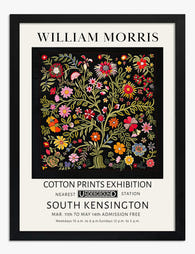
Poster botanisk blomning inspirerad av William Morris
Translation missing: sv.products.product.sale_price Från 180.00 kr256.00 kr -

Poster William Morris-inspirerad brittisk landsbygd
Translation missing: sv.products.product.sale_price Från 180.00 kr256.00 kr -

Poster Willow Pattern av William Morris
Translation missing: sv.products.product.sale_price Från 180.00 kr256.00 kr -

Poster livets träd av William Morris
Translation missing: sv.products.product.sale_price Från 180.00 kr256.00 kr -

Poster livets träd av William Morris
Translation missing: sv.products.product.sale_price Från 180.00 kr256.00 kr -

Poster William Morris – livets träd
Translation missing: sv.products.product.sale_price Från 180.00 kr256.00 kr -

Poster William Morris – livets träd
Translation missing: sv.products.product.sale_price Från 180.00 kr256.00 kr -

Poster Willow Pattern av William Morris
Translation missing: sv.products.product.sale_price Från 180.00 kr256.00 kr -

Poster William Morris julgran mot midnattsblå himmel
Translation missing: sv.products.product.sale_price Från 180.00 kr256.00 kr -

Poster William Morris fåglar och blommor
Translation missing: sv.products.product.sale_price Från 180.00 kr256.00 kr -

Poster botanisk vy i William Morris-stil
Translation missing: sv.products.product.sale_price Från 180.00 kr256.00 kr -

Poster William Morris julgran med botaniskt mönster
Translation missing: sv.products.product.sale_price Från 180.00 kr256.00 kr


Mer från The Frame

Why Arts and Crafts Nature Prints Are the Antid...
The minimalism hangover: why bare walls stopped feeling calming For about a decade, the aspirational interior was a white box with one boucle chair in it. That look has officially...

Botanical Petal Art: Why Close-Up Prints Feel M...
Full florals have had a long run, and they're not going anywhere. But if you've noticed that the botanical art appearing in design magazines, boutique hotel lobbies, and the better-styled...

The Complete Guide to Colours That Go With Peta...
Most colour guides assume you're building a room from scratch. You're probably not. You've fallen for a specific petal print, and now you need your existing lounge, bedroom or hallway...