Solid wood. Professionally framed. Arrives ready to hang.
Make your print ready to hang.
Fruit Art Prints
4.8
Fruit turns up in art in wildly different moods: sober Dutch still life, loose watercolour, flat graphic shapes, a single peach shot close enough to see the fuzz. Kitchens and dining walls take the bright end well, so start with lemon art prints or a run of citrus art prints. For something darker and more grown-up, pomegranate art prints suit a hallway or a room you eat in after dark.
Calming Mediterranean scenes and colourful fruit or bird designs work especially well in kitchens, adding a distinctive accent to the room.
The first I describe is the Matisse lemons
The first I describe is the Matisse lemons. I am in my 80s now and enjoy finding the right the things for my grandchildren. I love all the imaginative art that is now sent by email with text, without charge,by some dedicated people. So...your initiative must be very busy.
Botanical prints have quietly become one of the most flexible categories in wall art, but mixing them well is harder than it looks. Pile up too many ferns and florals...
Vegetable prints have a reputation problem. People assume they belong in a country cottage with checked curtains, when actually they make some of the most striking, surprisingly grown-up gallery walls...
A blank wall can be intimidating. You know you want art, but where do you even start? You scroll through endless options online, walk through galleries feeling lost, or stare...
Which fruit print suits your room

Short answers on picking a subject, choosing colour and framing, plus how delivery and returns work
Which fruit art colours work with a sage green, navy or all-white kitchen?
Pick fruit tones that either contrast or echo your existing palette. With sage green, warm fruits read best: lemon yellow, apricot, peach and terracotta pop against the grey-green, while blush plum or fig keeps things soft and earthy. Navy loves high contrast, so bright citrus, ochre and cognac-toned pears look crisp, especially with cream mounts and warm brass or gold frames. All-white kitchens can handle the boldest choices, like deep berry reds, watermelon pinks and rich greens. Repeat one fruit colour elsewhere in the room so the art feels intentional. You may also like our Citrus Art Prints.
What do different fruits symbolise in art?
In Western art, each fruit carries its own shorthand meaning. Apples signal temptation and knowledge, tied to the Garden of Eden story; pomegranates suggest fertility, abundance and rebirth through the Persephone myth; grapes evoke harvest, celebration and, in Christian imagery, communion wine; lemons and other citrus once flagged wealth and imported luxury, while their sourness hinted at beauty that deceives. Peaches and cherries read as sweetness, sensuality or longevity, and ripening or spoiling fruit reminds viewers that time passes. Meanings shift with culture and context, so trust what a piece makes you feel at home. For a related option, explore our Apples Art Prints.
Is fruit art too seasonal to leave up all year?
No. Fruit motifs read as year-round decorating rather than a summer-only theme, and designers currently treat produce imagery as part of a broader, ongoing interest in nature, gardening and pastoral charm that carries well past August. The trick is styling: tie the palette to colours already in the room, like cream, sage, soft blue, black or warm wood, so the art feels like a permanent layer instead of a holiday decoration. Deeper, moodier tones and classic botanical treatments transition especially easily into autumn and winter. For another take, browse our Food Art Prints.
Which fruit art prints work best in a kitchen?
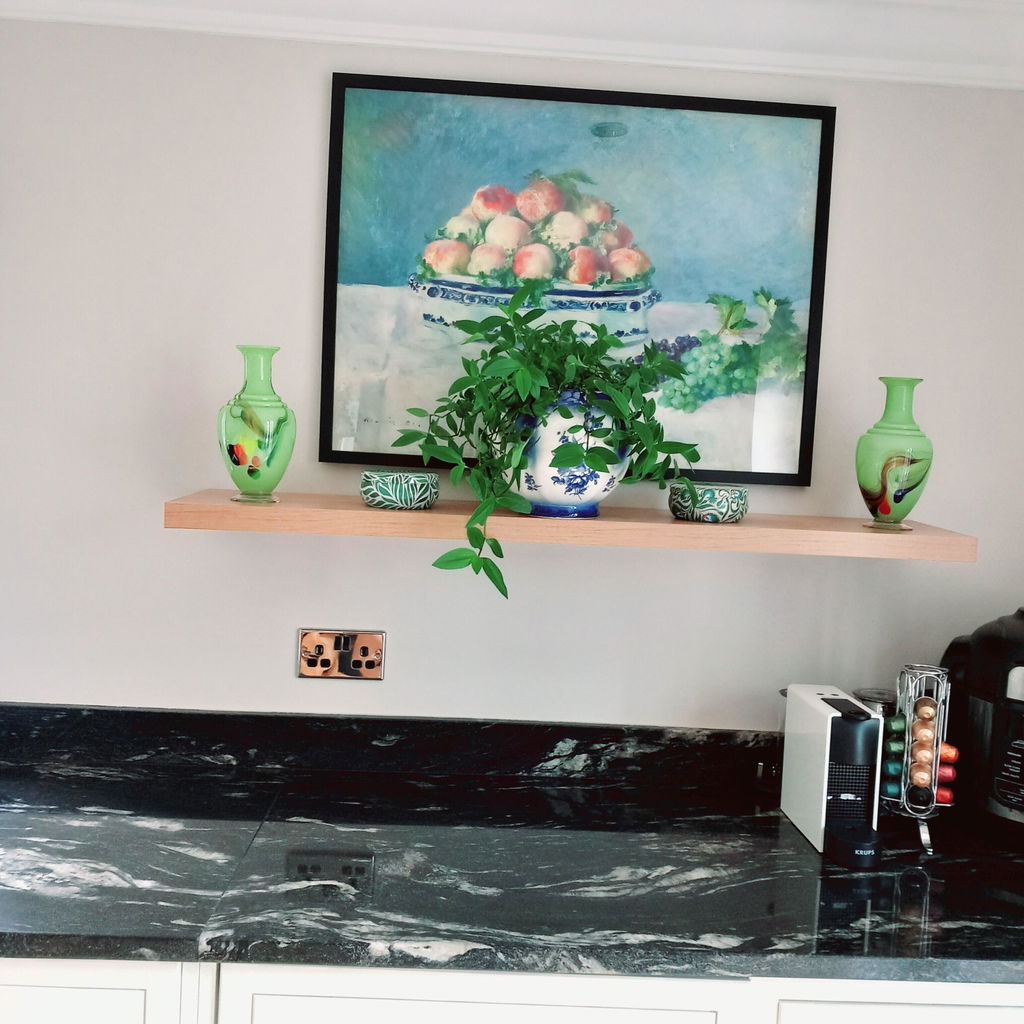
Citrus fruit wall art (lemons, oranges, limes) is the go-to for kitchens because the warm yellows and vibrant greens complement the natural light most kitchens get. We'd recommend a framed 40x50cm or 50x70cm lemon art print above a worktop or breakfast bar, using a natural oak frame to keep things warm. If your kitchen has cooler tones like grey cabinets or marble worktops, a pair of smaller botanical fruit prints with figs or plums adds depth without clashing. Our framed prints arrive ready to hang with UV-protective glazing, so steam and sunlight won't fade your artwork over time.
Are fruit prints still in style?
Very much so, and they've moved well beyond the country-cottage cliché. The current trend leans towards modern botanical fruit illustrations with clean backgrounds and rich, slightly muted colour palettes, or vintage fruit art prints inspired by 18th and 19th century botanical studies. They work brilliantly in contemporary kitchens, dining rooms, and even living spaces when you choose the right scale. A large 70x100cm tropical fruit art print in a black frame feels more like a gallery piece than grandma's kitchen decor.
How do I style fruit art in a dining room?
A dining room is one of the best spots for fruit artwork because the subject matter just makes sense where you eat. For a single statement piece, go for a 50x70cm or 70x100cm framed fruit print centred on the wall your table faces, so it's the first thing guests notice when they sit down. If you have a longer wall (say behind a sideboard or buffet), a symmetrical pair of framed prints, like one citrus and one stone fruit, hung 5-8cm apart at eye level creates a polished, intentional look. Stick to one frame colour across both for cohesion.
Should I choose framed or unframed fruit prints?
For kitchens and dining rooms, we strongly recommend framed. These are high-traffic, high-humidity spaces and a properly framed print with UV-protective acrylic glazing will stay looking sharp for years. One of the biggest frustrations people have with art prints is cheap framing that warps or separates from the print. Ours ship as one fitted unit in solid FSC-certified wood, ready to hang straight out of the box. If you're placing fruit art in a hallway or bedroom and want a more minimal feel, an unframed print in a clip frame can work, but you'll sacrifice that longevity.
What are fruit paintings called in art history?
Paintings focused on fruit, food, and objects are called still life (or "nature morte" in French, which translates delightfully as "dead nature"). The genre exploded in 17th century Dutch and Flemish painting, where artists like Caravaggio and later Cézanne turned bowls of fruit into some of the most iconic works in Western art. Today's fruit illustration prints draw heavily on that tradition but with cleaner compositions and a more contemporary feel. If you love that vintage botanical look, search our collection for prints inspired by historical fruit studies, they bring real character to a wall.
Choosing a selection results in a full page refresh.