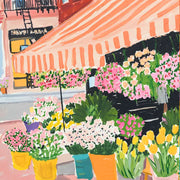
London Fields Market Vibes Art Print - Oak

London Fields Farmers' Market Art Print

Sale price From £11.95 £19.95
Lilac Pastry Trio Art Print - White

Weekend Pastries Lilac Art Print

Sale price From £11.95 £19.95
Black Tartarian Cherry Plate Art Print Brown

Black Tartarian Cherry Plate Art Print

Sale price From £11.95 £19.95
Borough Market Mushrooms Art Print - Unframed

Borough Market Mushrooms Poster Art Print

Sale price From £11.95 £19.95
Kitten & Seafood Still Life Art Print Brown

Kitten & Seafood Still Life Art Print

Sale price From £11.95 £19.95
Cornish Gilliflower Apple by Wendel Art Print Brown

Cornish Gilliflower Apple by Wendel Art Print

Sale price From £11.95 £19.95
Retro Cake Delight Art Print - White

Always Room For Cake Art Print

Sale price From £11.95 £19.95
Russian Apricots Nursery Plate Art Print Brown

Russian Apricots Nursery Plate Art Print

Sale price From £11.95 £19.95
Reine Claude Violet Plum by A.J. Wendel Art Print Brown
Early Richmond Cherry Art Print Brown

Early Richmond Cherry Art Print

Sale price From £11.95 £19.95

More Fab art curations

Thinking it through before you buy

Short answers on framing choices, hanging vintage botanicals in kitchens, and how ordering works

Need more help? Contact our team here

Which artists are known for vegetable and produce illustration?

Historic vegetable imagery is most associated with botanical illustrators rather than gallery painters. Adolphe Millot, who illustrated French Larousse dictionaries, is one of the best-known names, and the Vilmorin-Andrieux seed catalogs produced another widely loved body of French vegetable plates. Antique horticultural society plates are a third familiar source. Reproductions in this style share the same flat, labelled, specimen-on-white look, so pieces from different sources tend to hang together comfortably.

How do I style vintage vegetable prints in a kitchen or dining room?

Hang them where food actually happens: above a sideboard, along a breakfast nook wall, or in a narrow column beside a pantry door. A grid of three or six similarly sized pieces looks tidier than scattered singles, and matching frames keep a busy kitchen from feeling cluttered. Warm woods, cream walls and farmhouse or cottage-style cabinetry flatter the aged paper tones; simple black frames sharpen the look in a more modern space.

Should I mix vegetable prints with fruit or herb prints?

Yes, and it's a common approach because these motifs come from the same illustration traditions and share a palette of greens, earthy reds and faded paper backgrounds. Mixing vegetables with fruit or herbs gives a set more variety while keeping it coherent. To keep it deliberate, hold one thing constant, such as a single frame finish, a consistent print size, or a repeating background tone across every piece.