
 Heute bestellen, Lieferung bis
 So verwandelst du jeden Raum mit einer stimmigen Rosa-Galeriewand
A practical formula for building a pink gallery wall that reads as considered and grown-up, not saccharine.


Rosa gehört zu den kniffligsten Farben für eine gelungene Galeriewand. Falsch kombiniert, liest sich die Wand schnell kindlich oder chaotisch – wie das Moodboard eines Teenagers. Richtig gemacht, wird sie zu einer der elegantesten, lichtdurchflutetsten Flächen im ganzen Zuhause.
Der Unterschied hängt von ein paar frühen Entscheidungen ab: Wie viele Rosanuancen, welche Formate – und vor allem, wie du alles rahmst. Hier ist das System.
Warum eine tonale Galeriewand stärker wirkt als ein „matchy‑matchy“-Set
Beim Kauf von Kunst in einer Farbe ist die Versuchung groß, nach „Geschwister“-Motiven zu greifen: gleiche Künstler:innen, gleiche Palette, gleiche Stimmung. Das fühlt sich sicher an – wirkt aber oft flach.
Eine tonale Galeriewand ist spannender. Statt dasselbe Rosa auf jedem Print zu wiederholen, bleibst du in einem kontrollierten Spektrum – etwa von warmem Blush bis zu pudrigem Rosé – und lässt die Variationen arbeiten. Das Auge nimmt zuerst die Verbindung wahr (Rosa), danach die Unterschiede (hier ein pfirsichfarbener Abstrakt, dort ein roségetöntes Botanical). Diese Spannung lässt die Wand kuratiert wirken statt einfach nur gekauft.
Auch „Matchy“-Sets sind schwerer zu erweitern. Ein neues Teil – und das Ganze fällt auseinander. Eine tonale Wand dagegen steckt neue Prints locker weg, solange sie in deinem Farbbereich liegen. Du baust ein System, keine starre Anordnung.
Die professionelle Faustregel von Innenstylist:innen ist ähnlich: Zusammenhalt entsteht durch ein bis zwei Anker (Farbe, Rahmen, Motiv), der Rest darf variieren. Bei einer rosa Wand ist die Farbe dein erster Anker. Zum zweiten kommen wir gleich.

Die Rosa-Palette wählen: auf zwei bis drei Tonbereiche beschränken
Der größte Fehler bei rosa Kunstdrucken ist, „Rosa“ als eine einzige Farbe zu behandeln. Ist es nicht. Knallpink, Blush, Lachs, Altrosa, Fuchsia und Millennial Pink verhalten sich an der Wand wie völlig unterschiedliche Töne. Wirfst du sie alle zusammen, weiß das Auge nicht, wo es landen soll.
Wähle zwei Tonbereiche, drei maximal. Kombinationen, die zuverlässig funktionieren:
- Warmes Blush + pfirsichiges Koralle. Weich, sonnig – schmeichelhaft in nordseitigen Räumen.
- Kühles Rosé + pudriges Mauve. Erwachsener, leicht moody – ausgezeichnet fürs Schlafzimmer.
- Blush + Terrakotta + ein einzelner Hot‑Pink‑Akzent. Erdverbunden und modern; der Akzent nimmt die Süße heraus.
Auffällig, was fehlt: Fuchsia direkt neben Babyrosa oder Millennial Pink neben Koralle. Töne, die auf dem Farbkreis zu nah beieinander liegen, aber als unterschiedliche Temperaturen gelesen werden, geraten aneinander.
Praktischer Test vor der Bestellung: Öffne alle Motive gleichzeitig auf dem Bildschirm und kneife die Augen zusammen. Springt ein Print als „falsches Rosa“ heraus, ist er es auch. Tausche ihn aus.
Mit Blush zu dekorieren funktioniert am besten, wenn du Blush als Grundton nimmst und ein bis zwei tiefere oder wärmere Nuancen für Kontrast sorgen. Reine-Blush-Wände wirken flach. Ein Spektrum von Creme-Rosa bis Lehm-Rosa hat Tiefe.
Wie viele Prints du wirklich brauchst (und welche Größen zusammen funktionieren)
Für die meisten Wände liegt die magische Zahl zwischen fünf und neun Prints. Unter fünf wirkt es nicht mehr wie eine Galeriewand, sondern wie eine spärliche Hängung. Über neun bist du bei einer Salonhängung – ein ganz anderes Projekt und tonal schwerer zu kontrollieren.
Hier ist eine Formel, die über einer Standard-Sofawand (ca. 2,4 Meter) funktioniert:
- 2 große Drucke à 50x70 cm oder 60x80 cm
- 3 mittlere Drucke à 30x40 cm oder 40x50 cm
- 2 bis 4 kleine Drucke à 21x30 cm (A4) oder 30x40 cm
Die gesamte Anordnung sollte ungefähr zwei Drittel der Breite des Möbelstücks darunter einnehmen. Schmaler wirkt schnell kopflastig; breiter erschlägt das Sofa.
Über einem Standard-Doppelbett darfst du leicht skalieren: zwei 60x80‑cm‑Anker, ergänzt um drei bis vier mittlere Prints. Im schmalen Flur reduzierst du auf vier bis fünf, alle klein bis mittel.
Wenn du nicht alles einzeln zusammensuchen willst, nehmen vorkuratierte Wandbilder-Sets dir den Großteil der Rätselraten ab. Sie sind tonal und in der Größe aufeinander abgestimmt – zwei Probleme auf einmal gelöst.
Ein No-Go: Prints alle in derselben Größe. Ein Raster aus neun identischen Quadraten ist kein Galerie-Arrangement, sondern ein Muster. Variation in der Größe gibt dem Auge Ruhepunkte und Fokus.

Die eine Regel, die alles zusammenhält: einheitliche Rahmen
Wenn Farbe dein erster Anker ist, sind Rahmen der zweite – und ehrlich gesagt der wichtigere. Uneinheitliche Rahmen lassen viele rosa Galeriewände wie einen Trödelladen-Wildwuchs wirken.
Wähle eine Rahmenoberfläche und zieh sie konsequent durch. Drei Optionen schmeicheln Rosa-Kunst zuverlässig:
- Eiche natur. Warm, weich; nimmt kühleren Rosétönen die Härte und lässt Blush weniger zuckrig wirken. Unsere Top-Empfehlung für die meisten Rosa-Paletten.
- Mattschwarz. Erdung und grafische Galerie-Kante – großartig in Wohnzimmern mit dunkleren Möbeln.
- Weiß. Verschwindet optisch an der Wand und lässt die Kunst sprechen. Am besten in kleinen Räumen oder wenn maximale Leichtigkeit gefragt ist.
Vermeide gemischte Oberflächen. Ein schwarzer Rahmen neben Eiche neben Gold wirkt nicht eklektisch, sondern zufällig. Wenn du variieren willst, variiere Passepartout-Breite oder Rahmendicke innerhalb derselben Oberfläche – nicht die Oberflächen selbst.
Hinweis zu Passepartouts: Ein weißes oder offwhite Passepartout gibt jedem Print Luft und eine weitere Ebene der Einheitlichkeit. Zu wärmeren Rosatönen (Blush, Pfirsich, Terrakotta) passt Elfenbein oder Creme natürlicher als Reinweiß. Zu kühleren Rosas (Rosé, Mauve) ist Reinweiß knackiger und besser.
Hier zählt Qualität wirklich. Die häufigsten Probleme bei gerahmten Drucken sind verzogene Rahmen, schlecht sitzendes Glas/Acryl oder getrennte Lieferungen, die du selbst montieren musst. Unsere gerahmten Drucke kommen hängefertig in einem Karton – mit passgenau eingesetztem, UV‑schützendem Acrylglas und FSC‑zertifizierten Massivholzrahmen. Das Acryl ist bei Rosa besonders wichtig, weil Rosa-Pigmente unter direkter Sonne zu den ersten gehören, die verblassen. UV-Schutz hält Blush jahrelang blush – und verhindert, dass es zu Beige kippt.
Stile mischen: Abstrakte Rosa-Prints mit Fotografie und Line Art kombinieren
Neun rosa Abstrakte an einer Wand sind eine Menge Rosa-Abstrakt. Der Genre-Mix verhindert, dass eine tonale Wand eindimensional wirkt.
Eine verlässliche Quote ist etwa 60% Abstrakt zu 40% Gegenständlich. Bei einer Siebener-Wand sind das vier rosa abstrakte Kunstdrucke und drei andere Stücke: eine botanische Illustration, ein rosa-getöntes Foto, eine minimalistische Linienzeichnung einer Figur.
Die gegenständlichen Motive geben dem Auge etwas Wiedererkennbares und Ruhe. Die Abstrakten liefern Farbflächen und Textur. Ohne Abstrakte wirkt die Wand wie eine Illustrationssammlung. Ohne Gegenständliches wie Farbmuster.
Botanische Kunstdrucke funktionieren in Rosa-Paletten besonders gut, weil Rosa oft als Blüte oder Stiel vor neutralem Hintergrund erscheint – so entstehen visuelle Pausen zwischen satteren abstrakten Motiven. Pfingstrosen, Magnolien, Dahlien und Kirschblüten leisten das ganz natürlich.
Line Art ist der andere Arbeitseinsatz. Eine einfache Tuschezeichnung von Gesicht oder Figur auf cremefarbenem Grund bringt Schwarz oder Anthrazit ins Spiel – das nimmt dem Rosa die Süße. Fühlt sich die Wand zu Barbie an? Das ist die Korrektur.
Erlaubnis, die eigene Regel zu brechen: Wenn die Wand immer noch zu rosa wirkt, tausche ein Motiv gegen ein Schwarzweißfoto oder ein komplett neutrales Abstrakt. Ein nicht-rosa „erdendes“ Stück – besonders in einer Ecke der Anordnung – schärft alles andere.
Layout-Planung: die Sofa-Längen-Regel und wie du richtig Abstand hältst
Bevor du den ersten Nagel setzt, plane das Layout flach auf dem Boden.
Lege alle Drucke vor der Wand auf dem Boden aus. Schiebe sie so lange, bis die Anordnung ausgewogen wirkt. Zwei Prinzipien helfen dabei:
Die Sofa-Längen-Regel. Die Gesamtbreite deiner Galeriewand sollte ungefähr zwei Drittel der Breite des Möbels darunter betragen. Bei einem 200‑cm‑Sofa peilst du etwa 130 bis 140 cm Wandkunst an. Zentriere am Sofa, nicht an der Wand (beides ist selten identisch).
Die 5‑cm‑Abstandsregel. Lasse rund 5 cm Negativraum zwischen den Rahmen. Knapp darunter drängeln die Prints, deutlich darüber zerfällt die Anordnung in Einzelteile. Halte den Abstand über die ganze Wand konsistent – horizontal und vertikal.
Verteile deine größten Prints zuerst, idealerweise nicht symmetrisch. Symmetrie wirkt auf einer Galeriewand formell und etwas steif. Eine leicht versetzte Ankerposition – etwas höher oder seitlich – wirkt überlegt und bewohnt.
Hänge auf Augenhöhe. Der Museumsstandard setzt die Mitte der Anordnung bei ca. 145 bis 150 cm ab Boden. Über einem Sofa liegt die Unterkante des niedrigsten Prints ca. 15 bis 20 cm über der Sofakante, damit die Kunst sich auf das Möbel bezieht statt zu schweben.
Wenn das Bodenlayout stimmt, markiere es an der Wand mit Malerkrepp oder Papierschablonen in Rahmengröße. Lebe einen Tag damit. Du siehst morgens um acht oft anderes als abends um acht – und Klebeband zu versetzen ist leichter, als Bohrlöcher zu spachteln.

Vom Karton an die Wand: In unter einer Stunde hängen – mit hängefertigen Drucken
Beim Ausführen stocken die meisten Galeriewand-Projekte. Rahmen kommen separat, Hardware fehlt, der Print passt nicht in den Rahmen. Das Wochenende ist dahin.
Wenn deine Drucke hängefertig ankommen – mit bereits montierten Aufhängern – dauert das eigentliche Aufhängen deutlich unter einer Stunde. Der schnellste Workflow:
- Lege alles ein letztes Mal auf dem Boden in der gewünschten Anordnung aus.
- Miss den Aufhängepunkt jedes Prints (meist Sägezahn- oder Drahtaufhänger auf der Rückseite, ein paar Zentimeter unter der Oberkante).
- Übertrage dein Papier-Layout an die Wand mit Malerkrepp und Wasserwaage. Markiere die Nagelposition auf jeder Schablone.
- Schlage Nägel oder Bilderhaken an jeder Markierung ein. Papier abreißen.
- Hänge zuerst die größten Stücke und arbeite dich nach außen zu den kleineren vor. Justiere zwischendurch.
- Mach nach zwei, drei Prints einen Schritt zurück. Kippen, korrigieren – eine Galeriewand hängt selten beim ersten Versuch perfekt, und das ist okay.
Für Mieter:innen oder alle, die Löcher scheuen, funktionieren Klebestreifen (z. B. Command Strips) bei kleineren Formaten gut. Alles ab 50x70 cm gehört aus Sicherheitsgründen an einen richtigen Bilderhaken.
Ein paar No-Gos
- Zu viele Rosa-Nuancen. Maximal drei.
- Unstimmige Rahmenoberflächen. Eine wählen und durchziehen.
- Alles in derselben Größe. Größen variieren, sonst wirkt es wie ein Muster.
- Symmetrie. Versetzte Anker wirken souveräner.
- Drängeln. Halte konsequent 5 cm Abstand.
- Ohne Probe hängen. Krepp und Papier schützen vor Reue.

Eine rosa Galeriewand ist nicht wirklich eine Frage von Rosa. Es geht um Zurückhaltung: eine enge Palette, ein einheitliches Rahmenfinish, ein überlegtes Verhältnis von Abstrakt zu Gegenständlich und saubere Abstände. Sitzen diese vier Punkte, wirkt die Wand intentional – egal, ob du ein Wochenende oder eine Stunde investierst. Starte mit den Farben, die in deinem Raum ohnehin schon leben – Kissen, Plaid, Teppich – und lass die Wand darauf antworten. So hört eine Galeriewand auf, wie Pinterest auszusehen, und fängt an, wie deine auszusehen.

In diesem Blog vorgestellte Fab-Produkte
-

Poster Rosa Café-Szene mit Freunden und Hunden
Verkaufspreis Ab €16,95€23,95 -

Poster Abstrakte Harmonie in Korallenrot & Rosé
Verkaufspreis Ab €16,95€23,95 -

Poster Abstrakte Farbblöcke in Pink, Koralle & Orange
Verkaufspreis Ab €16,95€23,95 -

Leinwandbild Botanische Blüte in Rosa & Grün – Pink Pop
Verkaufspreis Ab €65,95€93,95 -

Poster Londoner Stadthaus in Pastellrosa
Verkaufspreis Ab €16,95€23,95 -

Poster Weiße Wolke vor rosarotem Himmel
Verkaufspreis Ab €16,95€23,95 -
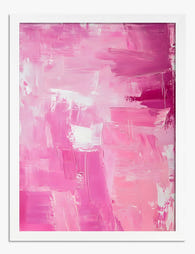
Poster Strahlkraft in Pink
Verkaufspreis Ab €16,95€23,95 -

Leinwandbild Abstrakte Pinselstriche in Rosa
Verkaufspreis Ab €65,95€93,95 -
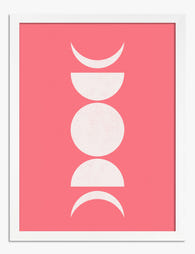
Poster Mondphasen in Rosa
Verkaufspreis Ab €16,95€23,95 -

Leinwandbild Fließende botanische Linien in Pink
Verkaufspreis Ab €65,95€93,95 -

Leinwandbild Strahlendes Korallenrosa
Verkaufspreis Ab €65,95€93,95 -

Poster Geometrische Blumen in Blau, Beige und Weiß auf Puderrosa
Verkaufspreis Ab €16,95€23,95 -

Leinwandbild Bauhaus-Geometrie in Rosa
Verkaufspreis Ab €65,95€93,95 -

Leinwandbild Pastellrosa Stadthausfassade
Verkaufspreis Ab €65,95€93,95 -

Leinwandbild Bauhaus: konzentrische Kreise in Pink
Verkaufspreis Ab €65,95€93,95 -

Leinwandbild Wolke vor pinkem Himmel
Verkaufspreis Ab €65,95€93,95 -

Leinwandbild Kräftige grafische Blüten in rosa Vase
Verkaufspreis Ab €65,95€93,95 -

Poster Wolke vor zartrosafarbenem Himmel
Verkaufspreis Ab €16,95€23,95 -

Poster Geometrische Bauhaus-Komposition in Pink
Verkaufspreis Ab €16,95€23,95 -

Poster Abstrakte Kunst in Koralle, Orange und Rosa
Verkaufspreis Ab €16,95€23,95


Mehr aus The Frame

Antike römische Fresken erklärt: Die vier Stile...
Über rund drei Jahrhunderte überzogen wohlhabende Römer ihre Wände mit gemalten Illusionen: falscher Marmor, falsche Fenster, falsche Gärten, falsche Tempel, die in der Luft zu schweben scheinen. Als der Vesuv...

Unsere liebsten Van-Gogh-Garten-Kunstdrucke für...
Warum Van-Gogh-Garten-Kunstdrucke in modernen Interieurs funktionieren (und nicht nur in traditionellen) Es hält sich hartnäckig die Annahme, Van Goghs Gartenbilder gehörten in Landhausküchen und in Omas gute Stube. Falsch gedacht....

Wanddeko im französischen Landhausstil: So geli...
Die meisten Ratgeber zum französischen Landhausstil tun so, als hättest du ein Bauernhaus in der Provence, ein Antikbudget und die Erlaubnis, deine Küche aufzureißen. Dieser hier nicht. Wenn du das...