
 Heute bestellen, Lieferung bis
 Above the Toilet, Above the Bath: Bathroom Art That Works
A zone-by-zone guide to choosing, sizing and hanging art in the steamiest, trickiest room in your home.


Bathrooms are the most overlooked walls in the house, and the trickiest to get right. Steam, splash, awkward sightlines and tiled surfaces all conspire against the kind of art advice that works elsewhere. This guide breaks the room into zones and tells you what actually survives, what looks good, and how to hang it.
Yes, you can hang art in the bathroom
The old advice was to avoid putting anything precious in a humid room. That logic came from an era of cheap inkjet prints, MDF frames and paper-backed mounts that warped within months. Modern giclée prints on heavy matte paper, sealed behind UV-protective acrylic in a solid wood frame, handle a domestic bathroom just fine.
The caveats are real but manageable. You need decent ventilation, sensible placement away from direct water contact, and materials that aren't going to delaminate the first time someone runs a hot shower. Get those right and your bathroom becomes one of the best spots in the house for art, because people actually look at the walls in there.

Understand your bathroom's splash zones
Before you choose anything, map the room. Every bathroom has three zones, and each one has different rules.
Zone 1, the wet zone. Directly inside the shower, the bath surround, and anywhere water lands. No art goes here, ever. Not framed, not canvas, not metal. The combination of repeated direct water contact and trapped moisture behind any flat object on a tiled wall is a mould factory.
Zone 2, the splash zone. Within roughly 60cm of a water source. Above a basin, beside a bath, opposite a shower opening. Art can live here if the materials are right and the piece is positioned to avoid direct splash. Canvas tends to be more forgiving than paper here, because there's no glazing to fog and no paper mount to wrinkle.
Zone 3, the dry zone. Above the toilet, on the wall behind the door, on the long wall opposite the bath. This is where you can hang almost anything you'd hang elsewhere in the house, provided the room ventilates properly.
The splash zone concept matters more than any single rule about humidity. A well-ventilated bathroom in Zone 3 is barely more humid than a kitchen. A poorly ventilated room with art directly above the bath is asking for trouble.
Art above the toilet: sizing and height
The wall above the toilet is the most reliable spot for framed art prints in any bathroom. It's dry, it sits at a comfortable viewing distance, and the toilet itself acts as a built-in pedestal that anchors the composition.
How big should it be?
Aim for art that's roughly 50 to 70 percent of the width of the toilet tank. A standard tank is around 50cm wide, so a piece between 30cm and 40cm wide reads as intentional rather than floating. For a single statement piece, 40x50cm or 50x70cm both work beautifully above a standard toilet.
If your wall is taller than it is wide (and most are), go vertical. A 30x40cm or 50x70cm portrait orientation print fills the visual space without crowding the cistern.
How high should you hang it?
The standard "centre at 145cm to 150cm" rule assumes a standing viewer in a gallery. Bathrooms are different. The bottom of your frame should sit roughly 15 to 25cm above the top of the cistern. Any higher and the art floats off into space; any lower and it looks like it's resting on the toilet.
For most setups, this puts the centre of the art somewhere between 150cm and 165cm from the floor. Step back, sit on the closed lid for a moment, and check the sightline. If you're staring at the bottom edge of the frame, raise it. If you're craning up, lower it.
A note on the guest perspective
Whoever uses your bathroom is going to spend time looking at this wall. Abstract, botanical, landscape and typographic prints all sit well at this viewing angle. Large figurative faces staring directly forward can feel confrontational at close range. Browse abstract art or botanical prints if you want something that holds up to sustained viewing without becoming uncomfortable.

Art above the bathtub: the rules change
Art above a bathtub is more dramatic and slightly more risky. You're working with a wider wall, a longer viewing distance from across the room, and a higher moisture exposure when the bath is in use.
Material first, style second
Above a bath, canvas earns its keep. A stretched canvas print has no glazing to fog with steam, no paper mat to ripple, and the poly-cotton surface tolerates humidity better than glazed paper does. If you love the look of a framed paper print above the bath, it can absolutely work, but only with proper ventilation and a sensible distance from the water itself.
Avoid anything with real glass. If a frame ever did come down (and frames in bathrooms come down more often than you'd think, thanks to expanding and contracting plasterboard), glass into a tub is a serious injury. UV-protective acrylic glazing is lighter, safer, and doesn't reflect harsh overhead lighting the way glass does.
Sizing for the bath wall
The bath is usually 170cm long. Your art should occupy roughly two-thirds of that width, so a single large piece between 100cm and 120cm wide reads as proportionate. A 70x100cm landscape print, or a 100x150cm canvas, both anchor the wall properly without looking apologetic.
A diptych of two 50x70cm pieces, hung with around 5cm between them, gives you the same visual weight with more flexibility around tiled splashbacks or window placement.
Height above the bath
You want the bottom of the art at least 20cm above the highest splash point. For most baths with a tiled splashback, that means the bottom edge of the frame sits roughly 30 to 40cm above the tile line. Centre the piece on the visible wall, not on the bath itself, because most baths sit against a longer wall and a piece centred on the tub alone will look off when the room's empty.
Wet rooms, walk-in showers and fully tiled walls
Wet rooms are the hardest case. Every surface is sealed, drilling is risky, and steam is everywhere. Art in a wet room belongs on the one wall that doesn't get direct water exposure, usually the wall opposite the shower head or beside the door.
For genuinely fully-tiled wet rooms, canvas is the only sensible choice. There's no paper to swell, no glazing to fog, and you can mount it with heavy-duty adhesive strips designed for tile rather than drilling. Hang it high enough that condensation running down the tile won't reach the bottom edge.
If you can drill into a partial tile wall, do it through the grout line, not the tile itself, using a diamond-tipped bit. This is fiddly. Adhesive mounting is genuinely the better option for most rentals and most people.
Small bathrooms and powder rooms
Tiny bathrooms benefit from going either very small or very bold, never medium. A 21x30cm print framed properly looks intentional in a powder room. A 30x40cm print looks slightly lost. A 50x70cm print on a single feature wall looks dramatic and confident.
Three small prints stacked vertically also work well on the narrow strips of wall you often find beside a basin or behind a door. Treat them as a single column with consistent spacing of 5cm between frames.
For dark, windowless powder rooms, lean into it. Moody colours, deeper tones, and richer subjects work better than airy beachscapes that look washed out under artificial light. Vintage and classic prints feel particularly at home in a dim, considered powder room.

Materials and moisture: what actually survives
The honest version of moisture tolerance, with no marketing fluff.
Giclée prints on thick matte paper, framed with acrylic glazing in solid FSC wood. Fine in any well-ventilated bathroom, including Zone 2 with sensible placement. The acrylic glazing prevents direct moisture reaching the print, the solid wood frame won't warp the way veneered MDF does, and the matte paper resists the slight surface bloom that gloss papers can develop in humid conditions.
Stretched canvas on solid wood stretchers. The most forgiving option for humid bathrooms. The mirrored edge wrap means no awkward white margins, and there's no glazing to fog. Canvas can be hung framed or unframed depending on the look you want.
Cheap poster prints, foam-mounted prints, photo paper. Don't. They'll cockle, ripple and fade within a season.
Frames shipped separately to be assembled. A specific frustration in this category. Cheap framed prints often arrive with the print loose, the backing warped, or the frame in three pieces. A bathroom is the worst possible place for a poorly fitted frame, because any gap between mount and glazing becomes a humidity trap. Pieces that arrive properly fitted and ready to hang, in one box, save you a lot of grief.
Ventilation, lighting and longevity
Two practical points that most guides skip.
Run your extractor fan. Art lasts longer in bathrooms that vent properly. If your fan only runs while the light is on, consider an overrun timer that keeps it going for 15 minutes after you leave. This single change does more for your art's lifespan than any product choice.
Mind the lighting. Most bathrooms have harsh, cool, overhead lighting that flattens colour and creates glare on glossy surfaces. Matte paper and matte canvas both handle this better than gloss finishes. If your bathroom has a window, prints in the path of direct afternoon sun need UV protection, which is why acrylic glazing matters more here than it does in a hallway.
Hanging into tile and rental-friendly options
If you're hanging into a plasterboard wall, standard picture hooks work fine. The problems start with tile.
Drilling into tile. Always go through the grout line, not the tile face. Use a masonry or diamond bit, start slow with tape over the spot to stop the bit wandering, and use proper wall plugs sized for the screw.
Not drilling. Heavy-duty adhesive strips rated for the weight of your piece will hold framed prints up to around 3kg on tile, painted surfaces and most wallpapers. Press firmly for 30 seconds, then leave for an hour before hanging. They release cleanly when you eventually move out.
For canvas in particular. Adhesive Velcro strips work brilliantly because canvas is light and the strips compress slightly, absorbing the inevitable knocks that happen in a busy bathroom.

Gallery walls in bathrooms
Bathroom walls are interrupted. Towel rails, mirrors, light switches, radiators and shaver sockets all break up the usable space. Treat these constraints as the grid, not the enemy.
A small three-piece gallery, all in identical frames at the same size, works above a single towel rail or along the strip of wall between door and basin. Hang as a horizontal row at consistent height, or a tight vertical column with 5cm spacing. Mixed frame sizes look chaotic in small bathrooms; restraint reads as considered.
If your bathroom has one long, uninterrupted wall, that's where a more ambitious arrangement belongs. Browse gallery wall sets for combinations that already share a palette and style, which saves you the curatorial work of pulling something coherent together from scratch.
A simple decision framework
When you're standing in your bathroom trying to choose, run through this:
- Which zone is the wall in? (Wet, splash, or dry.)
- How well does the room ventilate? (Fan that runs after use, or window left ajar.)
- What's the viewing distance and angle? (Close and seated, or far and standing.)
- Is the wall plaster, tile, or both?
- How big is the visible wall once you account for fixtures?
Answer those five and the choice between framed paper, canvas, large or small, single piece or pair, becomes obvious rather than overwhelming.
Bathrooms reward people who treat them seriously. Choose materials that match the moisture levels, size to the wall not to the room, and hang at the height that matches how you actually use the space. A well-chosen piece above the toilet or bath will outlast the tiles around it.

In diesem Blog vorgestellte Fab-Produkte
-
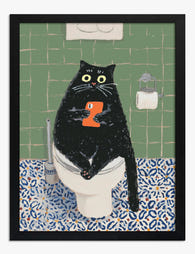
Poster Schwarze Katze auf Toilette mit orangefarbenem Telefon
Translation missing: de.products.product.sale_price Ab CHF 16.00CHF 22.00 -

Poster Tägliche Badezimmer-Rituale – Line Art
Translation missing: de.products.product.sale_price Ab CHF 16.00CHF 22.00 -

Poster Badezimmer-Spruch in Schwarz-Weiß – Typografie
Translation missing: de.products.product.sale_price Ab CHF 16.00CHF 22.00 -

Poster Tiger in der Badewanne
Translation missing: de.products.product.sale_price Ab CHF 16.00CHF 22.00 -

Poster Schwarze Katze beim Lesen im Bad
Translation missing: de.products.product.sale_price Ab CHF 16.00CHF 22.00 -
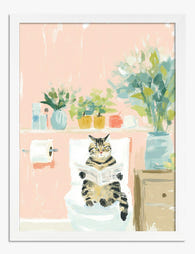
Poster getigerte Katze auf der Toilette mit Zeitung
Translation missing: de.products.product.sale_price Ab CHF 16.00CHF 22.00 -

Leinwandbild Schwarze Katze im Badezimmer – witziges Motiv
Translation missing: de.products.product.sale_price Ab CHF 61.00CHF 87.00 -

Poster Klassischer Leitfaden für Badezimmerregeln
Translation missing: de.products.product.sale_price Ab CHF 16.00CHF 22.00 -
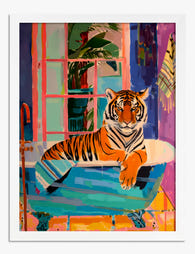
Poster Tiger in der Badewanne
Translation missing: de.products.product.sale_price Ab CHF 16.00CHF 22.00 -

Poster Schwarze Katze im Bad – spielt mit Toilettenpapier
Translation missing: de.products.product.sale_price Ab CHF 16.00CHF 22.00 -

Leinwandbild Lesende Katze auf der Toilette
Translation missing: de.products.product.sale_price Ab CHF 61.00CHF 87.00 -

Leinwandbild Otter mit Toilettenpapier – Humor fürs Bad, schwarzweiß
Translation missing: de.products.product.sale_price Ab CHF 61.00CHF 87.00 -
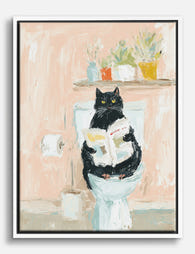
Leinwandbild witzige schwarze Katze beim Lesen auf der Toilette
Translation missing: de.products.product.sale_price Ab CHF 61.00CHF 87.00 -

Poster schwarze Katze im Schaumbad mit üppigem Grün
Translation missing: de.products.product.sale_price Ab CHF 16.00CHF 22.00 -
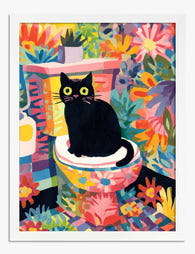
Poster Schwarze Katze auf Toilette zwischen bunten Blumen
Translation missing: de.products.product.sale_price Ab CHF 16.00CHF 22.00 -
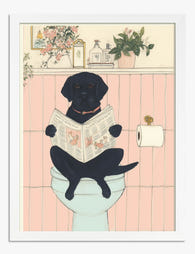
Poster Schwarzer Hund mit Zeitung auf der Toilette
Translation missing: de.products.product.sale_price Ab CHF 16.00CHF 22.00 -
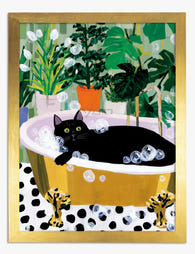
Poster Schwarze Katze in goldener Badewanne
Translation missing: de.products.product.sale_price Ab CHF 16.00CHF 22.00 -
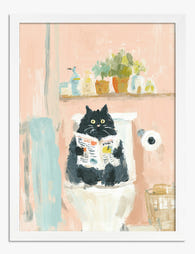
Poster Schwarze Katze beim Lesen auf der Toilette
Translation missing: de.products.product.sale_price Ab CHF 16.00CHF 22.00


Mehr aus The Frame

Art for Green Walls: What Works, What Fights
You painted the walls green. Maybe sage, maybe forest, maybe something in between. Now the room feels half-finished and the art you owned before suddenly looks wrong against it. Green...

What to Put in a Stairwell: The Hardest Wall in...
Stairwells are the wall everyone postpones. The ceiling is too high, the angle is wrong, the lighting is bad, and every nail hole feels like a permanent mistake on a...

Art at the Top and Bottom of a Staircase
Staircases are the most overlooked walls in the house. They are also the trickiest, because the top of the stairs, the bottom of the stairs, and the landing in between...