
 Heute bestellen, Lieferung bis
 Poster vs Art Print: Why the Difference Matters More Than You Think
The cheap poster on your wall might be costing you more than you think, and we have the maths to prove it.


Walk into any home and you can usually tell within seconds whether the art on the walls is a poster or a proper print. The difference isn't snobbery, it's physical. Paper, ink, framing, and longevity all add up to something you feel in the room, and something you pay for over time whether you realise it or not.
What most people mean when they say 'poster' (and why it's usually the wrong word)
"Poster" gets used as a catch-all for anything flat and printed that goes on a wall. In reality it describes a specific product: thin paper, dye-based inks, mass-produced in large runs, designed to be cheap and disposable. Think gig posters, film promos, and the rolled-up tubes you bought as a student.
An art print is a different object. It's printed using a giclée process (more on that below), on heavier archival paper, with pigment inks that don't fade for decades. The fact that retailers blur these terms in product listings is one of the reasons shoppers end up disappointed when their "art print" arrives looking suspiciously thin.
The difference between poster and print isn't marketing fluff. It's the difference between something that lasts six months in a sunny room and something your kids could inherit.

Paper weight and texture: why it changes everything about how art looks on your wall
Paper weight is measured in GSM (grams per square metre). Most posters land between 90 and 200 GSM. Proper art prints sit between 250 and 400 GSM. That's not a small gap. A 200 GSM poster feels like the cover of a glossy magazine. A 310 GSM matte art print feels like something between thick card and soft fabric.
Why does this matter on your wall? Three reasons.
It hangs flat. Lightweight poster paper curls at the edges as it absorbs moisture from the air, especially in bathrooms, kitchens, and humid coastal climates. Heavier paper resists this. If you've ever seen a poster lift away from its frame at the corners, you've seen GSM in action.
It catches light differently. Cheap poster paper is usually semi-gloss, which means glare. You'll see your ceiling light reflected in the print from across the room. A thick matte paper absorbs light, so the colours stay rich and the image stays readable from any angle. This is why galleries almost universally use matte stock.
It looks expensive up close. A heavy uncoated paper has texture you can feel and see. The shadows in a portrait have depth. Skies in landscapes feel atmospheric rather than flat. This is one of the reasons our art prints are made on thick matte paper using giclée printing: the detail rewards close inspection rather than disappearing under reflections.
The shorthand: if you can't find the GSM mentioned in a product listing, assume it's low.
Ink quality and fade resistance: the hidden cost of cheap posters
Posters are typically printed with dye-based inks on commercial offset presses. Dye inks are vibrant on day one and start fading within months in direct sunlight. You've seen this. The poster in the south-facing window that's gone slightly pink. The blues that have shifted to green. The blacks that look grey.
Giclée prints use pigment-based inks that are rated to last hundreds of years without noticeable fading, even in direct sunlight. The pigment particles are physically larger and bond differently to the paper, which is why museums and galleries standardised on this process.
Then there's acid migration. Cheap poster paper isn't acid-free, and the acid in the pulp slowly attacks the print itself. The first sign is yellowing along the edges, usually within 12 to 24 months. After that the discolouration creeps inward. Archival art prints are made on acid-free, FSC-certified paper specifically to prevent this.
So when someone asks how long do posters last compared to art prints, the honest answer is: a poster might look great for a year and tired by year three. A quality giclée print on archival paper will outlive you.
Framing a poster vs buying a framed art print (the maths and the hassle)
This is the part nobody talks about, and it's where the real money hides.
A poster on its own looks like a poster. To make it look like art, you need a frame, and because poster paper curls and fades, you really need glazing (glass or acrylic) to protect it. Here's the actual cost over five years for a 50x70cm wall piece.
Cheap poster route:
- Poster: £15
- Mid-range frame with glass: £45
- Replacement poster after 2 years (faded/curled): £15
- Time spent reframing, flattening, swapping: a Saturday afternoon you won't get back
Total over 5 years: roughly £75, plus you're on your second print and it still doesn't look quite right.
Quality art print route:
- Framed giclée art print, ready to hang: £85 to £120 depending on size
- Replacement: none needed
Total over 5 years: roughly £100, and it still looks the same as the day it arrived.
The poster only "wins" on day one. By year three it's costing more, looking worse, and demanding more of your time. This is what we mean by hidden cost. Poster prints for sale at £8 to £15 are advertising a starting price, not a finished price.
There's also the framing process itself. Posters arrive rolled, which means hours flattening them under heavy books before they'll sit flat in a frame. Even then, the thin paper often warps once humidity changes. Our framed art prints ship pre-fitted in solid FSC wood frames with UV-protective acrylic glaze, fixtures already attached. You hang it and you're done.

When a basic poster is genuinely fine (and when it's not)
We're not going to pretend posters have no place. They do. Being honest about this is more useful than pretending every wall in your house deserves museum-grade printing.
Posters are fine for:
- Short-term rentals. If you're moving in 12 months, a £10 poster taped to the wall is a sensible choice.
- Kids' rooms that change every six months. Tastes shift fast. Don't invest in something they'll have outgrown by Christmas.
- Garages, sheds, utility rooms. Spaces where humidity, dust, and temperature swings will destroy anything regardless of quality.
- Seasonal or event decor. Halloween prints, birthday displays, Christmas posters. Disposable by design.
- Testing a style before committing. A poster mockup of a piece you're considering can tell you if the size and palette work in your room before you buy the proper version.
Posters are not fine for:
- The lounge. The bedroom. The hallway. Anywhere you actually live and have guests.
- Sunny rooms. Fading will start within months and you'll be replacing it before you've finished paying off the frame.
- Humid rooms (bathrooms, kitchens). The paper will curl and the inks will run.
- Anything you want to keep for more than two years.
Are posters good for wall art in general? Sometimes, in specific contexts. Are they good for the room you spend most of your time in? Almost never.
What to look for when you buy poster prints online
Online listings are deliberately vague because vagueness sells. Here's how to read between the lines.
Check the GSM. If it's not listed, ask. Anything under 200 GSM is a poster regardless of what the listing calls it. 250 GSM and up starts to count as art print territory.
Look for "giclée" or "pigment ink." These are the words that matter. "High-quality printing" means nothing. "Vibrant colours" means nothing. Giclée and pigment are technical terms with specific meanings.
Check for "acid-free" or "archival." This tells you the paper won't yellow. If it's not mentioned, assume it will.
Look at the paper finish. Matte stays readable from any angle. Semi-gloss and gloss create reflection problems unless you're hanging the print somewhere with very controlled lighting.
Check the frame material if buying framed. Solid wood lasts. MDF and plastic-veneered frames warp, chip, and look cheap within a year. Our frames are made from solid FSC-certified wood for this reason.
Read the shipping description. "Frame and print shipped separately" is a red flag. You'll be assembling it yourself, often badly, and the print will likely arrive creased. A properly made framed art print ships in one box, fitted, ready to hang.
Ignore stock photos and look for customer photos. Sellers will photograph anything to look gallery-grade. Real customers in real rooms will tell you the truth.

A note on giclée, since everyone uses the word
Giclée (pronounced "zhee-clay") is a high-resolution inkjet printing process that uses pigment inks and very fine nozzles to produce prints with the detail and colour depth of original artwork. It's the standard for galleries, museums, and serious art retailers.
The word gets misused. Some sellers slap "giclée-style" on listings that are actually offset-printed posters. Others print on glossy photo paper and call it giclée. Real giclée means pigment inks, archival paper, and a high-resolution machine. If a seller can't tell you the printer model or the ink type, be sceptical.
The environmental angle nobody mentions
A poster that lasts two years is a poster that ends up in landfill, replaced by another poster, replaced by another. Multiply that across millions of households. The cheap-fast-disposable cycle that fashion has been criticised for applies to wall art too, just more quietly.
A single quality print on FSC-certified paper, made with water-based inks, framed in solid sustainable wood, is one object that lasts for decades. The environmental maths sits alongside the financial maths. Buying once, properly, is almost always the lower-impact choice.
Our recommendation: where to invest and where to save
The smart approach is hybrid. You don't need every wall in your house to be museum-grade.
Invest in the rooms you live in. The lounge, the main bedroom, the entry hallway. These are the walls you and your guests see every day for years. One or two well-chosen framed art prints here will completely change the feel of your home and still look the same in a decade.
Save on the rotational stuff. Seasonal pieces, kids' room art that needs swapping, temporary rentals, places where humidity will kill anything anyway. A poster-style print makes sense here, and you won't feel guilty replacing it.
Don't try to make a poster look like an art print. Spending £60 on a frame and glass to dress up a £10 poster is the worst of both worlds. You've spent art-print money and still have a poster underneath.
Buy fewer, better pieces. Three considered prints in a room beat eight cheap ones. Walls have more impact when they're not crowded.

The short version
If you're choosing between a poster and an art print for a wall you actually care about, the maths almost always favours the print. Lower total cost over five years, less hassle, no fading, no curling, no replacing. The poster wins on day one and loses every day after.
For everywhere else, posters are still useful. Just buy them knowing what they are, and don't spend art-print money trying to dress them up. The clearest sign of a confident room is art that's been chosen properly and left alone to do its job.

In diesem Blog vorgestellte Fab-Produkte
-

Leinwandbild Vintage-Ausstellungsplakat mit weißen Blumen
Translation missing: de.products.product.sale_price Ab CHF 61.00CHF 88.00 -

Poster Retro-Radrennen – Dynamische Rennfahrer in Rot und Gelb
Translation missing: de.products.product.sale_price Ab CHF 16.00CHF 22.00 -

Poster Saint-Tropez – moderne Côte-d’Azur-Grafik in Blau
Translation missing: de.products.product.sale_price Ab CHF 16.00CHF 22.00 -

Poster Fahrradrennen im Vintage-Stil mit Jugendstil-Bordüre
Translation missing: de.products.product.sale_price Ab CHF 16.00CHF 22.00 -

Poster/Leinwandbild Jeder Schritt zählt – Sneaker
Translation missing: de.products.product.sale_price Ab CHF 61.00CHF 88.00 -

Leinwandbild Vintage-Radrennen mit floraler Bordüre
Translation missing: de.products.product.sale_price Ab CHF 61.00CHF 88.00 -

Poster Rose mit japanischer Retro-Typografie
Translation missing: de.products.product.sale_price Ab CHF 16.00CHF 22.00 -

Poster Adler Planetarium – Himmlisches Drama, Mid-Century Vintage
Translation missing: de.products.product.sale_price Ab CHF 16.00CHF 22.00 -

Poster Bedeutungsvolle Verbindungen – Handschriftliches Zitat
Translation missing: de.products.product.sale_price Ab CHF 16.00CHF 22.00 -
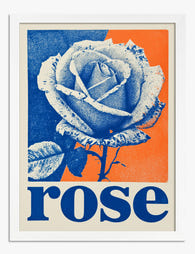
Poster Pop-Art-Rose in Blau und Orange
Translation missing: de.products.product.sale_price Ab CHF 16.00CHF 22.00 -

Poster Balance Glow – Farbiger Halbmond in Rosé, Gold & Grün
Translation missing: de.products.product.sale_price Ab CHF 16.00CHF 22.00 -

Poster/Leinwandbild Capri-Sonnenuntergang – grafische Wellen
Translation missing: de.products.product.sale_price Ab CHF 61.00CHF 88.00 -
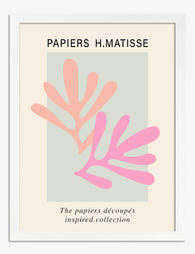
Poster Rosa Cut-Out im Matisse-Stil
Translation missing: de.products.product.sale_price Ab CHF 16.00CHF 22.00 -

Poster Leuchtende Discokugel in Orange – Pop-Art
Translation missing: de.products.product.sale_price Ab CHF 16.00CHF 22.00 -

Poster Pfirsich-Pop aus Nizza
Translation missing: de.products.product.sale_price Ab CHF 16.00CHF 22.00 -

Poster Pfirsich im Retro-Pop-Stil
Translation missing: de.products.product.sale_price Ab CHF 16.00CHF 22.00 -

Poster Verspielter Pfirsich
Translation missing: de.products.product.sale_price Ab CHF 16.00CHF 22.00


Mehr aus The Frame

You're Overthinking Your Arts and Crafts Galler...
Most gallery wall advice assumes you're working with clean, simple imagery. Photographs. Line drawings. Quiet little prints with breathing room baked in. Arts and Crafts prints are the opposite of...

Watercolor Painting Styles Explained: From Bota...
A quick primer on why watercolour looks the way it does Watercolour behaves unlike any other medium. Pigment suspended in water, applied to absorbent paper, with the artist controlling roughly...

What Gallerists Know About Framing Watercolour ...
Watercolour is the most delicate medium in your home, and most people frame it like a poster. The result is fading, warping, condensation rings, and paper fused to glass within...