
 Lächeln garantiert
 Heute bestellen, Lieferung bis
 How to Style Feminine Wall Art Without Overdoing It
Specific pairing formulas, frame rules, and room scenarios for using florals, figures, and pastels without going full Pinterest board.


You love the soft palettes, the figurative line drawings, the abstract florals. You also don't want your living room to read like a teenager's mood board. This guide is for people who want feminine art to be part of the story, not the entire plot.
The 'too matchy' trap and how to avoid it
The most common mistake with feminine art is treating it as an aesthetic to commit to rather than a tone to introduce. You buy one blush abstract, love it, then buy three more in the same palette. Six months later your lounge looks like a hotel suite designed by an algorithm.
Theme overload happens when every piece on your wall shares the same subject, palette, and mood. The eye has nowhere to land because nothing contrasts. A room with five floral prints in dusty pink doesn't feel curated, it feels coordinated, and coordinated is the enemy of interesting.
The fix is a ratio rule. For every two feminine pieces (florals, figures, pastels, soft abstracts), introduce one piece that fights back: a black and white photograph, a graphic typographic print, an architectural line drawing, a moody abstract. The ratio doesn't have to be exact, but the principle holds. Softness needs structure to read as deliberate.
If you're starting from scratch and nervous about commitment, try the single anchor strategy. Pick one larger feminine piece, hang it somewhere prominent, and build the rest of the room around it with more neutral, graphic, or eclectic art. One feminine statement reads as taste. Five reads as a theme.

Balancing feminine prints with graphic, architectural, or abstract art
The trick to mixing feminine art with other styles is understanding what each style brings to a wall. Feminine pieces tend to be soft, organic, and emotional. Graphic and architectural prints bring line, edge, and rhythm. Abstract art bridges the two, depending on the palette.
Some pairings that consistently work:
Floral + architectural line drawing. A loose painterly bouquet next to a clean ink drawing of a Parisian balcony or Brutalist building. The botanical softness reads as more intentional when it's sitting next to something engineered.
Figurative nude + bold typography. A delicate Matisse-style line figure paired with a graphic word print or poster. The contrast between organic body lines and rigid letterforms creates tension you can actually feel.
Pastel abstract + black and white photography. A blush and cream abstract beside a moody street photograph or portrait. The photograph anchors the softness in something real.
Floral still life + geometric abstract. A vase of peonies next to a hard-edged colour block print. Different centuries, different sensibilities, but they share enough palette DNA to belong together.
The rule of thumb: one floral or figurative piece needs at least one linear, graphic, or high-contrast piece nearby to balance it. If you're browsing abstract art prints to bring in that contrast, look for pieces with strong shapes or limited palettes rather than more soft swirls.
Building a gallery wall with feminine art as the anchor
A gallery wall lets you have feminine art without it dominating the room. The key is treating one feminine piece as the anchor and letting the rest of the wall do the supporting work.
The proportions
Your anchor piece should be the largest. For most living rooms and bedrooms, that means 60x80cm or 70x100cm. Hang it slightly off-centre rather than dead middle, then build outward with smaller pieces in varying orientations.
A good gallery wall has roughly 5-7 pieces. Of those, no more than two or three should read as overtly feminine. The rest should be doing different jobs: a black and white photograph, an architectural print, a small abstract, a piece of vintage botanical illustration, a typographic print. You want range.
The placement strategy
Start with the anchor on the floor. Lay out the surrounding pieces around it, leaving 5-7cm gaps between frames. The shape you're aiming for is a loose rectangle or organic cluster, not a perfect grid. Grids feel corporate. Clusters feel collected.
Mix orientations deliberately. If your anchor is portrait, surround it with a mix of landscape and small square pieces. Repeating the same orientation makes a wall read as wallpaper.
The 'collected over coordinated' test
Before you commit to your layout, ask yourself three questions:
- Could a stranger guess this was bought all at once? If yes, it's too coordinated.
- Does at least one piece feel slightly out of place? If no, you've over-edited.
- Is there a single piece your eye returns to? That's your anchor doing its job.
If you're shopping for a coordinated starting point that still allows room for personality, wall art sets give you a base trio you can build out from with one or two contrasting pieces over time.

Frame consistency: why matching frames let your subjects do the talking
When you're mixing subject matter aggressively, the frames need to calm everything down. A wall with a floral, a portrait, a building, and an abstract is already doing a lot of visual work. If those four pieces are also in four different frame finishes, the wall stops looking like a gallery and starts looking like a charity shop window.
The simple rule: pick one frame finish for the whole wall and stick with it.
Three finishes that work for almost any feminine art:
Natural oak. Warm, modern, and forgiving. Pairs well with soft palettes without sweetening them further. The best all-rounder for figurative and floral work.
Black. Sharp, gallery-like, and grown-up. Black frames are the fastest way to make pretty art look serious. If you're worried about a piece reading as too sweet, frame it in black.
White. Clean and quiet, best for rooms that already have a lot going on with textiles, plants, or pattern. White frames let the art breathe but can feel a bit minimal in sparse rooms.
What to avoid: gold or ornate frames on already-feminine subjects unless you're committing fully to a maximalist look. A gilded frame on a pastel floral pushes the whole thing into territory that's hard to live with.
The other thing matching frames solve is build quality. The biggest issue with framed prints generally is warping, gaps between print and mount, or frames that arrive separately from the print and need assembling. Fab's framed prints arrive in one piece, properly fitted, in solid FSC wood with a UV-protective acrylic glaze that won't fade in direct sunlight. That last part matters more than people realise: a sunny lounge will fade a poorly printed piece within a year.
Colour theory shortcuts for pairing feminine prints with your room
Forget colour wheels. Here are the only rules you actually need.
Pull one accent and repeat it. Look at your feminine print. Find the second or third most prominent colour in it (not the dominant one). Repeat that colour somewhere else in the room: a cushion, a vase, a graphic print on the same wall. This makes the piece feel like it belongs without making it the centre of a colour scheme.
Let the wall colour do half the work. Feminine art looks best on walls that aren't competing for the same softness. Sage green, deep terracotta, charcoal, warm putty, and dusty olive all flatter pastel and floral work better than white or pale pink. A blush print on a blush wall disappears. A blush print on a sage wall sings.
The 60/30/10 trick for mixed walls. If your gallery wall has multiple pieces, aim for one dominant palette family across roughly 60 per cent of the pieces, a secondary palette across 30 per cent, and a wildcard accent across 10 per cent. This is how galleries hang shows. It works at home too.
Black and white is always the answer. When in doubt, add a black and white piece. It cools down anything too sweet, anchors anything too floaty, and makes everything around it look more deliberate.
For feminine art prints specifically, the colours that almost always pair well with surrounding decor are: warm cream, terracotta, sage, charcoal, and rust. These read as adult versions of soft palettes.
Three room scenarios styled from scratch
The living room: feminine without being precious
Start with a single large feminine anchor above the sofa. A 70x100cm abstract floral or figurative piece, framed in natural oak. Either side, hang two smaller pieces that contrast: a black and white architectural photograph on one side, a small geometric abstract on the other.
Below the art, the sofa should be a non-feminine colour. Charcoal, olive, cognac leather, or oatmeal bouclé all work. Throw cushions can pull pinks or rusts from the print, but no more than two cushions in those tones. The rest should be neutral or contrasting.
Add a piece of structural furniture nearby: a black metal floor lamp, a marble-topped side table, a wooden bench. The room needs hard edges to make the soft art read as deliberate.
For more inspiration on building this kind of layered wall, the living room wall art collection is a useful starting point.

The bedroom: where you can lean softer
Bedrooms can carry more feminine weight than other rooms because the function of the space is rest. A bed wall with three feminine pieces (a figurative, a floral abstract, and a soft photograph) works here in a way it wouldn't in a lounge.
Hang them in a horizontal triptych above the bed at 60x80cm each, all in matching natural oak frames. Keep bedding in cream, white, or stone linen. Add one piece of dark wood furniture (a bedside table, a chest of drawers) to ground the softness.
The mistake people make in bedrooms is matching the bedding to the art. If your art is blush and cream, your bedding should not also be blush and cream. Pick contrasting linen or a deeper, moodier shade.
The home office or hallway: where structure wins
In a workspace, lean heavier on graphic and architectural pieces and use feminine art sparingly. One feminine piece in a cluster of four or five graphic prints reads as a personal touch rather than a theme. Reverse the ratio here: one feminine to two or three graphic.
Hallways are the same. The narrow space doesn't give the eye time to take in a busy floral. A single feminine piece at the end of a corridor, with graphic black and white pieces leading up to it, creates a satisfying visual journey.
Common mistakes and how to fix them
Mistake: Everything in pastels.
Fix: Add one piece with deep saturated colour or strong black. A single moody piece anchors a pastel wall.
Mistake: All pieces the same size.
Fix: Vary the scale. One large anchor, two medium, two or three small. Same-size pieces in a row look like a furniture catalogue.
Mistake: Mismatched frame finishes.
Fix: Pick one finish and stick to it across the whole wall. If you've already bought mismatched frames, swap them all to natural oak or black.
Mistake: Theme creep into the rest of the room.
Fix: Stop styling. If your art is feminine, your cushions, candles, vases, and bedding should not all also be feminine. Let one element carry the tone.
Mistake: Hanging too high.
Fix: The centre of your art (or the centre of a gallery wall cluster) should sit at roughly 145-150cm from the floor. Most people hang 10-15cm too high.
Mistake: Buying everything at once.
Fix: Build slowly. The best walls come together over months. If you're buying in one go, leave space for one or two pieces you'll add later.
The goal isn't to make a feminine room. It's to make a room that has range, depth, and personality, with feminine art as one voice in the conversation. Get the ratio right, keep the frames consistent, and trust contrast. The rest takes care of itself.


In diesem Blog vorgestellte Fab-Produkte
-

Poster Muse im grünen Streifenkleid mit Blume
Translation missing: de.products.product.sale_price Ab CHF 16.00CHF 22.00 -

Poster Gestreifte Anmut – Frau mit Blüte
Translation missing: de.products.product.sale_price Ab CHF 16.00CHF 22.00 -

Poster Feminines Modeporträt, inspiriert von Matisse
Translation missing: de.products.product.sale_price Ab CHF 16.00CHF 22.00 -

Poster Feminine Eleganz – Frau mit Früchten und Blumen
Translation missing: de.products.product.sale_price Ab CHF 16.00CHF 22.00 -

Poster Sitzende Frau im Matisse-Stil in Beige und Rosa
Translation missing: de.products.product.sale_price Ab CHF 16.00CHF 22.00 -

Poster Mode-Muse mit Streifen und floralen Akzenten
Translation missing: de.products.product.sale_price Ab CHF 16.00CHF 22.00 -

Poster Frau im üppigen Blumenmantel
Translation missing: de.products.product.sale_price Ab CHF 16.00CHF 22.00 -

Poster Elegante Balance – Line Art in Schwarz-Weiß
Translation missing: de.products.product.sale_price Ab CHF 16.00CHF 22.00 -

Leinwandbild Botanischer Chic – Frau im pfirsichgemusterten Kleid
Translation missing: de.products.product.sale_price Ab CHF 61.00CHF 87.00 -

Leinwandbild minimalistische Frau – Einlinienzeichnung in Rosé und Blau
Translation missing: de.products.product.sale_price Ab CHF 61.00CHF 87.00 -

Poster Porträt einer modernen Muse in Rosa und Weiß
Translation missing: de.products.product.sale_price Ab CHF 16.00CHF 22.00 -
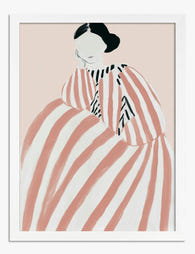
Poster Gestreifte Eleganz – Porträt
Translation missing: de.products.product.sale_price Ab CHF 16.00CHF 22.00 -

Poster Soft Harmony Minimal – Abstrakt in Beige und Weiß
Translation missing: de.products.product.sale_price Ab CHF 16.00CHF 22.00 -

Poster Muse in grünem Kleid mit Streifen
Translation missing: de.products.product.sale_price Ab CHF 16.00CHF 22.00


Mehr aus The Frame

Poster Decorating Ideas That Actually Make a Ro...
A room with bare walls feels unfinished even when the furniture is perfect. Posters are the fastest, cheapest, lowest-commitment way to fix that. This is a guide to using them...

Building an Italy Gallery Wall: The 3-5-7 Rule ...
Most people buy Italy prints the wrong way. They fall in love with a Venice canal, then a Tuscan hillside, then a Rome archway, and end up with a dozen...

Minimalist Beach Decor Ideas That Actually Work...
Coastal style has a branding problem. Somewhere between holiday cottages and gift shops, it picked up a reputation for being twee, themed, and slightly past it. The good news is...