
 Heute bestellen, Lieferung bis
 The Complete Guide to Cat Wall Art Gallery Displays
How to build a cat-themed gallery wall that looks curated and confident, not like a feline fan club tribute.


Cat art has a reputation problem. Done badly, it tips into novelty territory fast. Done well, it's one of the most charming and personal things you can put on a wall, and the difference comes down to how you arrange it.
This guide walks through the actual process: layout, count, framing, spacing, and the mistakes that send a lovely collection of prints straight into kitsch. Cat art as the subject, gallery wall craft as the discipline.
Start with the layout: grid, row, or salon hang?
Before you order a single print, decide your layout. The arrangement shapes everything else, including how many prints you need and what frames will work.
The grid
A grid is a tidy arrangement of identically sized prints in equal rows and columns, usually 2x2, 3x2, or 3x3. It feels architectural and modern, which is useful when your cat art leans whimsical or vintage. The grid imposes order on subject matter that might otherwise feel soft.
Grids work brilliantly with line drawings, minimalist portraits, or a series of breed studies. They're less forgiving with mixed styles, because the symmetry draws the eye to every difference.
The row
A horizontal or vertical row of three to five prints is the most underused gallery wall layout, and probably the easiest to get right. Above a console, sofa, or bedhead, a row of three prints reads as deliberate. Up a staircase, a vertical row that follows the stair angle does the same.
Rows reward restraint. Pick prints that share a tone or palette and let the repetition do the work.
The salon hang
A salon hang is the organic, asymmetric arrangement where prints of different sizes cluster together with consistent spacing. This is where most people go wrong, because it looks effortless and isn't.
Salon hangs are forgiving of mixed styles but unforgiving of mixed framing. If you want to combine a vintage Le Chat Noir poster with a modern line drawing and a moody black cat photograph, this is the layout that lets you do it. Just commit to a single frame finish across the whole wall.

How many prints you actually need (spoiler: fewer than you think)
The single biggest mistake in cat-themed gallery walls is volume. Once you start collecting cat prints, it's tempting to keep going, and the wall starts to feel less like a curated display and more like a tribute.
Here's a sensible rule of thumb based on wall size:
- Small wall (under 1.5 metres wide): 3 to 5 prints
- Medium wall (1.5 to 2.5 metres wide): 5 to 7 prints
- Statement wall (2.5 metres or wider): 9 to 12 prints maximum
Notice the cap. Beyond twelve, even a large wall starts to feel cluttered, and the eye has nowhere to rest. Negative space is part of the design, not wasted real estate.
If you're nervous, start with fewer than you think you need. You can always add a print later. Removing one means filling a hole.
The anchor piece principle
Every good gallery wall has an anchor: one print that's larger than the others or visually dominant, around which everything else orbits. For a cat-themed display, the anchor is usually a single 50x70cm or 70x100cm print. A bold portrait, a striking vintage poster, or a moody photographic study works well.
Choose the anchor first. Place it slightly off-centre on your wall (rarely dead centre) and build outwards. Smaller prints in 30x40cm or 40x50cm sizes fill in around it.
Mixing cat art styles without it looking random
Cat art comes in wildly different registers. Vintage Parisian posters, Egyptian-inspired silhouettes, modern minimalist line drawings, soft watercolours, bold pop art portraits. Mixing them is possible, but it needs a thread.
The thread is almost always colour palette. Pick two or three colours that appear in every print, even if the styles are completely different. A black-and-cream line drawing, a sepia vintage poster, and a charcoal photographic print all share a neutral palette and will sit together happily. A neon pop-art cat will not, no matter how much you love it.
If you want variety, try this combination:
- One vintage or illustrative piece (the personality)
- One minimalist line drawing or simple silhouette (the calm)
- One photographic or painterly portrait (the depth)
Repeat that triad in different sizes if you're working with six or nine prints. The eye reads it as a considered mix rather than a random pile.
You can also break up the cat-only theme with neutral additions. A botanical print, a mountain landscape, or a typographic piece in the same palette stops the wall from feeling one-note. Browse the broader animals collection for prints that pair well with cat art without competing for attention.
Why consistent framing matters more than matching prints
This is the single most important point in this guide, and it's the one most people miss.
When you mix art styles, your eye needs something to hold the arrangement together. That something is the frame. Consistent framing across wildly different prints reads as intentional. Mismatched framing across perfectly coordinated prints reads as chaotic.
Pick one frame finish for the entire wall. Options that work for cat art:
- Black solid wood: sharpens illustrations, makes vintage posters feel modern
- Natural oak: softens bold prints, warms up monochrome work
- White: gallery-clean, best for line drawings and pastel palettes
Frame quality matters too. Cheap frames warp, especially in hallways and staircases where temperature shifts. Look for solid wood (not MDF or veneer) and acrylic glazing rather than glass, because acrylic doesn't shatter on a stairwell, doesn't reflect glare under hallway lights, and won't fade the print over time. Fab's framed prints arrive ready to hang with the print already fitted properly inside the frame, so you skip the standard gallery-wall headache of frames and prints arriving separately and not quite fitting.
If you're working to a budget, the "uniform frames, varied art" approach is the smartest move you can make. Cheaper prints in identical good frames will always beat expensive prints in mismatched frames.

Spacing, alignment, and hanging height
Spacing is where good intentions go to die. Too tight and the wall feels cramped. Too loose and the prints stop reading as a group.
The 5 to 8 cm rule
Keep 5 to 8 cm (roughly 2 to 3 inches) between frames. This is the sweet spot for almost every gallery wall. Less than 5 cm and frames feel crowded. More than 8 cm and they drift apart visually.
For a strict grid, keep the spacing identical on every side. For a salon hang, aim for consistent spacing as the goal, even if the prints are different sizes. The eye forgives slight variation but notices wild inconsistency.
Hanging height
The centre of your gallery wall, not the centre of any individual print, should sit at roughly 145 to 150 cm from the floor. This is gallery standard and works for both UK and US ceiling heights.
Two adjustments:
- Above furniture: the bottom edge of the lowest print should sit 15 to 25 cm above the top of the sofa, console, or headboard. Closer than that feels cramped, further apart and the art floats.
- Hallways and staircases: raise the centre line slightly because you view from further back, but follow the stair angle (more on that below).
The mock-up step nobody does
Before you put a single nail in the wall, lay your prints out on the floor in the arrangement you want. Better still, cut paper templates the exact size of each frame, tape them to the wall with masking tape, and live with them for a day. Move them around. Photograph the wall and check the photo, because the camera flattens the arrangement and shows what your eye glosses over.
This step takes thirty minutes and saves you from twenty extra holes in the plaster.
The hallway and staircase gallery wall
Hallways and staircases are the most underused walls in a home, and they happen to be ideal for cat art. The reason is intimacy. You walk past these walls slowly, often alone, and the small details of a print reward close viewing in a way they don't in a busy living room.
Hallway strategy
Long, narrow hallways suit horizontal rows or two-row stacked grids. Keep the arrangement narrower than the wall, with at least 30 cm of breathing room on either side. Lighting matters here: hallways are often dim, so prints with strong contrast and bold composition work better than subtle washes.
Staircase strategy
Staircase galleries follow the angle of the stairs. Imagine an invisible diagonal line running parallel to the banister at about 145 cm above each step. The centre of each frame sits on that line.
Spacing between frames stays at 5 to 8 cm, measured perpendicular to the diagonal, not horizontally. A staircase usually fits four to seven prints depending on length, and works best with a vertical orientation for the prints themselves.
For both spaces, framed prints with acrylic glazing rather than glass are the safer choice, especially on stairs where a knock or vibration can crack glass.
Cat art in different rooms
A bedroom gallery is softer than a living room one. Calmer colours, sleepier subjects, lower contrast. Watercolour cats, line drawings, and quiet photographic studies suit a bedroom wall above the bed, ideally arranged in a row of three or a 2x2 grid. Browse the bedroom art prints collection for tonal inspiration.
Living rooms can take more energy and bigger pieces. A single statement print at 70x100cm above the sofa often beats a busy gallery, and pairs well with two smaller prints flanking a fireplace or shelf.
Home offices are where playful or graphic cat art comes into its own. A bold pop-art portrait or a quirky vintage poster keeps the room from feeling corporate.
For a curated browse focused entirely on feline subjects across styles, the cat collection is the place to start. If you'd rather skip the curation step entirely, pre-paired wall art sets come designed to hang together and remove the colour-matching guesswork.

Avoiding the biggest gallery wall mistakes
Most cat-themed gallery walls fail in predictable ways. Knowing them in advance means you can dodge them.
Hanging too high. The most common mistake by a wide margin. If the centre of your arrangement is above eye level, lower it. 145 to 150 cm to centre, every time.
Spacing too wide. When prints sit 15 cm apart, they stop reading as a group. Tighten to 5 to 8 cm.
Mixed frame finishes. Three black frames, two oak, one white. The eye snags on every transition. Pick one finish.
Too many prints. Twelve is a ceiling, not a target. If your wall feels busy, remove one print and look again.
Theme overload. Twelve cats, all cats, only cats. Break it up with one or two non-cat prints in the same palette. The cats actually feel more special when they're not the only thing on the wall.
Clashing palettes. A bright pop-art cat next to a sepia vintage poster next to a pastel watercolour. Pick a palette and stick to it, even at the cost of a print you love.
Skipping the mock-up. Thirty minutes with masking tape saves a wall full of unnecessary holes.

A final note
A cat gallery wall works when it stops being about cats and starts being about composition. Pick a layout. Cap the count. Match the frames. Mind the spacing. Mock it up before you hammer.
Do those five things and the cats take care of themselves.

In diesem Blog vorgestellte Fab-Produkte
-

Leinwandbild Neugierige Katzen vor rosafarbener Tür
Translation missing: de.products.product.sale_price Ab CHF 61.00CHF 87.00 -

Poster Statement-Piece für Katzenliebhaber
Translation missing: de.products.product.sale_price Ab CHF 16.00CHF 22.00 -

Leinwandbild Sonnige Stufen mit Katzen
Translation missing: de.products.product.sale_price Ab CHF 61.00CHF 87.00 -

Poster Treffen im Katzencafé
Translation missing: de.products.product.sale_price Ab CHF 16.00CHF 22.00 -

Poster Zwölf verspielte Katzen mit Persönlichkeit
Translation missing: de.products.product.sale_price Ab CHF 16.00CHF 22.00 -

Leinwandbild Pinke Katze – Statement für Katzenliebhaber
Translation missing: de.products.product.sale_price Ab CHF 61.00CHF 87.00 -

Poster buntes Katzenensemble in Pastell
Translation missing: de.products.product.sale_price Ab CHF 16.00CHF 22.00 -

Poster/Leinwandbild Statement für Katzenliebhaber
Translation missing: de.products.product.sale_price Ab CHF 61.00CHF 87.00 -

Poster Statement für Katzenliebhaber mit Handlettering
Translation missing: de.products.product.sale_price Ab CHF 16.00CHF 22.00 -

Poster Sonnige Oase mit Katze
Translation missing: de.products.product.sale_price Ab CHF 16.00CHF 22.00 -

Leinwandbild schwarz-weiße Katze im blauen Zimmer
Translation missing: de.products.product.sale_price Ab CHF 61.00CHF 87.00 -

Leinwandbild Schwarze Katze bei Kaffee & Kuchen im Café
Translation missing: de.products.product.sale_price Ab CHF 61.00CHF 87.00 -

Poster Neugierige Katzen – Humor fürs Badezimmer
Translation missing: de.products.product.sale_price Ab CHF 16.00CHF 22.00 -

Leinwandbild Rosa Katze – Statement für Katzenfans
Translation missing: de.products.product.sale_price Ab CHF 61.00CHF 87.00 -

Leinwandbild Verspielte Katze im floralen Mantel
Translation missing: de.products.product.sale_price Ab CHF 61.00CHF 87.00 -
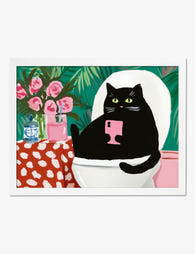
Poster Schwarze Katze mit rosa Telefon im tropischen Look
Translation missing: de.products.product.sale_price Ab CHF 16.00CHF 22.00 -

Leinwandbild Acht neugierige Katzen im Kreis
Translation missing: de.products.product.sale_price Ab CHF 61.00CHF 87.00 -

Leinwandbild Schwarze Katze – Zustimmung erforderlich
Translation missing: de.products.product.sale_price Ab CHF 61.00CHF 87.00 -

Poster Kusama-inspirierte Katzen-Traumlandschaft
Translation missing: de.products.product.sale_price Ab CHF 16.00CHF 22.00 -

Poster Gemütliches Katzenquartett
Translation missing: de.products.product.sale_price Ab CHF 16.00CHF 22.00


Mehr aus The Frame

From Victorian Textiles to Your Wall: The Story...
The fox has been hiding in plain sight for over 150 years, slipping from Victorian tapestries to wallpapers to the walls of your living room. Its appeal isn't accidental. Understanding...

What Interior Stylists Know About Botanical Win...
Botanical window art is a specific subgenre: prints that frame foliage, flowers, or garden scenes as if viewed through a real window. Styled well, it borrows light, adds depth, and...

Living Room Botanical Prints: The Right Way to ...
Botanical prints are one of the most forgiving categories of wall art to choose, and one of the easiest to ruin with bad framing. A warped frame, the wrong glazing,...