
 Smiles Guaranteed
 Order today for delivery by
Framed vs Unframed Prints: Which Should You Actually Buy?
The honest guide to choosing between framed and unframed prints, including the framing pitfalls that quietly destroy art.


Most articles on framed vs unframed prints treat it as a style question. It isn't. It's a quality question, a longevity question, and increasingly a money question, because cheap framing can ruin a good print faster than no framing at all. Here's what to actually look for, when each option makes sense, and where the hidden costs hide.
The real difference between framed and unframed prints (beyond the obvious)
The obvious difference is presentation. A framed print arrives finished, ready to hang, and looks polished the moment it goes on the wall. An unframed print is just the paper, posted in a tube, waiting for you to do something with it.
The less obvious difference is protection. A framed print, if it's framed properly, is sealed against dust, humidity, UV light, and the slow chemical decay that fades and yellows paper over time. An unframed print pinned to a wall has none of that. It will age, and depending on your room, it can age fast.
There's also a structural difference people underestimate. Paper wants to curl. Heat, sunlight, and humidity all encourage it. A good frame holds the print flat against an acid-free backing so it stays crisp for decades. A bad frame, or no frame, lets the paper move, ripple, and eventually warp.
So the real question isn't "framed or unframed." It's "what level of framing, and is it worth doing properly?"

Why cheap framing ruins good art: warping, bubbling, and UV damage
Here's the thing nobody selling cheap frames will tell you: a £15 high street frame will visibly damage a quality print within a year or two. The mechanisms are predictable.
Acid migration. Cheap frames use cardboard backing and non-archival mounts. Cardboard contains lignin, which slowly releases acidic compounds that yellow the paper from behind. You'll see it first as a brownish tint creeping in from the edges.
UV fading. Standard glass blocks almost no ultraviolet light. If your print sits anywhere near a window, the inks will start to shift within a year. Reds go first, then yellows. Eventually you're left with a faded, blue-cast version of what you bought.
Humidity warping. Thin MDF or plastic frames flex with humidity. The print, pressed against glass with no spacer, picks up condensation. That's where bubbling and rippling come from. Bathrooms and kitchens are the worst offenders, but any UK home with seasonal damp will see it.
Glass-to-print contact. Conservation framing always uses a mat or spacer to keep the paper off the glazing. Cheap frames skip this. When the print touches glass directly and humidity rises, the ink can stick to the glass. Try peeling that apart and you'll lose the artwork.
Sub-standard mounting. Regular tape, masking tape, or worse, glue, will yellow and damage the paper permanently. Archival mounting uses pH-neutral hinges or corners that can be removed without trace.
None of this is theoretical. It's the predictable outcome of pairing a good print with bad materials. Which is why the choice isn't really framed vs unframed, it's quality framed vs everything else.
When unframed prints actually make sense
Unframed isn't a compromise. There are situations where it's genuinely the right call.
Large statement pieces in modern spaces. A 70x100cm print pinned with bulldog clips or hung from a simple wooden hanger has a deliberately raw, gallery-studio feel that suits minimalist and industrial interiors. Adding a frame can make it feel fussy.
Rotating displays. If you like changing your art every few months, unframed prints are easier to swap, store flat, and post between homes. Frames are a commitment.
Rentals and temporary setups. Sometimes you want art on the wall without drilling for heavy frames. A few small unframed prints attached with removable adhesive strips give you a finished look with zero damage.
Gallery walls in progress. If you're building a collection over time, starting unframed lets you experiment with arrangement before committing to frames that match.
Canvas prints, full stop. Canvas is its own category. A hand-stretched canvas over a solid wooden frame is already a finished object. Adding a separate picture frame around it is optional and usually unnecessary.
What unframed doesn't suit: small prints (under A3, they look unfinished without a frame), formal rooms, prints in direct sunlight, anything in a humid room, or anywhere a print might get bumped, splashed, or breathed on by a curious dog.
For inspiration on where unframed pieces work, our art prints collection shows pieces in both formats so you can see the difference in context.
What to look for in a quality framed print (materials, glazing, fitting)
If you're buying a ready-framed print online, here's the checklist. These are the specs that separate framing that protects art from framing that quietly destroys it.
Frame material
Solid wood, ideally FSC-certified. Real wood is dimensionally stable, holds fixings properly, and ages well. Avoid anything described as "wood-effect," "wood composite," or unspecified. MDF and veneered fibreboard warp with humidity and crumble at the corners over time.
Glazing
UV-protective acrylic is the modern standard, and it beats glass on every metric except scratch resistance. It blocks the ultraviolet wavelengths that fade inks, weighs a fraction of glass, and won't shatter into the artwork if the frame falls. Our framed art prints all use UV-protective acrylic glazing for exactly this reason.
Glass is fine if it's specified as conservation or museum glass. Standard "picture frame glass" offers no UV protection at all.
Backing and mounting
Acid-free, lignin-free backing board. The print should be mounted with archival hinges or corners, not taped down with packing tape. If a retailer can't tell you what their backing is made of, assume it's cardboard.
Fitting and finish
The print should sit flat, square, and evenly within the frame. No gaps, no visible adhesive, no creases. The fixings should be pre-attached so it arrives ready to hang. The most common failure in this category is frames that ship separately from prints and require self-assembly, which is where warping and bubbling start.
The shipping test
A well-made framed print arrives in one box, properly packed, with the print already fitted. If a retailer ships the frame and print separately for you to assemble, that's a red flag. It usually means they're using flat-pack components and you're doing the (skilled) job of fitting it yourself.

Framed prints for different rooms: living room, bedroom, hallway
Different rooms have different demands. Here's how we'd think about each.
Living room
The living room is your most-seen, most-judged wall. Go framed. A polished frame elevates the whole room and signals that the art is intentional rather than incidental.
Black or natural oak frames are the most flexible. White frames work in lighter, Scandi-leaning rooms but can look stark against bold colours. Size matters here: a single piece above a sofa should span roughly two-thirds of the sofa's width. So for a standard 3-seater (around 200cm wide), you're looking at a 100x70cm or 70x100cm framed print.
Browse living room art prints for pieces sized and styled with this room in mind.
Bedroom
Bedrooms can go either way, but framing is usually worth it. The bedroom is where you want softness, calm, and a finished feel, all of which framing supports. Pairs and triptychs work especially well above beds.
Above a standard double bed, a pair of 50x70cm framed prints, hung 5-10cm apart, gives more presence than a single small piece. Our bedroom art prints collection has plenty of pairings designed to work together.
Hallway
Hallways are high-traffic, often narrow, and prone to bumps and brushes. Framed every time. Acrylic glazing matters more here than anywhere else because hallways take more knocks, and acrylic won't shatter if the frame gets caught by a passing coat or a school bag.
Smaller pieces grouped as a gallery wall work better in hallways than one large statement piece, because you rarely have the standing distance to take a big print in.
Kitchens and bathrooms
Frames matter most in humid rooms. Solid wood frames with sealed backing and acrylic glazing handle moisture far better than thin MDF frames with cardboard backing. Canvas prints are the other strong option for these rooms because there's no glazing to fog and the stretched canvas handles humidity well.
The hidden cost of framing it yourself vs buying ready to hang
People often assume DIY framing is cheaper. Let's actually run the numbers, because the reality is messier than it looks.
Cheap high street frame: £15-40. You get plastic or thin MDF, standard non-UV glass or thin acrylic, cardboard backing, and no archival mounting. As covered above, this is the option that actively damages your print over time. Cost-per-year is misleading because the print itself degrades.
Decent off-the-shelf wooden frame with mat: £40-90. Real wood, often acid-free mat, sometimes UV-protective glazing. You'll need to fit the print yourself, which means mounting it cleanly, cutting any custom mat, and assembling without trapping dust between print and glazing. Achievable, but it takes time and you'll likely make mistakes on the first one.
Custom professional framing: £150-400+ for a typical print. You get conservation materials, perfect fit, expert mounting, and a frame matched to the piece. The quality is excellent. The price reflects bench time, custom mat cutting, and shop overheads.
Quality ready-to-hang framed print online: £60-180 depending on size. The economics work because the framing happens at scale, on the same line as the printing, with the print sized exactly to the frame. Done well, it matches the conservation standards of custom framing for a fraction of the cost.
The hidden costs of DIY: the time you'll spend, the trips to buy materials, the mistakes that ruin a print, and the fact that off-the-shelf frame sizes rarely match your print exactly, so you're either trimming the print (sometimes losing image) or living with awkward white margins.
The catch with ready-to-hang is that quality varies wildly. Some online retailers use the same cheap components as high street frames, then add a markup. The questions to ask before buying: is the frame solid wood, is the glazing UV-protective, is the backing acid-free, and does it ship pre-fitted in one box?

Our recommendation: when to go framed every time
We'll take a position. For most people, in most homes, framed is the right answer. Here's where we'd say go framed without hesitation:
- Any paper print under 50x70cm. Smaller pieces look unfinished unframed. The frame gives them weight and presence.
- Anything in a room with direct sunlight. UV-protective glazing is the only thing standing between your inks and slow-motion fading.
- Anything in a humid room. Bathrooms, kitchens, anywhere with seasonal damp. A sealed frame protects against warping and bubbling.
- Sentimental or one-of-one pieces. If you'd be upset to lose it, frame it.
- Formal rooms and high-traffic areas. Living rooms, dining rooms, hallways. Framing reads as intentional. Unframed in these spaces can read as unfinished.
- Gifts. A framed print is a finished object. An unframed print is homework.
Where unframed is genuinely fine: large canvases (which are already finished objects), oversized paper prints in deliberately minimal modern spaces, rotating displays, and rentals where frames feel like overcommitment.

The shortcut: if you're buying a print you actually love, in a size under 70x100cm, for a room you spend real time in, buy it framed. Buy it from somewhere that uses solid wood, UV-protective acrylic, acid-free backing, and ships it pre-fitted in one box. That's the version of framed that protects your art instead of slowly destroying it, and it's the version worth paying for.

Fab products featured in this blog
-

Unbothered Elegance Art Print
Translation missing: en.products.product.sale_price From €17,95€29,95 -

Meaningful Connections Art Print
Translation missing: en.products.product.sale_price From €17,95€29,95 -

Sunlit Green Window Art Print
Translation missing: en.products.product.sale_price From €16,95€23,95 -

Sunlit Forest Pathway Art Print
Translation missing: en.products.product.sale_price From €16,95€23,95 -
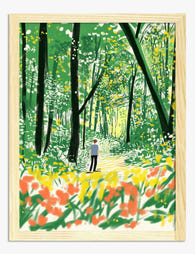
Sunlit Forest Stroll Art Print
Translation missing: en.products.product.sale_price From €17,95€29,95 -

Wrapped in Calm Art Print
Translation missing: en.products.product.sale_price From €17,95€29,95 -

Striped Reflection Art Print
Translation missing: en.products.product.sale_price From €17,95€29,95 -

Canopy Perspective Art Print
Translation missing: en.products.product.sale_price From €16,95€23,95 -

Greatest Project Quote Canvas Print
Translation missing: en.products.product.sale_price From €64,95€107,95 -

Needed When Younger Quote Canvas Print
Translation missing: en.products.product.sale_price From €64,95€107,95 -

Tranquil Blue Canopy Art Print
Translation missing: en.products.product.sale_price From €17,95€29,95 -

Bold Yeah Typography Canvas Print
Translation missing: en.products.product.sale_price From €64,95€107,95 -

Uphill Adventure Canvas Print
Translation missing: en.products.product.sale_price From €64,95€107,95 -

Needed When Younger Quote Art Print
Translation missing: en.products.product.sale_price From €17,95€29,95 -

Effortlessly Elegant Canvas Print
Translation missing: en.products.product.sale_price From €64,95€107,95 -

Fresh Finds, Everyday Joy Art Print
Translation missing: en.products.product.sale_price From €16,95€23,95 -

Travel Makes You Richer Canvas Print
Translation missing: en.products.product.sale_price From €64,95€107,95 -

Bold Confidence Quote Canvas Print
Translation missing: en.products.product.sale_price From €64,95€107,95


More from The Frame

How to Build a Gallery Wall With People Art Pri...
Putting one portrait on a wall is easy. Putting six on the same wall, all staring out at you and your dinner guests, is where things get awkward. This is...

How to Build a Gallery Wall with Watercolor Cit...
You love watercolour cityscapes, but you've seen the gallery walls where Paris, Tokyo and New York fight each other for attention like postcards on a fridge. The problem isn't the...

How to Build a French-Themed Gallery Wall That ...
A French-themed gallery wall can go one of two ways: refined Left Bank apartment, or first-year student dorm with a beret problem. The difference is not the prints you choose....