
 Bestel vandaag, levering vóór
 What Colours Go with Floral Prints? Pairings That Interior Designers Swear By
The designer's trick for matching florals to your walls, plus the exact paint shades, fabrics, and frame finishes that actually work.


Most floral art looks beautiful on screen and then lands awkwardly in your actual room. The fix isn't more neutral walls or playing it safer with your art choice. It's understanding which colour to pull from the print, because the dominant bloom is rarely the one that ties the room together.
The one rule: pull a secondary colour from the print, not the dominant one
Look at any floral print you love and you'll see three or four colours doing the heavy lifting. There's the dominant petal colour (the blush rose, the burnt-orange poppy, the indigo iris), there's the foliage, and then there are the quieter accents: a stem in ochre, a shadow in plum, a leaf vein in dusty teal.
The mistake almost everyone makes is matching their walls, sofa, or cushions to the dominant flower. Blush florals get paired with blush walls. Sage botanicals get plonked against sage paint. The result is flat, washed out, and weirdly amateur looking, because there's no contrast to make the print feel like art.
The professional move is to pull a secondary colour from the print and let that drive your room palette. A blush peony print with cognac leaves looks ten times more sophisticated against tobacco-coloured velvet than against blush walls. A sage botanical with a thin band of mustard at the base of the stems comes alive when there's a mustard throw on the bed.
Squint at your print. The colour you spot third or fourth is your palette key.

Soft florals: blush, cream, and sage pairings that don't go flat
Soft florals are the trickiest to style because the instinct is to surround them with more softness. Don't. Pastels next to pastels read as nursery, not grown-up.
Blush and dusty pink florals want grounding, not echoing. Pair them with walls in Farrow & Ball Setting Plaster (a warm, slightly clay-toned pink that has backbone), or go in the opposite direction with a deep charcoal like Farrow & Ball Down Pipe. For fabrics, cognac leather, oatmeal linen, and ink-blue velvet all flatter blush far better than another pink. Add a brass picture light above the print and the whole thing reads expensive.
Cream and ivory florals need contrast or they disappear into the wall. Try walls in a warm mid-tone like Little Greene's Rolling Fog, or even a soft black like Bone Black for high-drama bedrooms. Pair with raw linen, aged oak, and matte black hardware. Avoid pure white walls behind cream florals unless you want the print to vanish.
Sage and eucalyptus florals are the most forgiving but also the most often ruined by being placed against sage walls. Instead, try walls in a warm off-white like Farrow & Ball School House White, or a putty tone like Skimming Stone. For furniture, cane, rattan, light oak, and unbleached linen all work. If you want more drama, terracotta tiles or a rust-coloured rug picks up the warm undertone in most sage botanicals.
If you're decorating a calmer space, our bedroom wall art collection has soft floral options that work beautifully with this palette logic.
Bold florals: how to anchor red, orange, and magenta without clashing
Bold florals scare people. They shouldn't. The trick is to give them a heavy, quiet anchor so the colour reads as confident rather than chaotic.
Red and crimson florals (think old Dutch master tulips, vintage rose botanicals) belong against deep, moody backgrounds. Walls in Farrow & Ball Railings, Hague Blue, or a warm aubergine like Pelt let the reds glow. On lighter walls, anchor with chocolate brown furniture, oxblood leather, or a heavy walnut sideboard. Avoid pairing red florals with pink or coral, the temperature war makes both look cheap.
Orange and terracotta florals are the easiest bold colour to live with because they read warm and earthy. Pair with cream walls (Farrow & Ball Tallow, Slipper Satin), walnut wood, rust velvet, and unbleached linen. For a more contemporary look, try walls in a deep olive like Treron with cognac leather and brass.
Magenta, fuchsia, and hot pink florals are the trickiest because they're cool-toned and saturated. They need cool grounding: charcoal grey walls, slate, or even a deep emerald. Avoid warm woods and beige. Instead, lean into black metal, pewter, and ice-blue accents. A magenta print on a charcoal wall with a black frame is one of the chicest looks you can pull off.
The 60-30-10 rule helps here: 60% of your room should be your dominant neutral (walls and large furniture), 30% a secondary tone (sofa, rug, curtains), and 10% the accent colour pulled from your floral. Bold florals shouldn't try to be more than 10%.

Dark botanicals: the richest pairings in the game
Dark florals on navy, emerald, or near-black backgrounds are having a moment, and for good reason. They're the most flexible colour family in the botanical art prints world because their depth reads as a neutral.
Navy botanicals look stunning against warm whites (Farrow & Ball Wevet, Strong White), but they truly come alive against caramel and cognac. A navy floral above a tan leather chair with a cream bouclé throw is a near-foolproof combination. For contrast, pair with brass hardware, walnut shelving, and a vintage rug with rust and ochre tones. Avoid placing navy florals on blue walls, the print will lose all its punch.
Emerald and forest green botanicals love being surrounded by warm, earthy tones. Walls in a clay tone like Farrow & Ball Jitney, or a soft pink like Pink Ground, both let the green sing without competing. Pair with terracotta, aged brass, and natural wood. If you want a more masculine read, try chocolate brown walls (Tanner's Brown) with black-framed emerald botanicals.
Black background florals (think moody Dutch still life prints) are the most dramatic option and the easiest to style. They work against almost any wall colour because the black grounds them automatically. Cream walls, deep red walls, even bright white walls all work. The print becomes the punctuation mark of the room.
For dark botanicals, frame choice matters more than usual. A wide black wood frame doubles down on the drama. A thin brass or warm wood frame softens the print and lets it read as more of a feature than a statement.
Neutrals: how warm whites, stone, and linen let floral art do the talking
If your room is genuinely neutral (which most rooms are), florals are the easiest way to introduce colour without committing to coloured walls or new furniture.
The trick with neutrals is knowing your undertone. Warm neutrals (cream, oatmeal, stone, mushroom) flatter florals with yellow, orange, red, or warm pink undertones. Cool neutrals (true grey, taupe, greige with a blue base) flatter florals with magenta, blue, purple, or true white backgrounds.
Pair a warm neutral wall like Farrow & Ball Joa's White or Little Greene's China Clay with terracotta, peach, or buttery yellow florals. Pair a cool neutral like Cornforth White with cool blush, lavender, or icy-toned florals.
The biggest mistake on neutral walls is hanging a print that's also predominantly neutral. A cream floral on a cream wall is invisible. Either pick a print with strong colour saturation, or commit to a confident frame finish (deep walnut, black, or warm brass) so the framed piece has presence even when the print itself is soft.
This is also where size matters. On a neutral wall, go bigger than you think. A 70x100cm framed print or a 100x150cm canvas reads as intentional. Anything smaller floats and looks like an afterthought.
Frame colour as part of your palette, not an afterthought
Most guides treat frame choice as a binary: black or natural wood. That's missing about half the conversation.
A frame is roughly 10% of the visual weight of your hung piece, which means it functions exactly like the accent colour in your 60-30-10 split. Choose it deliberately.
Black frames are the safest contemporary choice and work with almost any floral colour family. They sharpen soft florals, anchor bold ones, and look architectural against both white walls and dark walls. The downside: black can feel heavy in a small room, and it can clash with warm-toned florals that would prefer a softer frame.
Natural oak and warm wood frames soften everything. They're the right choice for sage, cream, terracotta, and dusty botanical palettes. They look beautiful with linen, cane, and unfinished wood furniture. They can look flat against ultra-modern interiors.
White frames are underrated. On a coloured or wallpapered wall, a white frame creates a clean mat-like border that lets the print breathe. On a white wall, they disappear (sometimes that's what you want).
Brass and metallic frames are the most overlooked option. A thin brass frame around a blush, navy, or emerald print elevates it instantly. Brass also picks up on hardware (drawer pulls, lamp bases, curtain rods) in a way that ties a room together without you having to think about it.
A useful test: photograph the print on your wall with each frame option in different colours using a mockup app before you order. If you're committing to a 70x100cm framed piece, ten minutes of testing saves you a lot of regret. Our framed prints arrive ready to hang with the print properly fitted into a solid FSC wood frame, so you're not dealing with the usual horror of warped boards or frames shipped separately.

Three real room setups with specific floral print recommendations
Generic advice only gets you so far. Here are three real scenarios and the exact direction we'd take.
A living room with grey walls and a charcoal sofa
You're working with a cool, modern base, which means warm floral art will give you the biggest visual reward. Look at large-scale botanical prints with cognac, mustard, or rust accents. A 70x100cm framed print in a thin brass or warm walnut frame, hung above the sofa with a 15-20cm gap, instantly warms the room.
Add a single cognac leather pouffe or a rust velvet cushion to echo the print's secondary colour. Skip more grey accents, you already have enough.
A bedroom with white walls and oak furniture
This is the easiest scenario and the one where people most often pick the wrong art. Don't go cream or beige, you'll get lost. Instead, go for navy botanicals, deep emerald florals, or moody dark backgrounds.
A pair of 50x70cm framed prints in black wood, hung side by side above an oak chest of drawers, creates instant gallery-bedroom energy. For something softer, a single 100x70cm landscape-format canvas with a dusty pink and sage palette works against oak beautifully.
A kitchen-diner with sage green cabinets and terracotta tiles
You've already done the hard styling work, so your art needs to confirm the palette rather than introduce a new one. Look for floral prints that contain both sage and terracotta, or warm botanical prints with rust, ochre, and cream tones.
Avoid anything with magenta, cool pink, or icy blues. They'll fight the warmth. A canvas works particularly well in a kitchen because there's no acrylic glaze to catch overhead light, and canvas handles humidity better than a framed print would.
If you're starting from scratch on the art side, our floral art prints and abstract art prints collections both have options that work across these palettes.
A few quick truths to take with you
Pull the secondary colour from your print and build your accents around it. Ground soft florals with something darker or richer, never with more pastel. Treat your frame as 10% of your colour palette, not a default. Test before you commit, especially at larger sizes.
And if the print you love doesn't fit your current room? It's almost always cheaper to swap a cushion, a throw, or a lampshade than to talk yourself out of art you actually want.


Fab-producten in dit blog
-

Poster abstracte bloemen op blushroze achtergrond
Translation missing: nl.products.product.sale_price Vanaf €16,95€22,95 -

Canvas paarse bloemen op beige achtergrond
Translation missing: nl.products.product.sale_price Vanaf €64,95€91,95 -

Poster zachtroze en bordeaux bloemen
Translation missing: nl.products.product.sale_price Vanaf €16,95€22,95 -
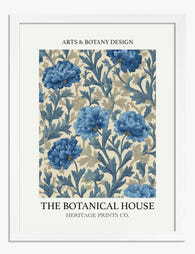
Poster blauwe botanische bloemen
Translation missing: nl.products.product.sale_price Vanaf €16,95€22,95 -

Poster paarse botanische vintage bloemen
Translation missing: nl.products.product.sale_price Vanaf €16,95€22,95 -

Poster zachtroze tulpenpaar met blauwe bloemenrand
Translation missing: nl.products.product.sale_price Vanaf €16,95€22,95 -

Poster blushroze en blauwe bloesems
Translation missing: nl.products.product.sale_price Vanaf €16,95€22,95 -

Canvas vrouw met bloemenjas en rode handtas
Translation missing: nl.products.product.sale_price Vanaf €64,95€91,95 -

Canvas grafische bloemen in blauw en poederroze
Translation missing: nl.products.product.sale_price Vanaf €64,95€91,95 -

Canvas paarse vintage bloemen
Translation missing: nl.products.product.sale_price Vanaf €64,95€91,95 -

Poster twee witte bloemen op oudroze achtergrond
Translation missing: nl.products.product.sale_price Vanaf €16,95€22,95 -

Canvas bloemen in zacht rood en blauw
Translation missing: nl.products.product.sale_price Vanaf €64,95€91,95 -

Canvas bordeaux en poederroze bloemen
Translation missing: nl.products.product.sale_price Vanaf €64,95€91,95 -

Poster klassieke blauwe bloemen
Translation missing: nl.products.product.sale_price Vanaf €16,95€22,95 -

Canvas zachtroze bloemblaadjes duo
Translation missing: nl.products.product.sale_price Vanaf €64,95€91,95 -

Canvas pioenrozen op pruimpaars met vintage charme
Translation missing: nl.products.product.sale_price Vanaf €64,95€91,95 -

Poster vintage tuinbloemen
Translation missing: nl.products.product.sale_price Vanaf €16,95€22,95 -

Poster kleurrijke bloemensymfonie
Translation missing: nl.products.product.sale_price Vanaf €16,95€22,95 -

Canvas blauwe botanische klassieker
Translation missing: nl.products.product.sale_price Vanaf €64,95€91,95 -
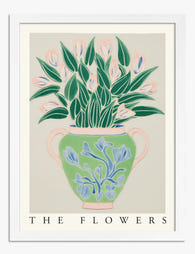
Poster botanische vaas met bloemen
Translation missing: nl.products.product.sale_price Vanaf €16,95€22,95


Meer van The Frame

Botanical Prints vs. Floral Art: What's the Dif...
If you've searched for "botanical art prints" and ended up scrolling through everything from Victorian fern studies to neon abstract peonies, you're not imagining the chaos. The two categories get...

Modern Floral Prints That Don't Look Dated: 7 S...
Floral prints have a reputation problem. Mention them to anyone under 40 and they picture chintz curtains, peach watercolour bouquets in oval frames, or those identical rose prints that haunted...

The Best Flower Prints for Every Room in Your H...
Flowers are one of the few subjects that work in almost any interior, which is exactly why most flower prints end up feeling forgettable. The trick is matching the style,...