
 Order today for delivery by
 Art That Works with Patterned Wallpaper
A pattern-by-pattern decoder for choosing art that holds its own against bold, busy, beautiful wallpaper.


Patterned wallpaper is having a proper moment, and the question that comes next is always the same: what on earth do you hang on it? The honest answer is that almost any art can work, but only if you match it to the pattern type first. Forget generic "keep it simple" advice, this is a guide that starts by identifying what's actually on your walls.
Start by identifying your wallpaper type
Before you think about art, you need to name what you're working with. Generic pairing advice fails because a tight geometric grid behaves nothing like a sprawling botanical mural. Here are the six categories that cover most patterned wallpaper, and how each one wants to be treated.
Geometric patterns
Hexagons, grids, chevrons, scallops, anything with repeated mathematical shapes. These patterns are rhythmic and predictable, which means they pair surprisingly well with organic, irregular art. Think botanical illustrations, abstract expressionist pieces, or loose figurative work.
The trick is to introduce a different kind of energy. If the wallpaper is all straight lines, give it curves. We'd suggest a single statement piece at around 60x80cm rather than a gallery wall, because geometric patterns already create their own grid and a multi-piece arrangement will fight it.
Florals (small to medium scale)
Ditsy florals, scattered botanicals, the kind of paper you'd find in a country cottage bedroom. These read as texture from a distance, which is actually a gift. You can hang almost anything on small-scale floral wallpaper as long as it has clear edges and a strong frame.
Black and white photography works beautifully here. So does bold modern abstract work, line drawings, and architectural prints. The contrast between fussy pattern and clean modern art is what makes the room feel collected rather than themed.
Large-scale florals and botanicals
Oversized peonies, tropical leaves, mural-style botanicals. These are essentially art themselves, which is why people freeze when it comes to adding more. The rule we follow: don't compete on subject matter. No floral art on floral wallpaper. No leafy prints on a leafy mural.
Instead, go abstract or figurative. A single large portrait, a piece of abstract colour-field work, or a moody landscape will sit confidently against big botanicals without trying to out-bloom them.

Damask and toile
These are the most traditional patterns and the most decorative. Damask repeats are formal and symmetrical. Toile tells little narrative scenes. Both have a strong period feel.
You have two routes. Lean in with classical art (portraits, still lifes, architectural etchings) and you'll get a proper Old World room. Or contrast hard with contemporary work, neon-tinged abstracts, modern photography, pop art, and let the friction do the talking. What doesn't work is the middle ground. Generic "pretty" prints get swallowed.
Abstract and painterly wallpaper
Watercolour washes, brushstroke patterns, marbled effects. These are tricky because they already feel like art. The best pairing is something with clear structure: architectural photography, graphic typography, geometric prints, or figurative drawings with strong outlines.
You're looking for shape and edge against a wall that has neither. A crisp black and white print against a soft watercolour wallpaper is one of the most reliably good pairings in this whole category.
Scenic and mural wallpapers
Chinoiserie, panoramic landscapes, full-wall illustrations. The hot take: often you shouldn't hang anything at all. The wallpaper is the art. If you must, keep it small (30x40cm or under), keep it framed simply, and place it in a spot where it acts as a footnote, above a console table, beside a doorway, never centred on the main wall.
The negative space rule
Every piece of art on patterned wallpaper needs a buffer of calm around it. Without it, the eye can't tell where the pattern ends and the art begins.
A working guideline: leave at least 15cm of clear wallpaper around the outside of the frame on all sides. For larger art at 70x100cm or above, push that to 20cm. If you can't achieve that, the piece is too big for the wall, or you need a wider mat inside the frame to create internal breathing room.
This is also why mats matter more on patterned walls. A 5cm white mat inside the frame buys you another layer of separation between print and pattern, and stops the two from blurring into each other.
The inverse scale principle
Match the scale of your art inversely to the scale of the pattern. Big patterns want big art. Small patterns give you more flexibility.
Specifically:
- Small-scale patterns (repeats under 10cm): art from 40x50cm up to 70x100cm all work. You have room to play with gallery walls and groupings.
- Medium-scale patterns (repeats 10-25cm): aim for a single piece at 50x70cm or 60x80cm, or a tight pair.
- Large-scale patterns (repeats over 25cm): go big or go home. One statement piece at 70x100cm or a large canvas at 100x150cm. Anything smaller looks like a postage stamp.
Gallery walls work brilliantly on small-scale patterns and almost never on large-scale ones. If you love the gallery wall look but have bold paper, save it for a different room.
Colour strategy: pull or contrast
There are only two colour strategies that reliably work, and you need to pick one.
Colour pulling
Choose art that contains one or two colours already present in the wallpaper. Not all of them, just one or two. If your paper is sage green and cream with a hint of terracotta, find a print with terracotta as a hero colour. The shared note ties everything together without making the room feel matchy.
This is the safer route and the one we'd recommend if you're nervous. It almost always works.
Strategic contrast
Pick a colour that sits opposite the wallpaper's dominant tone on the colour wheel. Blush pink wallpaper takes deep forest green art. Navy wallpaper takes mustard or rust. Sage takes plum or burnt orange.
This route is bolder and more rewarding when it lands. The risk is that "contrast" turns into "clash" if the contrasting colour is too thin or too bright. Stick to muted, saturated tones rather than primary brights.
What doesn't work: tonal matching where every colour in the art is also in the wallpaper at the same intensity. The art disappears.

Frame selection
The frame is where most pairings go wrong. Here's how to think about it.
White or off-white frames work on busy or dark wallpapers because they create their own border of calm. This is the most universally safe choice and the one we'd default to on anything densely patterned.
Black frames work on light wallpapers with strong graphic patterns. They give you edge and definition. On dark wallpaper, black frames disappear.
Natural wood frames (oak, walnut) suit floral, botanical, and any wallpaper with an organic, earthy palette. They soften the transition between art and pattern.
Ornate gilt frames belong on damask, toile, and chinoiserie. They look ridiculous on geometric or abstract patterns. Don't fight this.
Frames in a colour pulled from the wallpaper can be wonderful but require commitment. A deep green frame on green-toned floral wallpaper, for instance, makes the art feel embedded in the room rather than stuck on top.
The one rule that's non-negotiable: the frame needs to be substantial enough to hold its own. Thin, flimsy frames get visually eaten by busy patterns. Look for frames with at least 2cm of visible width on the front face. Solid wood holds up. Anything thinner reads as an afterthought.
Room by room
Patterned wallpaper behaves differently depending on where it lives.
Powder rooms and cloakrooms
The smallest rooms tolerate the boldest combinations. A tiny windowless loo is the one place we'd genuinely encourage pattern-on-pattern, dark moody walls, a gilt-framed portrait, gallery wall density. Go further than you think you should.
Bedrooms
Calmer is better here, because you have to sleep in it. Stick to colour-pulling rather than contrast, and keep art above the bed simple and horizontal. One wide piece at 60x90cm or 70x100cm tends to work better than a busy grouping.
Dining rooms
Formal patterns (damask, toile, chinoiserie) want formal art (portraits, still lifes, architectural prints). Casual patterns (block prints, abstracts) want casual art. Match the energy.
Hallways and stairwells
These are the best places for gallery walls because you view them in passing rather than dwelling. Even on patterned wallpaper, you can get away with tightly grouped framed prints here if you keep frames consistent and spacing tight (around 5cm between frames).
Living rooms and kitchens
The main thing is sightlines. Stand where you usually sit. If the art and the wallpaper are both in your eyeline competing for attention, scale up the art or simplify the placement.
Test before you commit
Don't drill into wallpaper to find out it doesn't work.
Cut paper templates to the exact size of any frame you're considering and tape them to the wall with low-tack painter's tape. Live with it for 48 hours. Look at it in morning light, evening light, with the lamps on.
For colour testing, order the art first and prop it against the wall on a piece of furniture for a few days before hanging. You'll know within a day whether the pairing has chemistry. Our 99-day returns window exists precisely so you can do this without anxiety. If the piece is wrong, send it back.

Hanging without damaging the wallpaper
The biggest worry people have is wrecking expensive wallpaper. Three techniques worth knowing.
The V-cut method: with a sharp craft knife, make a small V-shaped cut in the wallpaper where the picture hook will go. Peel the V back gently, drive in your hook or nail through the bare plaster, then glue the V flap back down over the fixture. When the art comes down, the cut is invisible.
Picture rails: if your room has them, use them. Modern adhesive picture rail systems exist that mount to the top of the wall and let you hang art on hooks and wire without ever touching the wallpaper itself.
Adhesive hanging strips: these can work on lightweight unframed prints, but we'd avoid them for anything heavier than 2kg. When they fail, they take a strip of wallpaper with them. Not worth the risk for proper art prints you've invested in.
Avoid Command strips on textured, embossed, or delicate hand-printed wallpapers entirely. They will lift the surface when removed.
When it's already not working
If you've hung art and it's fighting the wallpaper, try these in order before giving up.
- Add a wider mat. Reframing with a 5-8cm mat often solves clashing instantly by creating breathing room.
- Switch the frame. White frames rescue more bad pairings than anything else.
- Move it lower. Art hung too high against busy wallpaper feels stranded. Drop it so the centre sits at 145-150cm from the floor.
- Add a picture light. Targeted lighting pulls the art forward and pushes the wallpaper back visually.
- Group it. A single piece struggling alone sometimes works when paired with one or two more in a horizontal line.
The maximalist exception
If you're drawn to pattern-on-pattern and bold layering, ignore most of the rules above. The maximalist approach works when every element commits fully. Patterned wallpaper, ornate frames, oil paintings, mirrors, and sconces stacked together with confidence. The failure mode of maximalism isn't too much, it's half-hearted. Either go all in or pull back to one statement piece. The middle is where rooms go to die.
A final word
The fear around pairing art with patterned wallpaper is overblown. Pick the right scale, leave breathing room, commit to either pulling or contrasting your colours, and choose a frame substantial enough to hold its ground. Then trust your eye. The rooms that feel most alive are almost always the ones where someone took a risk on a pairing that shouldn't have worked, and made it sing anyway.


Fab products featured in this blog
-

Wallflower Pattern by William Morris Art Print
Translation missing: en.products.product.sale_price From £11.95£19.95 -

Patterned Cats Gathering Art Print
Translation missing: en.products.product.sale_price From £13.99£19.99 -

Checkerboard Blooms Art Print
Translation missing: en.products.product.sale_price From £13.99£19.99 -

William Morris Cotton Prints Exhibition Art Print
Translation missing: en.products.product.sale_price From £11.95£19.95 -

Modern Bauhaus Pattern Art Print
Translation missing: en.products.product.sale_price From £11.95£19.95 -

Patterned Ducks & Blooms Art Print
Translation missing: en.products.product.sale_price From £13.99£19.99 -
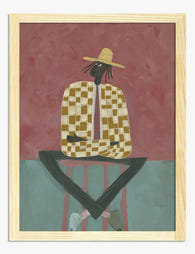
Checkerboard Muse Art Print
Translation missing: en.products.product.sale_price From £11.95£19.95 -

Studies in Botanical Ornament by William Morris Art Print
Translation missing: en.products.product.sale_price From £11.95£19.95 -

Wallflower Pattern by William Morris Canvas Print
Translation missing: en.products.product.sale_price From £44.95£74.95 -

Patchwork Stitch No. 4 Art Print
Translation missing: en.products.product.sale_price From £11.95£19.95 -

Patterned Feline Garden Art Print
Translation missing: en.products.product.sale_price From £13.99£19.99 -

Birds by William Morris Art Print
Translation missing: en.products.product.sale_price From £11.95£19.95 -

Cray by William Morris Art Print
Translation missing: en.products.product.sale_price From £11.95£19.95 -
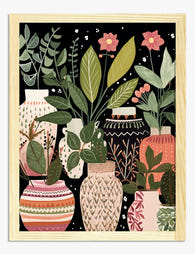
Boho Vases and House Plants Art Print
Translation missing: en.products.product.sale_price From £11.95£19.95 -

Happy Dogs Pattern Art Print
Translation missing: en.products.product.sale_price From £11.95£19.95 -

Stitched Pattern Study Art Print
Translation missing: en.products.product.sale_price From £13.99£19.99 -

Earthy Overlap Art Print
Translation missing: en.products.product.sale_price From £11.95£19.95 -

Espresso for Two on Patterned Tile Art Print
Translation missing: en.products.product.sale_price From £11.95£19.95 -

Studies in Botanical Ornament by William Morris Art Print
Translation missing: en.products.product.sale_price From £11.95£19.95 -

William Morris Studies in Botanical Ornament Art Print
Translation missing: en.products.product.sale_price From £11.95£19.95


More from The Frame

The Bedroom Finishing Guide: Art, Scale, and Light
Most bedrooms get decorated, but very few get finished. The difference is not how much you put on the walls, it is whether the art, the scale of your furniture,...

One Statement Piece Is All Your Living Room Needs
Most blank walls stay blank because the brief feels enormous. You don't actually need a gallery, a grid, or a curated grouping you'll second-guess for six months. You need one...

Art for White Walls: The Hardest Wall to Dress
Everyone tells you white walls are easy. They're not. A white wall hides nothing: every proportion mistake, every cheap frame, every clashing undertone gets magnified because there's no colour to...