


 Order today for delivery by
 Home Art That Reflects You: A Guide to Finding Unique Prints
A systematic guide to finding wall art you'll actually love in five years, not just five minutes.


Most people don't end up with boring wall art because they have boring taste. They end up with it because no one taught them how to recognise what they actually like. This guide is about fixing that, methodically, so the art on your walls feels like yours and stays that way.
Why most people end up with boring wall art (and how to break the cycle)
The default path looks like this. You move into a new place, the walls feel oppressive, you panic, and within a week you've ordered three prints that everyone on Instagram seems to own. Six months later, you don't see them anymore. Twelve months later, you're quietly resenting them.
This happens because choosing art under pressure forces you toward the safe middle. Generic line-drawn faces, the same five botanical silhouettes, motivational typography in beige. None of it is bad exactly, but none of it is yours either. The algorithm rewards what's familiar, and familiar reads as safe when you're standing in an empty room with anxious flatmates or a partner asking when the walls will stop being beige.
The way out is to slow down by about two weeks and replace gut-feel shopping with a small amount of structured observation. You don't need to develop "taste" in some mystical sense. You need to notice what you already respond to and then go find more of it.

Start with the room, not the art: reading your space for clues
Before you open a single shop tab, spend ten minutes in the room you're buying for. Look at what's already there. The undertones in your sofa, the warmth or coolness of your floor, the metals on your door handles, the dominant texture (linen, leather, velvet, wood grain).
Rooms tend to lean either warm (cream, terracotta, oak, brass) or cool (grey, navy, chrome, black ash). Art doesn't need to match, but it should know which conversation it's joining. A piece with a lot of cool blue grey will feel sharp and intentional in a warm room and quietly harmonious in a cool one. Both work. Random doesn't.
Note the light too. South-facing rooms wash everything in warmth and forgive bold colour. North-facing rooms flatten things, so high contrast and confident composition work harder than soft pastels. Bathrooms and kitchens swing humid, which is one practical reason canvas often outperforms framed prints in those rooms (less chance of any moisture issue around glazing).
Finally, identify the wall. Is it the first thing you see when you walk in? The wall you face from the sofa? The narrow strip behind a bed? Each wants something different, and we'll come back to this when we talk about size.
The five questions to ask yourself before you buy anything
Skip the "follow your heart" advice. Hearts are unreliable narrators. Instead, sit down with a notebook or your phone and answer these five questions honestly.
1. What have you saved on Instagram or Pinterest in the last three months? Open your saved folder and look for patterns. Not individual pieces, patterns. Are you saving lots of muted abstracts? Architectural photography? Botanical illustrations with strange colour palettes? Surrealist collage? This is your taste, already mapped, you just haven't read the map.
2. What stops you in hotels, restaurants, or other people's flats? Think about the last time you genuinely paused in front of a piece of art somewhere. What was it doing? Was it the colour, the scale, the subject, the mood? Specificity matters here. "I liked it" is useless. "It was huge and almost entirely one shade of green with a small figure in the bottom corner" is a brief.
3. What do you wear? Your clothing palette is a remarkably accurate predictor of art you'll live with happily. People who wear earthy neutrals tend to bristle at neon. People who love saturated colour in clothing usually find muted prints depressing on their walls. This isn't a rule, it's a tell.
4. What do you want the room to feel like? Calm? Energising? Considered? A bit weird? The feeling you want is more useful than the style you think you should have. "Calm" might lead you to soft abstract washes or quiet landscape photography. "A bit weird" might lead you to surrealist work or unusual portraiture you'd never have searched for directly.
5. Will you still want to look at this in five years? Trends have a sell-by date. If a piece feels exciting because it's everywhere right now, that's a warning sign, not a green light. The test is whether you'd still buy it if no one else had ever heard of it.
Styles worth exploring if you want something genuinely different
If your saved folder is mostly the same five styles everyone else saves, it's worth deliberately wandering further. Some directions that consistently produce more interesting walls.
Abstract work with real texture and intention. Not the beige blob trend, but actual abstract painting reproduced at high quality. Composition, palette, and mark-making vary wildly across abstract art prints, and the category rewards browsing slowly.
Botanical work that isn't the obvious greenery. Vintage scientific illustrations, unusual specimens, dried flower studies, hand-painted ferns with strange colour treatments. The right botanical art prints feel less like decoration and more like a small museum room.
Architectural and graphic photography. Brutalist buildings, empty swimming pools, lone petrol stations, deserted interiors. Strong composition, often quite cinematic, ages well.
Surrealist and collage work. Genuinely distinctive and almost impossible to get bored of because the eye keeps finding new things.
Type-led work that isn't a slogan. Foreign-language posters, vintage event prints, typographic experiments. The trick is avoiding anything that reads like a Pinterest quote.
If you want a curated starting point, our unique art prints collection leans deliberately away from the algorithmic middle.

How to spot quality printing and framing when buying art online
The art market online is full of two very different things sold at similar prices. Properly produced giclée prints on archival paper, and dropshipped poster reproductions printed cheaply and shipped from a warehouse. Knowing the difference saves you money and disappointment.
Green flags:
- The seller specifies the printing method (giclée is the gold standard for fine art reproduction).
- Paper or canvas is described properly: weight, finish, material. "Thick matte paper", "poly-cotton canvas", "FSC-certified" are real signals.
- Inks are mentioned. Pigment-based or archival inks last decades or centuries. Standard dye inks fade in a few years, especially in sunlight.
- Frames are specified as solid wood, not "wood-effect" or unspecified.
- Glazing is acrylic rather than glass for prints over A3 size (lighter, safer, and good acrylic includes UV protection).
- The print and frame ship together, properly fitted. This sounds basic, but a huge amount of online frustration comes from prints arriving separately from frames, with the buyer expected to assemble.
Red flags:
- No information about paper, ink, or printing process.
- Stock-image style listing photos with no real-world scale or detail shots.
- Suspiciously low prices for "original" art (almost certainly a reproduction).
- "Certificate of authenticity" language used for what is clearly a print run. A certificate doesn't make a poster a fine art print.
- Vague delivery information and no clear returns policy.
At Fab, prints are giclée-printed on thick matte paper or poly-cotton canvas, frames are solid FSC-certified wood with UV-protective acrylic glazing, and everything ships in one box ready to hang. We say all of this not to be smug but because these are exactly the details worth checking wherever you buy.
Size matters: a practical guide to scale for every room
Most "trust your eye" advice fails because untrained eyes consistently undershoot. People buy art that's too small, hang it too high, and wonder why the wall looks awkward.
Above furniture (sofas, sideboards, beds, consoles): the art (or the full set, if it's a pair or trio) should be roughly two-thirds to three-quarters of the furniture's width. A 220cm sofa wants art around 150-170cm wide in total. A single 40x50cm print floating above a long sofa is the most common sizing mistake in British living rooms.
Hanging height: centre the piece at roughly 145-150cm from the floor for standalone walls, which puts the middle of the piece at average eye level. Above furniture, leave around 15-20cm between the top of the furniture and the bottom of the frame.
Standalone walls and statement pieces: go bigger than feels comfortable. A 70x100cm or 100x150cm piece on a large wall reads as confident. The same wall with a 40x50cm print reads as undecorated.
Narrow walls and awkward gaps: vertical formats (50x70cm or 70x100cm portrait orientation) are your friend. They draw the eye up and make ceilings feel taller.
Gallery walls and pairs: keep spacing consistent, ideally 5-8cm between frames. Mixing sizes works as long as you maintain a clear underlying grid or alignment (a shared centre line, or shared top or bottom edges). Random arrangement almost never reads as "effortless." It reads as random. Pre-curated wall art sets take the pain out of this if you'd rather not measure.

Building a collection over time vs buying everything at once
The instinct when moving in is to fill every wall in one weekend. Resist it. The walls that feel best in homes you envy are almost always the result of slow accumulation, not a single shopping trip.
Buy the anchor piece first. This is the largest piece in your main room, usually above the sofa or bed. Spend the most here. It sets the temperature for everything else.
Live with it for a month before buying anything else. You'll start to see what the room actually needs, which is rarely what you would have guessed on day one.
Add accent pieces with intent. A second piece in a different room. A small print for the hallway. A vertical for the awkward gap by the kitchen door. Each addition should have a job.
Don't try to match. Cohesion comes from consistent quality, considered framing, and a shared underlying mood, not from buying everything in the same series. A home that looks like a hotel suite is a home no one lives in.
Allow yourself to break your own rules occasionally. The piece you buy on holiday or inherit from a relative or fall for inexplicably is often the one that gives a room its character.
If budget is a real constraint, this approach is also financially sensible. One properly produced anchor piece at 70x100cm beats four cheap prints every time, and you can add to it without regret over years.
Where to start right now
If you're staring at empty walls, here's the sequence that actually works.
Start with the anchor wall in your main living space. Measure it. Note the furniture width below, if any. Decide whether the room runs warm or cool. Then spend an hour, not five minutes, browsing slowly. Save everything that stops you, even if you can't articulate why. Come back the next day and look at your saved list with fresh eyes. The pieces that still feel right are the ones to consider seriously.
For something genuinely distinctive rather than algorithmically familiar, the unique art prints collection is a good place to wander. If you've identified that your taste leans organic and textural, botanical art prints goes deeper than the obvious leafy silhouettes. If you want bold colour and confident composition, abstract art prints is where the best statement pieces live. And if you're filling a larger wall and want something pre-curated, wall art sets takes the guesswork out of pairing.

The art on your walls should make you feel something specific every time you walk into the room. Not "yeah that's nice." Something more like recognition. Buy slowly, buy fewer pieces than you think you need, and buy at the size the room actually wants. Six months from now you'll still like what's on the wall, which is the only test that really matters.

Fab products featured in this blog
-

The Homebody Club Art Print
Sale price From £11.95£19.95 -
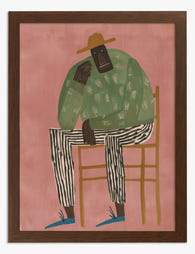
Striped Reflection Art Print
Sale price From £11.95£19.95 -

Bold Ampersand Art Print
Sale price From £11.95£19.95 -

Soft Reflections Art Print
Sale price From £11.95£19.95 -

This Must Be The Place Art Print
Sale price From £11.95£19.95 -

Blue Spot Footballer Art Print
Sale price From £11.95£19.95 -

Be You. Do You. For You. Art Print
Sale price From £11.95£19.95 -

Bold Blue Portrait Art Print
Sale price From £11.95£19.95 -

Urban Literary Retreat Art Print
Sale price From £11.95£19.95 -

The Thoughtful Footballer Art Print
Sale price From £11.95£19.95 -
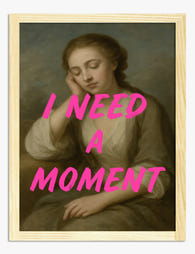
I Need a Moment Art Print
Sale price From £11.95£19.95 -

Self-Portrait by Vincent van Gogh Art Print
Sale price From £11.95£19.95 -

Amsterdam Canal Reflections Art Print
Sale price From £11.95£19.95 -

Flea Market Furniture Poster Art Print
Sale price From £11.95£19.95 -

The Homebody Club Art Print
Sale price From £11.95£19.95 -

Angel Number 666 Reflect Aura Art Print
Sale price From £11.95£19.95 -

At Eternity's Gate by Vincent van Gogh Art Print
Sale price From £11.95£19.95 -

Water Lilies at Sunset Art Print
Sale price From £11.95£19.95


More from The Frame

The Best Art for Conservatory Walls (That Won't...
Most people leave their conservatory walls bare, and it's not because they don't want art there. It's because they're quietly worried about fading, warping, and whether anything will look right...

Vintage Frog Prints: From 18th-Century Naturali...
Frogs have been drawn, painted and engraved for over 300 years, long before they became the unlikely stars of modern wall art. The best vintage frog prints sit at a...

Frog Art for the Bathroom: Why It Works and How...
Frog art has quietly become one of the most-searched subjects for bathroom walls, and it's not hard to see why. The pairing makes sense on an instinctive level, but the...