
 Order today for delivery by
 Klimt's Tree of Life: The Story Behind the Icon and How to Display It
From a Brussels dining room mosaic to the wall above your sofa, here's what to know before you buy.


You've seen it on phone cases, yoga studio walls, and tote bags. But the Tree of Life wasn't conceived as a standalone painting at all. It started life as a working drawing for a mosaic in a Brussels mansion, and understanding that changes everything about how you choose and hang a reproduction.
The Stoclet Frieze: where the Tree of Life actually comes from
In 1905, the Belgian banker Adolphe Stoclet commissioned the Viennese architect Josef Hoffmann to build him a private palace in Brussels. The Palais Stoclet became one of the defining buildings of the Vienna Secession movement, and Hoffmann brought in Gustav Klimt to design the centrepiece: a frieze for the marble-walled dining room.
Klimt worked on the designs between roughly 1905 and 1911. What he produced was a set of full-scale paper cartoons that craftsmen at the Wiener Werkstätte then translated into a glittering mosaic of marble, enamel, semi-precious stones, gold, silver, and ceramic. The actual frieze is still in situ in Brussels, in a private home, and is essentially never open to the public.
The cartoons themselves now live at the Museum of Applied Arts (MAK) in Vienna. This is the crucial point most articles get wrong: the image you know as "The Tree of Life" is a preparatory design, not an easel painting. It was never meant to hang in a gilded frame. It was a blueprint for a wall.
The frieze itself is a triptych. The Tree of Life forms the long central panel, with two figurative scenes on either side: Expectation (a stylised dancer in a triangular robe) and Fulfilment, also called The Embrace, showing a couple wrapped in patterned gold. The tree's swirling branches physically connect the two figurative panels, weaving the whole composition together.

Symbolism in the Tree of Life and why it resonates today
The tree itself is an ancient symbol that appears in Norse, Egyptian, Celtic, Christian, Buddhist, and Kabbalistic traditions. The basic idea is the same across cultures: roots in the underworld, trunk in the world of the living, branches in the heavens. One image that holds three realms together.
Klimt was steeped in this kind of symbolism. His tree's spiralling golden branches don't grow upward in any naturalistic way. They curl and loop back on themselves, suggesting the cyclical nature of life rather than linear progression. The pattern has been read as everything from the complexity of human relationships to the entanglement of fate, love and death, themes Klimt returned to constantly.
Then there's the black bird. Sitting amongst all the gold, a single dark bird perches on one of the branches. Most interpretations read it as a raven or crow, traditional symbols of death. Its presence in a composition otherwise dedicated to flourishing life is the kind of contradiction Klimt loved. You can read it as a memento mori, a reminder that life and death share the same tree.
The flanking panels reinforce a reading about romantic and spiritual union. Expectation shows longing. Fulfilment shows consummation. The tree between them is the connecting force, life itself, which the lovers either move toward or are sheltered by.
Why does it still land in 2024? Partly because the symbolism is open enough to read as spiritual without being tied to any one religion, and partly because the visual language (gold, ornament, organic curves) reads as both luxurious and serene. It's one of the few images that works equally well in a meditation studio and a maximalist drawing room.
How the Tree of Life fits within Klimt's wider nature paintings
If you only know the Tree of Life, you might be surprised by Klimt's other landscape work. Pieces like Birch Forest, Beech Grove, and The Park show a completely different sensibility: dense, almost pointillist canvases of leaves and trunks, with no gold, no symbolism, no figures. They look closer to Monet or Seurat than to the Tree of Life.
Klimt painted these mostly during summers at Lake Attersee in the Austrian Alps, where he holidayed for nearly two decades. They're meditative, observational, and deeply concerned with pattern and texture in real foliage. If you've fallen for Klimt's nature art more broadly, these landscapes are worth knowing.
What makes the Tree of Life unique within his work is that it's the only major landscape from his Golden Phase. The Kiss, Judith, Portrait of Adele Bloch-Bauer I: these are figurative works. The Attersee landscapes are nature studies without gold. Only the Tree of Life sits at the intersection, applying his most ornate, gilded vocabulary to a single tree.
This matters when you're choosing prints. The Tree of Life will hold a room on its own with its sheer decorative weight. A Beech Grove print is quieter and reads as a contemplative window. They serve completely different functions on a wall. If you're browsing Klimt prints for the first time, knowing this saves you from buying something that doesn't do what you wanted.
Full artwork vs detail crops: which version works best as a print
Reproductions of the Tree of Life come in roughly four flavours, and choosing between them matters more than people realise.
The full triptych. All three panels together, showing Expectation on the left, the Tree of Life in the centre, Fulfilment on the right. This is the most historically accurate option, but it requires a serious amount of wall. The original frieze runs to about seven metres wide. Even reduced, you need a long, uninterrupted stretch of wall and a willingness to commit to a busy, figurative composition. Best above a long sofa or in a wide hallway.
The centre panel only. Just the tree, vertical format, no figures. This is the most popular option for good reason. It works on a single feature wall, it reads cleanly from across a room, and it preserves the iconography that makes the piece famous. If you only buy one version, this is usually the right one.
Detail crops. Some prints zoom into a section: just the upper branches, just the spiral pattern, just the base with its rosettes. These can be beautiful in their own right, almost abstract. They're a good choice if you want Klimt's vocabulary in a room without the immediate "I know that picture" recognition.
Darkened or recoloured versions. You'll see reproductions where the background has been deepened to black, navy, or olive. Klimt's original cartoon has a warm cream background. The darker versions can look dramatic and modern, but they're not what he painted. Worth knowing if accuracy matters to you.

Size and orientation: getting the proportions right on your wall
The Tree of Life is naturally vertical. The centre panel of the original is significantly taller than it is wide, and reproductions tend to follow suit, typically around a 2:3 or even 1:2 ratio.
This makes it brilliant for spaces other art struggles with: narrow walls between doorways, the strip of wall above a console in a hallway, the chimney breast in a Victorian terrace, the wall above a staircase. Tall, narrow walls are the Tree of Life's natural habitat.
For sizing, the basic rule from professional picture hangers applies: your art should occupy roughly two-thirds to three-quarters of the width of the furniture beneath it, or two-thirds of the available wall if it's hanging solo. For most living rooms, that means a 60x90cm print above a small console, a 70x100cm print above a standard sofa, or going larger (up to 100x150cm on canvas) for a feature wall.
Hang it slightly higher than you would a horizontal piece. The eye reads vertical art from top to bottom, so the centre point can sit at roughly 155-160cm from the floor rather than the standard 145cm. This keeps the upper branches at eye level rather than disappearing toward the ceiling.
If you do go for the full triptych and have the wall for it, hang the three panels with very small gaps between them, 2-3cm at most. The original is a continuous mosaic, and large gaps break the visual flow that makes the composition work.
Frame choices that complement Klimt's gold palette
Framing the Tree of Life is where a lot of people overthink it. The instinct is to match gold with gold, but a heavy gilt frame around an already-gilded image tends to create visual competition. The frame fights the art, and both lose.
A few principles that work consistently:
Go warm rather than cool. The Tree of Life is built on warm metallics: gold, ochre, copper, cream. A cool grey or stark white frame can make the print look orphaned. Natural oak, walnut, or a warm off-white moulding all sit more comfortably with the palette.
Slim before chunky. A slim profile lets the ornament of the artwork do the work. Chunky ornate frames can feel redundant alongside Klimt's own ornament. A 2-3cm wood moulding is plenty.
Black works, surprisingly. A thin matte black frame can be a confident choice. It treats the print as a graphic object and lets the gold pop against the dark border. This works particularly well in modern interiors where you want to avoid anything that reads as twee.
Float mounting is worth the extra spend. Having the print floated on a mount board with a visible border of paper around the image gives the piece room to breathe and signals quality. It also keeps the warm cream of Klimt's background from butting straight into the frame.
For canvas, the Tree of Life can work unframed if you're after a softer, less formal look. The poly-cotton canvas and mirrored edge wrapping mean you don't lose any of the image, and there's no glare across all that gold. Framed canvas (a slim floating frame in oak or black) reads more polished and is the safer bet for living rooms and dining rooms.

One practical point that's worth flagging: the biggest failure mode in Klimt reproductions is poor print quality on the gold tones. Cheap offset prints flatten the metallic areas into mustard yellow and lose all the depth that makes the original sing. You want giclée printing on a heavy matte paper, which renders the warm tones with proper saturation and keeps the fine ornamental detail crisp up close. UV-protective glazing matters too, because the warm ochres and golds are exactly the pigments that fade fastest in direct sunlight.
If you're drawn to the symbolism but not specifically to Klimt's version, it's also worth browsing wider tree art prints before committing. Sometimes what you actually want is the feeling of a tree on a wall, and there are quieter, more contemporary options that scratch the same itch.

Where to put yours
If you're choosing a Tree of Life print today, the practical shortlist is this: pick the centre panel unless you genuinely have a seven-metre wall, hang it somewhere vertical and slightly higher than usual, frame it in warm wood or thin black rather than competing gold, and make sure the print itself does justice to the metallic palette. Get those four right and you'll have a piece that earns its place rather than just decorating it.

Fab products featured in this blog
-

Klimt's Spiralling Tree Exhibition Print Canvas Print
Sale price From £49.95£74.95 -

Klimt's Spiralling Tree Exhibition Print Art Print
Sale price From £11.95£19.95 -

Klimt-Inspired Forest Radiance Canvas Print
Sale price From £49.95£74.95 -

Klimt-Inspired Sunlit Forest Poster Canvas Print
Sale price From £49.95£74.95 -

Sunlit Forest by Gustav Klimt Canvas Print
Sale price From £49.95£74.95 -

Sunlit Path by Gustav Klimt Art Print
Sale price From £11.95£19.95 -

Klimt Floral Symphony Exhibition Print Art Print
Sale price From £11.95£19.95 -

Klimt-Inspired Golden Birch Forest Art Print
Sale price From £11.95£19.95 -

Klimt Sunlit Forest Exhibition Poster Art Print
Sale price From £11.95£19.95 -

Tree of Life by William Morris Art Print
Sale price From £11.95£19.95 -

Golden Forest Abstract Art Print
Sale price From £11.95£19.95 -

William Morris Tree of Life Exhibition Canvas Print
Sale price From £49.95£74.95 -
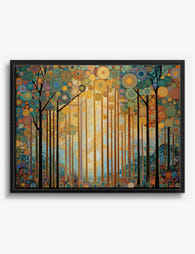
Klimt-inspired Forest Glow Canvas Print
Sale price From £49.95£74.95 -

Klimt Sunlit Forest Exhibition Poster Canvas Print
Sale price From £49.95£74.95 -

William Morris Tree of Life Poster Art Print
Sale price From £11.95£19.95 -

Sunlit Forest by Gustav Klimt Art Print
Sale price From £11.95£19.95 -

Gustav Klimt Sunset Forest Art Print
Sale price From £11.95£19.95 -
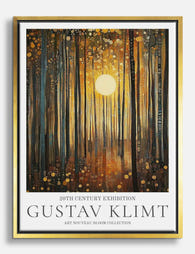
Sunlit Forest by Gustav Klimt Canvas Print
Sale price From £49.95£74.95 -

Sunlit Forest by Gustav Klimt Art Print
Sale price From £11.95£19.95 -

Klimt-Inspired Forest Glow Art Print
Sale price From £11.95£19.95


More from The Frame

Vintage vs Modern Floral Prints: How to Choose
Both styles are called floral art, but they behave in opposite ways on a wall. Vintage botanicals whisper, group together and rely on architectural detail. Modern florals shout, stand alone...

The best dog art by breed, from dachshunds to r...
Dog art has a long history, from Egyptian tomb paintings of sight hounds to Landseer's Victorian retrievers, and each breed carries its own visual language. The trick to choosing a...

The best bird art for a bedroom, from flight si...
Bird art is one of those categories that can drift into cliché fast. Done well, it brings movement, calm and a sense of open sky into the most private room...