
 Smiles Guaranteed
 Order today for delivery by
Living Room Wall Art: The Complete Guide to Getting It Right
Wall-by-wall, sofa-by-sofa, style-by-style: every decision you need to make, with the measurements to back it up.


The living room is the hardest room in the house to get right, and the walls are the reason. You have a sofa wall, probably a TV wall, possibly a chimney breast, awkward alcoves, and a feature wall someone on Instagram told you to paint dark green. This guide takes you through every one of those decisions with the actual measurements and style recommendations that most articles skip.
The above-sofa wall: the single most important art decision in your home
The wall behind your sofa is the visual anchor of the room. It's the first thing you see when you walk in, the backdrop of every conversation, and the surface that pulls the seating area together. Get it right and the whole room reads as considered. Get it wrong and the sofa looks like it's floating, no matter how nice it is.
The most common mistake by a wide margin is going too small. A single 30x40cm print floating above a three-seater sofa looks like a postage stamp on a duvet. The second most common mistake is hanging art too high, which disconnects it from the furniture and makes the wall feel cold. Both problems are easily solved if you follow a couple of measurements properly.
Before you commit, decide whether you want a single statement piece, a pair, a triptych, or a gallery wall. Each works above a sofa, but each has different rules. We'll get to all of them.

Sizing for above the sofa: the two-thirds rule with specific measurements
The professional consensus, and the rule we'd back with money, is that art above a sofa should span roughly two-thirds the width of the sofa itself. Not one-half (too small), not the full width (overwhelming, and it competes with the furniture rather than complementing it). Two-thirds is the sweet spot.
Here's what that actually means for the three most common sofa sizes.
Two-seater sofas (around 150 to 165cm / 60 to 65 inches wide)
You're looking for art that spans roughly 100 to 110cm. A single large print at 70x100cm works beautifully here, especially in portrait orientation flanked by a slim lamp. A pair of 50x70cm prints hung side by side with a small gap between them also lands at the right total width. For canvas, an 18x24in or 24x32in piece is in the right zone.
Three-seater sofas (around 200 to 215cm / 80 to 85 inches wide)
This is the most common sofa size, and the trickiest, because the wall above it can swallow art that would look generous anywhere else. Aim for total art width of 140 to 150cm. A single XL piece at 70x100cm is the minimum we'd recommend, and honestly, going up to 90x120cm in canvas is often better. A triptych of three 40x50cm prints, or a pair of 50x70cm prints, both work. If you're committing to one statement piece, look at the XL art prints edit, which is built for exactly this scenario.
Four-seater and corner sofas (245cm+ / 96 inches+)
Now you need real scale. A single 100x150cm canvas, or a 70x100cm framed print paired with a smaller piece, or a proper gallery wall of five to seven frames. Anything smaller than 90cm total art width will look lost. This is where canvas earns its keep, because you can go genuinely large without the weight problem you'd get from a framed print of the same size.
How high to hang it
Forget gallery rules about 57 inches to centre. Above a sofa, the only measurement that matters is the gap between the top of the sofa back and the bottom of the frame. Aim for 20 to 25cm (8 to 10 inches). Less than that feels cramped. More than that and the art floats away from the furniture, which is the single biggest reason rooms look uncoordinated. Ceiling height is a red herring here. Always hang to the sofa, not to the ceiling.
The TV wall dilemma: how to hang art alongside (or instead of) a television
Most living rooms have a television, and most articles pretend they don't. Here's the honest version.
You have three real options. First, accept the TV as the focal point and don't fight it. Second, integrate the TV into a gallery wall so it reads as one of many rectangles rather than the only one. Third, mount the TV elsewhere (over a console, on a side wall) and let art take the main wall.
Option one: TV as focal point, art around it
If your TV is wall-mounted, you can flank it with art on either side to balance the visual weight. Two prints in matching frames at 30x40cm or 40x50cm, hung at the same height as the TV's vertical centre, work well. Don't try to hang anything above a wall-mounted TV unless you have at least 40cm of clearance. Cramped art above a screen looks worse than no art at all.
Option two: the TV-inclusive gallery wall
This is the cleverest solution and the most underused. Build a gallery wall of six to ten frames around the television, treating the TV as one element in the composition. The trick is to use frames in a consistent finish (black, oak, or walnut) so the screen blends into the arrangement rather than sticking out. Mix sizes, but keep the spacing tight, around 5 to 7cm between pieces. Abstract prints work particularly well here because their shapes echo the rectangle of the screen without competing for attention.
Option three: TV on a side wall, art takes priority
If your room layout allows it, putting the TV on a perpendicular wall lets the main wall do what it should: hold a proper piece of art. This is increasingly common in homes that watch less linear TV and more streaming, and it's worth considering before you commit to drilling holes.

Chimney breast and mantelpiece: the focal point that deserves focal-point art
A chimney breast is a gift. It's a built-in frame for a single piece of art, and it tells you exactly where the eye should go. Don't waste it.
The rule here is simpler than the sofa wall: art above a mantelpiece should span roughly the width of the fire opening, give or take 10cm. Not the full width of the chimney breast, which usually looks too wide and pushes art into the corners awkwardly. The fire opening width is your guide.
Hanging height is also tighter than elsewhere. Aim for 10 to 15cm between the top of the mantelpiece and the bottom of the frame. Anything more and the art looks marooned.
To lean or to hang
Leaning art on a mantelpiece is having a moment, and we think it's earned. It works particularly well if you want to layer pieces (a larger print at the back, a smaller framed piece in front), and it makes seasonal swaps effortless. The trade-off is that leaning only works at certain sizes, usually framed prints between 40x50cm and 50x70cm. Anything larger gets unstable and anything smaller looks lost.
If you have a working fire, hang rather than lean. Heat and smoke aren't friends to art, and you want the piece higher up the chimney breast to keep it out of trouble.
What to put there
Chimney breasts suit art with a clear central focus: a portrait, a landscape with a strong horizon, a single botanical study, a moody still life. Avoid busy patterns or anything with the visual weight off-centre, because the symmetry of the chimney breast will fight it. Vintage art prints and traditional botanicals are a particularly safe bet here.
Alcoves: the awkward spaces that actually look best with smaller, paired prints
Alcoves are narrow, which throws people. They want to hang one big piece and find that nothing fits, then they give up and put a plant there. Plants are fine, but alcoves are made for art if you size correctly.
The trick is to think vertically. A single portrait-orientation print at 30x40cm or 40x50cm, hung at eye level, fills an alcove beautifully. Better still, a vertical pair of two smaller prints (15x20cm or 28x35cm) stacked with 5cm between them creates rhythm and makes the alcove feel intentional rather than awkward.
If you have matching alcoves either side of a chimney breast, treat them as a pair. The same print in both, or two prints from the same series, ties the whole wall together. This is one of the best uses of wall art sets, where the pieces are designed to live together.
Avoid landscape orientation in alcoves unless the alcove is unusually wide. Horizontal pieces will hit the side walls and look squashed.
Matching art to your living room style
Here's where most guides go vague. We're going to be specific.
Scandi
Scandi rooms are about restraint, light, and natural materials. Art should support that, not shout over it. Look for minimal line drawings, muted botanicals, black and white photography (especially landscapes and architecture), and abstract pieces in soft neutrals: oatmeal, sage, dusty pink, charcoal. Frames should be light: oak, ash, or thin black. Avoid heavy gilt, ornate detail, or saturated colour. One large piece or a pair, never a busy gallery wall.
Mid-century modern
Mid-century rooms can take more colour and more graphic energy. Look for abstract prints with bold geometric shapes, mustard, teal, burnt orange, olive, and rust. Block-colour compositions, vintage travel posters, atomic-era illustration. Frames in walnut or black. This is a style where a single statement piece really earns its place. Browse abstract art prints for the right vocabulary.
Traditional
Traditional living rooms suit traditional subjects. Botanical studies, classical landscapes, oil-painting reproductions, architectural studies, equestrian art, still life. Frames should be substantial: dark wood, gilt, or deep oak. Symmetry matters here. A single large piece centred above the sofa or mantelpiece, or a pair flanking a feature, almost always beats an eclectic gallery wall in a traditional room. William Morris prints are a natural fit for this style.
Boho
Boho rooms are layered, textured, and warm. Art should add to the layers, not try to be the only voice in the room. Look for woven textures, earthy abstracts, figurative line drawings, vintage botanicals, Mediterranean landscapes, ceramics studies. Terracotta, ochre, sage, cream, deep brown. Mix frame finishes deliberately: rattan, raw wood, brass, black. Gallery walls work brilliantly here because the boho aesthetic forgives, even encourages, mismatch. Mediterranean art prints are tailor-made for the look.
Maximalist
Maximalism is the only style where you genuinely cannot go too big or too bold. Saturated colour, dense pattern, oversized scale, gilt frames stacked next to lacquered ones, portraits over wallpaper. The rule is that there are no rules, but there's still a discipline: every piece should feel chosen, not accumulated. Build a gallery wall and keep adding to it over the years.

Colour coordination: matching art without being too matchy
The cardinal sin is matching your art to your cushions exactly. It looks like a furniture showroom, not a home.
Aim for a relationship, not a match. Pick up one or two colours from your sofa, rug, or curtains, and find art that uses those colours alongside two or three you don't have anywhere else. That's how a piece of art makes a room feel pulled together without making it feel like a catalogue.
A practical example: if your sofa is dusty pink and your rug is cream and charcoal, the right art for the room contains pink (less saturated than the sofa, ideally), some charcoal or black, and one new colour, perhaps a muted ochre or sage. The new colour is what makes the room look styled rather than coordinated.
The sofa-first vs art-first question comes up a lot. Our take: if you've already bought the sofa, work outward from it. If you haven't, buy the art first. Art is harder to find than upholstery, and a piece you love will dictate a more interesting room than a sofa you settled on.
Gallery walls in living rooms: layouts that suit the space
Three layouts work reliably above a sofa or on a feature wall. The rest are usually overcomplicated.
The grid
Six, eight, or nine identically sized frames in a perfect rectangle. Quiet, modern, and very forgiving if you choose the right prints. Spacing should be 5 to 7cm between frames. Best for Scandi, mid-century, and minimalist rooms.
The symmetrical pair or triptych
Two or three frames in a horizontal line, identically sized, equally spaced. The most underused layout and possibly the most effective. Reads as one composition rather than a collection. Works in every style.
The salon-style cluster
Mixed sizes, mixed orientations, anchored by one or two larger pieces with smaller frames filling around them. Spacing tighter, 3 to 5cm, to read as a unit. Best for boho, maximalist, and traditional rooms.
For all three, lay the arrangement out on the floor first, take a photo, and adjust until it looks right before you put a single nail in the wall. Brown paper templates taped to the wall save real grief.

Picture ledges and leaning art: the low-commitment alternatives
Not everyone wants to drill. A picture ledge running along the back of the sofa wall lets you lean three or four pieces against it, layer smaller in front of larger, and swap things out when you fancy a change. Floating shelves do the same job in alcoves.
Leaning works particularly well for renters, for people who change their minds often, and for rooms where the architecture is doing a lot already. The trade-off is that leaned art always looks slightly less considered than hung art, and very large pieces are unstable when leaned. We'd hang anything over 70x100cm.
The single statement piece vs the curated collection
This is the final decision, and it's largely about your room and your temperament.
A single statement piece, properly sized, is the easier route to a polished room. It commits the wall to one strong idea. If you have a calm, considered, Scandi or modern room, this is almost always the right call. Browse the living room art prints collection for pieces sized to anchor a wall.
A curated collection (a gallery wall, a triptych, a wall of paired pieces) takes more work to get right but rewards you with depth and personality. It's the better choice for boho, maximalist, traditional, and family rooms where the art accumulates over time.
The middle ground, and arguably the most successful approach in most living rooms, is a single large statement piece on the main sofa wall and a smaller pair in the alcoves or on a side wall. You get the impact of scale where it matters and the layered interest everywhere else.

A note on framing
Most of the failures we see in living room art come down to bad framing: warped frames shipped separately from prints, cheap plastic that yellows in sunlight, glass that throws glare across the room every evening. Our framed prints arrive in one box with the print already fitted, on solid FSC-certified wood, with UV-protective acrylic glaze that won't fade even in direct sunlight and won't bounce light back at you when the lamps come on. That last point matters more in a living room than anywhere else, because living rooms are where you sit at angles, in lamplight, and notice glare.
For very large pieces, canvas is often the better practical choice. It's lighter, it doesn't have a glazing surface to catch reflections, and the living room canvas prints range scales up to 100x150cm without weight or wall-anchor problems.
What to do next
Measure your sofa width, multiply by two-thirds, and that's your art width. Measure 20 to 25cm above the sofa back, and that's your hanging height. Pick a colour from your room you already love, and find art that uses it alongside two colours you don't have. Lay everything out on the floor before you drill.
That's the whole guide in four sentences. The rest is taste, and taste is yours.
Fab products featured in this blog
-

Cozy Library Living Art Print
Translation missing: en.products.product.sale_price From £11.95£19.95 -

Cozy Green Living Art Print
Translation missing: en.products.product.sale_price From £11.95£19.95 -

Chic Lounge Evening Canvas Print
Translation missing: en.products.product.sale_price From £55.99£79.99 -

Green Sofa Still Life Art Print
Translation missing: en.products.product.sale_price From £11.95£19.95 -

Cozy Reader on Sofa Canvas Print
Translation missing: en.products.product.sale_price From £55.99£79.99 -

Green Velvet Living Room Art Print
Translation missing: en.products.product.sale_price From £11.95£19.95 -

Cozy Book Nook Living Room Canvas Print
Translation missing: en.products.product.sale_price From £44.95£74.95 -

Colorful Modern Living Art Print
Translation missing: en.products.product.sale_price From £11.95£19.95 -

Vibrant Pop Living Room Art Print
Translation missing: en.products.product.sale_price From £11.95£19.95 -

Cozy Library Living Canvas Print
Translation missing: en.products.product.sale_price From £44.95£74.95 -

Cozy Reader on Sofa Art Print
Translation missing: en.products.product.sale_price From £13.99£19.99 -

Colorful Modern Living Art Print
Translation missing: en.products.product.sale_price From £11.95£19.95 -

Cozy Library Living Canvas Print
Translation missing: en.products.product.sale_price From £44.95£74.95 -
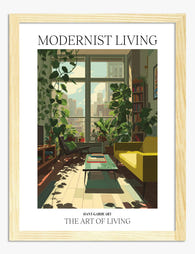
Urban Oasis Living Art Print
Translation missing: en.products.product.sale_price From £11.95£19.95 -

Love-Fueled Living Art Print
Translation missing: en.products.product.sale_price From £11.95£19.95


More from The Frame

Canvas Prints vs Framed Art Prints: Which One B...
You're stuck between two formats, the internet keeps telling you "it depends on personal preference," and you still don't know what to buy. Let's fix that. This is an opinionated...

Giclée Print vs Original Watercolor: What Actua...
The question everyone asks: can a print really capture watercolour? Watercolour is the trickiest medium to reproduce. The translucent washes, the soft bleeds where two colours meet, the visible grain...

How to Build a Gallery Wall with Japanese Art P...
Gallery walls go wrong for predictable reasons: too many frames, too many styles, too little breathing room. Japanese art demands the opposite of all three. This guide walks you through...