


 Order today for delivery by
Types of Botanical Prints Explained: From Scientific Illustrations to Modern Florals
Learn to speak botanical fluently, from Redouté's roses to moody Dutch florals, and find the style your walls have been waiting for.


Flowers on walls are not a trend. They are a 400-year-old habit, and the category has splintered into at least six distinct visual languages. This guide teaches you how to tell them apart, where each one belongs, and how to pick the style that actually fits your home.
A quick history: why we've been hanging flowers on walls for 400 years
The modern botanical print descends from a very specific moment. In the 17th and 18th centuries, European explorers were shipping back plants nobody in London or Paris had ever seen, and painters were hired to document them before they wilted. These were working documents first, decorative objects second. The beauty was almost a byproduct of the science.
Pierre-Joseph Redouté painted roses for Empress Josephine. Maria Sibylla Merian travelled to Suriname at 52 to study insects and their host plants. Georg Dionysius Ehret worked with Linnaeus to illustrate the new system of plant classification. Their work was printed, hand-coloured, bound into enormous folio books, and eventually, inevitably, cut up and framed.
That tradition of documentary beauty is why botanicals still feel grounding. They connect a room to nature without requiring you to actually keep a plant alive.

Scientific botanical illustrations: precision and beauty
Scientific botanical illustrations are the foundational category and the easiest to identify once you know what to look for. The plant is usually isolated on a plain cream or white background. You can often see the roots, the seeds, a cross-section of the flower, and tiny Latin inscriptions at the bottom. The framing is specimen-first: this is a plant being studied, not a bouquet being admired.
The lines are precise, the colours are muted and botanical-accurate (sage greens, soft ochres, dusty pinks), and the composition is almost always vertical. Redouté's stipple engravings of lilies and roses are the archetype. Ehret's tulips and Merian's flowering branches with caterpillars are close cousins.
Where they work
Scientific botanicals suit rooms that already have a slightly curated, library-ish feeling. Studies, reading nooks, hallways, and dining rooms with panelled walls all absorb them well. They look fantastic hung in grids of four, six or nine identically framed prints, which plays up the specimen-collection reference.
Avoid hanging a single scientific botanical in isolation on a large wall. They are small-scale, detailed works, and they want company. A pair at minimum, ideally a set. Browse the full botanical art prints collection if this is the direction you're heading.
Vintage and antique-style flower prints: the aged, collected look
Here is where it gets confusing for shoppers, so pay attention. A genuine antique print is a 150-year-old piece of paper you'd buy at an auction. A vintage-style reproduction is a contemporary print that imitates that aesthetic: slightly foxed background, faded colours, visible paper grain, sometimes a printed border or French script.
Both read as "vintage" to the eye. The reproductions are far more practical because they are printed on fresh, archival paper that won't yellow further, they can be made in sizes that actually suit modern walls, and you don't need to worry about damaging a historical artefact every time you move house.
Visually, vintage flower prints are warmer and more decorative than their scientific cousins. The flowers are often arranged in bouquets or garlands rather than isolated specimens. Colours lean towards muted rose, ochre, faded teal, and tobacco brown. There is usually visible texture: paper tone, soft edges, the suggestion of age.
Where they work
Vintage florals are the great chameleons. They sit beautifully in traditional rooms (think Georgian cornicing and velvet sofas) but they also soften very contemporary spaces, which is often exactly what a sharp, modern interior needs. Bedrooms, dressing rooms, and the walls flanking a fireplace are natural homes.
A single large vintage floral above a bed, framed in a warm oak or dark walnut, is one of the easiest high-impact decisions you can make. We'd suggest 70x100cm as a starting point for a standard UK double bed.
Painterly florals: loose brushwork and expressive colour
Painterly florals are what most people mean when they say "flower art" rather than "botanical print." These are not studies. They are paintings. You can see the brushwork, the colour is saturated and emotional, and the composition prioritises mood over accuracy.
Think of a vase of peonies rendered in confident, visible strokes. The petals might blur into each other. The background is often an atmospheric wash rather than a clean white. The palette can be anything from soft pastel to riotous jewel tones.
This category covers a huge range, from Impressionist-influenced work to contemporary artists working in gouache, oil, or digital brushes. The common thread is that the artist's hand is visible. You are meant to feel the painting, not identify the species.

Where they work
Painterly florals need a bit of breathing room. They work best as a single hero piece rather than a grid. Above a sofa, above a sideboard, at the end of a hallway, or in a dining room where you want something to look at while you eat.
They pair well with slightly imperfect interiors: linen slipcovers, antique rugs, a bit of patina on the furniture. In an aggressively minimalist room they can feel like they've wandered in from a different conversation. Explore the broader flower art prints selection to see the range.
Modern minimal botanicals: clean lines for contemporary spaces
Modern minimal botanicals are the newest category and arguably the most misunderstood. These are often line drawings: a single stem, a leaf, a eucalyptus branch, rendered in black ink or soft sepia on a plain cream background. Sometimes they incorporate a single wash of muted colour. The composition is deliberately spare.
The reference points are mid-century line drawing, Japanese sumi-e, and contemporary graphic illustration. The idea is to suggest a plant rather than depict it fully. One confident line can do the work of a hundred petals.
A related sub-style is the abstract botanical: softer, more painterly than a line drawing but still working in a limited palette with lots of negative space. Think a single ink-wash tulip or a loose watercolour poppy sitting in the middle of a mostly empty page.
Where they work
Modern minimal botanicals are built for contemporary interiors: pale walls, light wood, concrete, Scandinavian furniture, that particular aesthetic that lives on Instagram. They also work brilliantly in small spaces like downstairs loos, galley kitchens, and narrow hallways where a busier print would feel claustrophobic.
Hang them in pairs or threes with generous margins. The negative space is doing most of the work, so don't crowd them. For a tighter contemporary look, framed prints in a slim black or natural oak frame work best. Our frames are solid FSC-certified wood with UV-protective acrylic glaze, which matters more than it sounds: glass reflects, acrylic doesn't, and the art stays readable from any angle. See the modern art prints collection for the contemporary end of the spectrum.
Dark and moody florals: the Dutch Master revival
If one botanical style is having a proper moment right now, it's this one. Dark moody florals take their cues from 17th-century Dutch still life painters like Rachel Ruysch and Jan van Huysum, who painted lavish floral arrangements against deep black or near-black backgrounds. The flowers glow out of the dark. The effect is theatrical, slightly gothic, and extraordinarily rich.
Contemporary dark florals use the same visual logic. A deep background (black, oxblood, forest, charcoal), densely rendered flowers in jewel colours (crimson, saffron, violet, cream), and dramatic contrast between the two. Photographic versions use the same approach: macro shots of a single flower or arrangement against pure black.
Where they work
Dark florals need confidence. They work best in rooms that are themselves already a bit moody: deep green or inky blue walls, dark wood, a single lamp doing the lighting. Dining rooms, snugs, home bars, and bedrooms with heavy curtains all benefit.
They also, paradoxically, work in very pale rooms as the one dramatic object. A single large dark floral on a white wall above a cream sofa is a strong, confident choice. Just commit to the scale: anything smaller than 50x70cm will look timid. We'd recommend going larger, up to 70x100cm framed or 100x150cm on canvas if you have the wall for it.
Canvas is worth considering here specifically. The matte poly-cotton finish absorbs light the way an oil painting does, which flatters a dark palette. Framed prints give a sharper, more polished edge; canvas feels more like a painting on your wall.

Wildflower prints: the relaxed, countryside alternative
Wildflower prints occupy a looser, more relaxed register than their formal cousins. The subject matter is cow parsley, poppies, cornflowers, foxgloves, grasses, the kind of things you'd find in a hedgerow rather than a cultivated garden. The composition is often less structured: a loose spray rather than a tight bouquet.
Style-wise, wildflower prints can be rendered in several ways: delicate watercolours, pressed-flower photography, loose line drawings, or soft painterly work. The common thread is a sense of informality and seasonality. These feel found rather than arranged.
Where they work
Wildflower prints are the natural fit for country, cottage, and farmhouse interiors, but they're also brilliant in modern homes that need softening. Kitchens, breakfast rooms, children's rooms, and bathrooms all suit them. They have an unpretentious quality that works where a more formal botanical would feel overdressed.
Gallery walls of mixed wildflower prints are a lovely application. Vary the frame colours slightly (natural oak, warm walnut, a bit of black) rather than matching them perfectly. The looseness is the point.
How to match each style to your home's personality
Here is the shortcut, by room and by overall interior mood.
By room
Living rooms can carry any style, but scale matters. Go large, go single, or go for a proper gallery wall of five or more pieces. Dark florals and painterly florals both read beautifully above a sofa.
Bedrooms suit softer registers: vintage florals, painterly work, wildflowers. A single large piece above the bed, or a pair above matching bedside tables.
Dining rooms love drama. Dark moody florals and scientific botanical grids both work. The light is often low in the evening, which flatters both.
Kitchens and breakfast rooms want informality. Wildflowers, line drawings, small vintage prints in groups.
Bathrooms are an underused space for art. Scientific botanicals and modern minimal line drawings both suit the clean, functional feel. Canvas handles humidity better than paper under glass, which is worth knowing if your bathroom steams up regularly.
Hallways and staircases are perfect for grids and gallery walls. Scientific botanicals in matching frames, repeated up a staircase, is a classic for a reason.
By interior style
If your home leans traditional (period features, antique furniture, patterned fabrics), go vintage, scientific, or painterly. Avoid aggressively minimal line drawings; they'll look out of place.
If your home is contemporary (clean lines, neutral palette, modern furniture), go minimal, abstract, or make a single dramatic statement with a dark floral.
If your home is country or cottage (natural materials, soft colours, a bit of pattern), wildflowers and vintage florals are your natural territory.
If your home is maximalist (colour, pattern, layered textures), painterly florals and dark moody pieces will hold their own. Scale up, mix styles, and don't be precious about matching.
A note on frames
Frame choice is as much a style decision as the art itself. Natural oak softens everything. Black sharpens contemporary work. Walnut warms vintage pieces. White frames can look fresh with botanicals but risk disappearing on a white wall.
Whatever you choose, the frame and print should arrive as one properly fitted object. Prints shipped separately from frames almost always warp or bubble, which is the single biggest frustration shoppers report with botanical art. Everything we make ships in one box, ready to hang, fixtures already attached.
Pick the style that matches the room you actually live in, not the room you wish you had. A print you love in a space it suits will outlast every trend.


Fab products featured in this blog
-

Spring Botanical Medley Art Print
Sale price From £11.95£19.95 -

The Botanical House Art Print
Sale price From £11.95£19.95 -

Spring Botanical Medley Canvas Print
Sale price From £49.95£74.95 -

Blue Botanical Flow Art Print
Sale price From £11.95£19.95 -

The Plants and the Flowers Art Print
Sale price From £11.95£19.95 -

Bold Botanical Sketch Art Print
Sale price From £11.95£19.95 -

Gardens of the World Botanical Art Print
Sale price From £11.95£19.95 -

Sunlit Botanical Burst Art Print
Sale price From £11.95£19.95 -
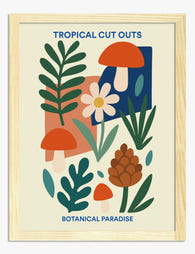
Tropical Cut Outs Botanical Paradise Art Print
Sale price From £11.95£19.95 -

Bold Botanical Vases Art Print
Sale price From £11.95£19.95 -

The Plants and the Flowers Art Print
Sale price From £11.95£19.95 -

Modern Botanical Burst Art Print
Sale price From £11.95£19.95 -
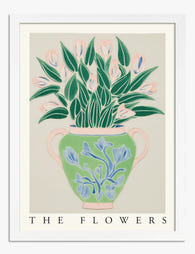
Botanical Bloom Vase Art Print
Sale price From £11.95£19.95 -

British Botanical View Art Print
Sale price From £11.95£19.95 -

The Plants and the Flowers Art Print
Sale price From £11.95£19.95


More from The Frame

Transform Your Bedroom with Botanical Art: A Cu...
Botanical prints are the easiest art to buy and the hardest to style. One print looks considered; four looks like a garden centre gift shop. This guide is about restraint:...

Why Botanical Art Works Better in Small Living ...
Botanical art does something strange to small rooms: it softens them without crowding them. In large rooms, it often gets lost, floating on a wall that needs more weight. This...

Blending Vintage and Modern Décor? Start With Y...
Your furniture is already a mix. A mid-century sideboard here, a modern bouclé chair there, maybe your grandmother's wingback holding court in the corner. The walls are where you make...