Solid wood. Professionally framed. Arrives ready to hang.
Make your print ready to hang.
Impasto Art Prints
4.8
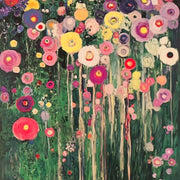
Impasto is paint applied thick enough to cast its own shadow, ridges, peaks and drag marks that catch the light as you move past. These prints keep that raised, sculptural surface visible: loaded brushwork in florals and landscapes, palette-knife abstracts, moody skies built from heavy strokes. Pick a piece with quiet, tonal texture for a calm wall, or go for high-contrast marks where you want the room to have a focal point.
Impasto is a painting style where paint is laid on thickly so brushstrokes and ridges stand out from the surface. The approach was popularised in the seventeenth century and later became central to Impressionist painting, where thick strokes add movement and light. As a print, that raised paint is reproduced visually, so you get the look of bold, tactile brushwork on a flat, easy-to-hang surface.
Which famous artists are known for impasto?
Impasto is most often associated with Baroque painters such as Rembrandt van Rijn and Diego Velazquez, who used thick paint to catch light and suggest volume. The technique was later taken up widely by Impressionist and post-Impressionist painters, whose visible, loaded brushstrokes became a signature of the style. Many modern and contemporary painters continue to work this way, which is why impasto-style prints span everything from florals to abstracts.
How is an impasto print different from a real impasto painting?
A true impasto painting has physical ridges of paint you can feel, since the paint is applied in thick layers. A print reproduces that same visual texture, including highlights and shadow along each stroke, on a smooth surface. From normal viewing distance the effect reads as painterly depth, and prints are far easier to hang, group and swap around than heavy textured canvases.
How do I style impasto-look prints at home?
Because the appeal is texture and bold brushwork, give these prints room to breathe on a plain or softly painted wall rather than a busy wallpaper. They suit modern and contemporary interiors, and pair well with linen, wood and other tactile materials that echo the brushstrokes. Side light from a window or a wall light exaggerates the sense of raised paint, and a simple frame keeps the focus on the strokes.
Choosing a selection results in a full page refresh.


 Order today for delivery by


 Thinking about impasto? Start here