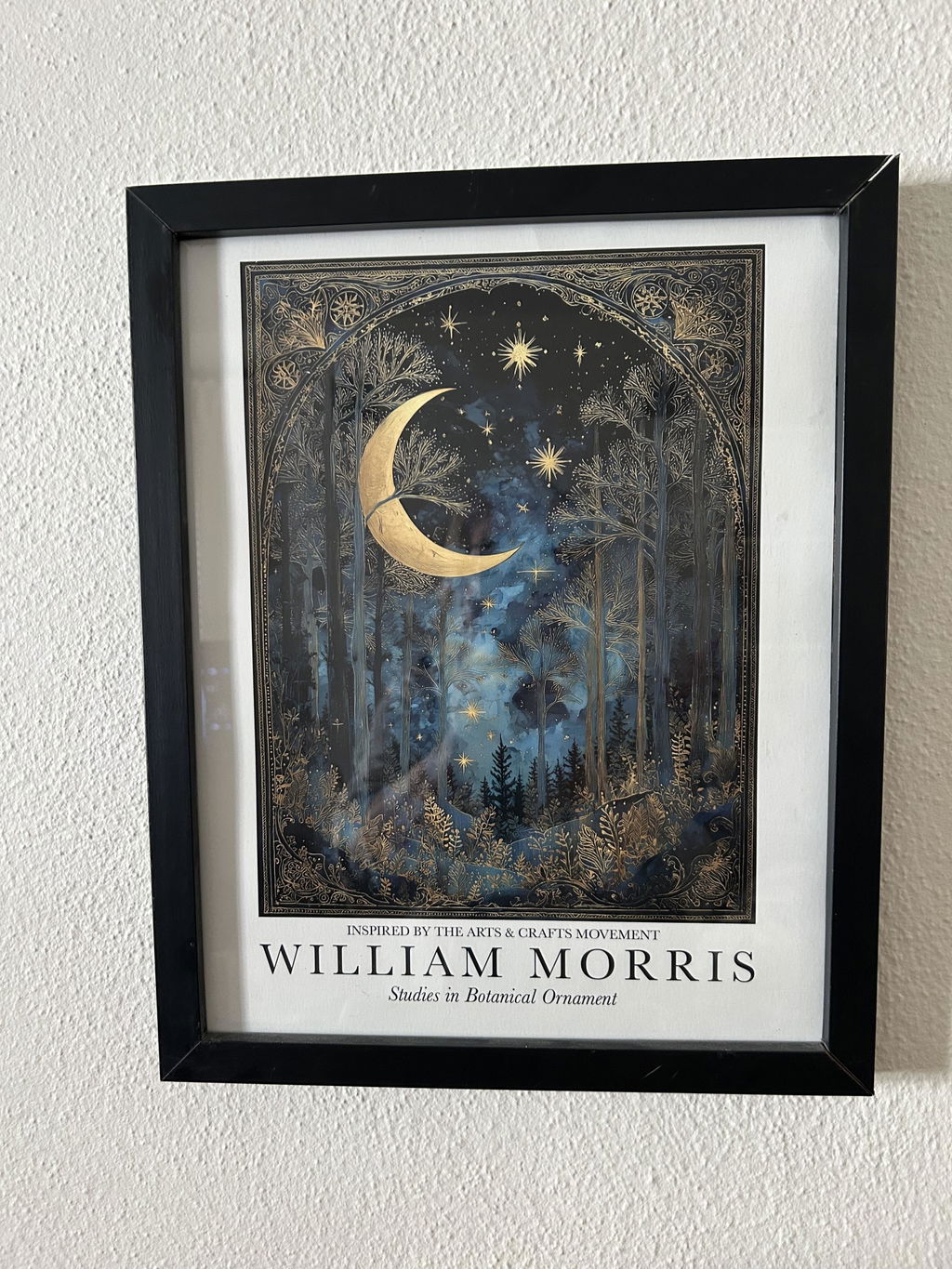
Solid wood. Professionally framed. Arrives ready to hang.
Make your print ready to hang.
William Morris Forest Art Prints
4.8
Morris's forest work is dense stuff: layered acanthus leaves, curling foliage and animals half-hidden in the undergrowth, all deep greens and indigo blues. It suits walls that can take some depth, a hallway, a study, the space behind a bed. If the woodland feel is what pulled you here, William Morris Tree Art Prints run quieter, while William Morris Animal Art Prints bring the hare and fox forward.
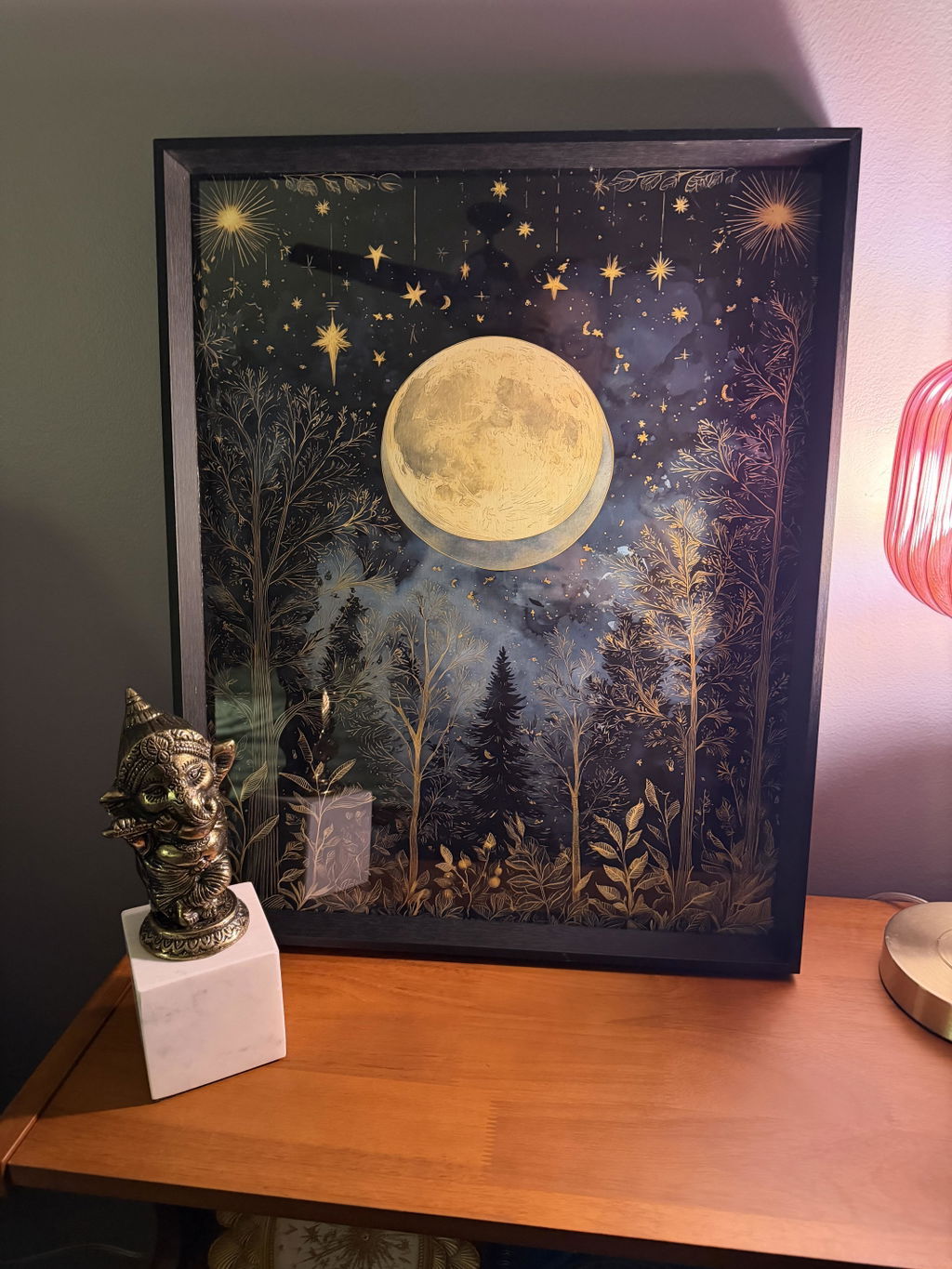
This is a gorgeous addition to our newly renovated room
This is a gorgeous addition to our newly renovated room.It's deep colors are exactly as shown. I will add my own frame once we decide on accessories. William Morris has such beautiful timeless pics. Great purchase!
The minimalism hangover: why bare walls stopped feeling calming For about a decade, the aspirational interior was a white box with one boucle chair in it. That look has officially...
Which Morris forest print suits you

Short answers on framing, colour matching, where these prints work best and how orders arrive
Forest is one of Morris's best-known works, sitting alongside Strawberry Thief, Acanthus and Honeysuckle among his most famous designs. It began life as a large woven tapestry, filling the surface with dense foliage, curling acanthus leaves and animals hidden among the branches. Reproduced as wall art, that tapestry-style density translates into a rich, layered piece that reads almost like a scene rather than a simple repeating pattern.
How do I build a set of three William Morris prints that work together?
Sets of three are a popular way to hang Morris work, and the easiest route is to keep one variable constant. Pick three designs that share a dominant color, such as deep greens and indigos, then vary the scale of the pattern so a dense woodland sits beside something more open. Matching frames, equal sizes and consistent spacing pull the group into one confident block rather than three competing patterns.
Should I choose a framed or unframed Morris forest print?
Unframed prints are the flexible choice if you already have frames, want a custom mount, or plan to change things around later. A framed piece arrives finished and needs no assembly, which suits busy walls and gifts. Morris's woodland designs are detailed and dark-toned, so a plain wood or black frame usually works better than anything ornate. Shipping is free and returns run to 99 days either way.
Which William Morris forest print works best for a living room wall above a sofa?
For the main wall above a standard sofa, we'd go with The Forest tapestry design as a large framed print (70x100cm). It's got that incredible depth of layered trees, animals, and foliage that genuinely rewards closer inspection, and the rich greens and warm browns ground a living room without overpowering it. Our museum-grade giclée printing picks up every detail of Morris's original woodland textures, and framed in natural oak it looks like something you'd find in a country house gallery. It arrives ready to hang with fixtures already fitted, so you're on the wall in minutes, not wrestling with a separate frame kit.
Why did William Morris use forests and nature so heavily in his designs?
Morris was genuinely horrified by industrialisation and believed that surrounding yourself with natural beauty was essential to wellbeing. His forest and woodland designs were a deliberate pushback against mass-produced Victorian clutter, drawing directly from the English countryside he loved, especially the ancient woodlands around his Kelmscott home. That philosophy is exactly why these William Morris nature prints still feel so relevant in modern interiors. They bring an organic calm to a room that geometric or abstract art simply can't replicate.
Are William Morris woodland art prints a good gift for someone who's just moved house?
Honestly, they're one of the safest and most impressive art gifts you can buy. Morris's woodland designs have broad appeal because they're decorative without being divisive, and the earthy greens, blues, and golds work in almost any room. A framed William Morris forest print arrives ready to hang with proper fixtures already attached, so your recipient isn't left hunting for nails and spirit levels on moving day. We'd suggest a medium-sized framed print (around 50x70cm) since it suits most spaces without overwhelming a room you haven't seen yet. Plus, with our 99-day returns policy, they can exchange it if the colour palette clashes with their new place.
How do Morris forest prints compare to his more famous floral patterns like Golden Lily or Pimpernel?
Morris's floral patterns are gorgeous but they tend to read as decorative and quite 'busy' on a wall. His forest and woodland designs have more depth and narrative to them, with layered trees, animals like foxes and hares, and a sense of actual place rather than repeating pattern. As art prints, that storytelling quality makes them far more compelling to look at over time. If your walls already have a lot going on with patterned soft furnishings or textured wallpaper, a William Morris tree print will anchor the space rather than compete with it.
How many forest and woodland designs did William Morris actually create?
Morris produced a surprisingly wide range of woodland-themed work across tapestries, wallpapers, and textile designs throughout his career from the 1870s onwards. The Forest tapestry (1887) is the most celebrated, but his tree and nature motifs appear across dozens of designs including Blackthorn, Acanthus, and various embroidery panels. Our collection of William Morris forest art prints focuses on the designs that translate best to wall art, where the detail and colour palette genuinely shine in giclée reproduction. These aren't simplified copies; the museum-grade printing captures the intricate hand-drawn quality that made Morris's originals so special.
Choosing a selection results in a full page refresh.