
 Order today for delivery by
 How to Create a Stunning Cornwall Gallery Wall (With Sizing and Layout Tips)
A practical planning guide for shoppers buying multiple Cornwall prints, with templates, sizing, and the curation rules nobody explains.


A Cornwall gallery wall is one of the easiest themed displays to get right, and one of the easiest to get wrong. The challenge isn't finding beautiful prints, it's curating harbour scenes, beach views and coastal landscapes so they feel like a single collection rather than a noticeboard. This guide walks you through layout, sizing, frame choices and three copy-and-paste templates with exact dimensions.
Why Cornwall scenes work so well as a gallery wall theme
Cornwall has a built-in colour palette that does most of the cohesion work for you. Soft blues, sandy neutrals, slate greys, weathered whites, the occasional pop of harbour-boat red. Almost any combination of Cornish prints will share that DNA, which is why the region is one of the few subjects that genuinely thrives in multiples.
The variety helps too. You can mix tight, intimate harbour details (lobster pots, painted hulls, cobbled slipways) with wide coastal vistas and quiet beach scenes, and the eye reads it as a single trip rather than three different artworks. That narrative quality is what separates a gallery wall from a random cluster of frames.
The trade-off is real, though. Pick badly and you get visual chaos: too many busy harbour scenes competing for attention, mismatched colour temperatures, frames that fight the art. The rest of this guide is about avoiding that.

Choosing your layout: grid, salon, or linear?
There are three layouts worth considering, and the right one depends on your wall and your nerve.
Grid
A grid uses identically sized prints in identical frames, arranged in clean rows and columns (typically 2x2, 2x3, or 3x3). It's calm, symmetrical and forgiving. If you're nervous about gallery walls, start here. Grids work brilliantly for a curated set of harbour scenes or a series of beach studies because the uniform structure lets you appreciate the variations between each image.
Salon
Salon style mixes frame sizes in an asymmetric arrangement, anchored by one larger "hero" piece with smaller works flowing around it. This is where Cornwall really sings, because you can pair a wide coastal vista with intimate close-ups. Salon walls look effortless but require the most planning. Skip the paper template step (covered below) and you will regret it.
Linear
A single horizontal row of prints, all the same height, evenly spaced. Linear layouts suit hallways, narrow walls above consoles, or above long sofas. Three to five harbour scenes in a row, all 30x40cm, all in matching frames, looks genuinely beautiful and takes about ten minutes to plan.
How many prints and what sizes (the two-thirds rule explained)
The two-thirds rule is the single most useful guideline in art hanging: your gallery wall should occupy roughly two-thirds the width of the furniture beneath it. Not the full width (looks heavy), not half (looks lost).
Some worked examples:
- Sofa 200cm wide: aim for a gallery wall around 130-140cm wide total
- Sofa 240cm wide: aim for around 160cm wide total
- Console table 120cm wide: aim for around 80cm wide total
- Bed (king, 150cm): aim for around 100cm wide total
To hit those widths, you're combining frame sizes plus spacing. A useful rule of thumb: for a 200cm sofa you typically want 5-7 prints, mixing one larger piece (say 50x70cm or 60x80cm) with several mediums (30x40cm) and a couple of smaller pieces (21x30cm).
Height matters too. A gallery wall should be roughly half to two-thirds as tall as it is wide. Anything taller starts to feel like a column rather than a composition.
Mixing subjects: harbours, beaches, and landscapes together
This is the bit no one talks about. You can follow every spacing rule perfectly and still end up with a wall that feels chaotic, because the subjects don't tell a coherent story.
The 60/40 framework
We think the cleanest approach is to weight your selection: roughly 60% of one dominant subject, 40% supporting. So for a seven-print wall you might choose four harbour scenes and three landscapes, or four beaches and three coastal cliffs. A 50/50 split tends to feel like two competing collections.
Anchor with one wide vista
Salon-style walls work best with a single dominant piece that establishes the location. A wide coastal panorama or a strong harbour view at 60x80cm or larger gives the eye somewhere to land. Surround it with smaller, more intimate details: a single fishing boat, a stretch of sand, a lighthouse silhouette.
The squint test
Stand back from your shortlist (laid out on the floor or pinned to a wall) and squint until the images blur. You're looking for two or three dominant colours repeating across the set. If one print has warm golden tones while everything else is cool blue-grey, it will pull focus on the wall. Either replace it or balance it with a second warm-toned print.
Vary scale, not just subject
Five harbour scenes all shot at the same distance will feel repetitive even if the subjects differ. Mix wide views, mid-range scenes (a row of beach huts) and tight details (a single buoy, a textured rope, a window detail). It's the variation in scale that creates rhythm.
Browse our Cornwall art prints collection for a curated mix that already covers this range, or pull from the broader coastal art prints selection if you want to extend beyond Cornwall specifically.

Picking a consistent frame and colour palette
Frame consistency does more heavy lifting than almost any other decision. If your prints vary in subject, style or even artist, identical frames will pull the whole thing together.
Which frame colour for Cornwall art?
Three options work, and we'd argue strongly against mixing them:
- Natural oak: warm, organic, leans Scandi-coastal. Best for sandy, sun-bleached scenes and lighter palettes. Our default recommendation for most Cornwall walls.
- White or whitewashed: airy, beachy, pairs well with cooler blue-dominant prints. Great in bright rooms but can disappear against white walls.
- Black: modern and graphic. Sharpens up softer watercolour-style prints and works beautifully with high-contrast harbour photography. Skip it if your prints are pastel-led.
Mixing frame colours on a coastal gallery wall almost never works. The Cornwall palette is already gentle and varied; adding frame contrast on top of subject contrast tips it into chaos.
The matting trick
If your prints come from different sources or vary stylistically, a consistent white or cream mount (the border between print and frame) is the quietest, most effective unifier. It creates breathing room around each image and visually flattens differences in style. A 5-8cm mount is usually right for prints up to 50x70cm.
Our framed prints come fitted properly in solid FSC-certified wood frames with UV-protective acrylic glaze, which matters for coastal rooms where light levels swing and humidity can warp cheaper materials.
Hanging heights, spacing, and the tools you actually need
How high to hang
The traditional museum standard is 145cm from the floor to the centre of the artwork. For a gallery wall, treat the centre of the entire arrangement as the centre of a single piece, and put that at 145cm.
When hanging above furniture, the bottom of the lowest frame should sit 15-25cm above the top of the sofa, console or headboard. Closer than that feels cramped, further than that and the art floats away from the furniture.
Spacing between frames
Keep gaps between frames consistent: 5-7cm (roughly 2-3 inches) is the standard. Tighter spacing reads as a single composition; wider spacing makes each piece feel separate. For Cornwall walls, where you want the prints to feel like a collected set, lean tighter, 5cm.
The paper template method
This is the one step most people skip and most people regret. It takes twenty minutes and saves you from a wall full of unnecessary holes.
- Cut sheets of newspaper or kraft paper to the exact outer dimensions of each frame.
- Mark the hanging point on each piece of paper (where the nail or hook will sit, usually 5-8cm down from the top).
- Stick them to the wall with masking tape in your planned arrangement.
- Live with it for 24 hours. Adjust spacing, swap positions, step back from across the room.
- When you're happy, tap your nails or screws straight through the paper at the marked points, then tear the paper away.
Tools
You need: a tape measure, a pencil, a spirit level (or a level app on your phone), masking tape, paper for templates, and appropriate fixings for your wall. For plasterboard, use proper plasterboard fixings rated for the frame weight, not just a nail.
Our framed prints arrive ready to hang with fixtures attached, so you're not faffing with separate hanging hardware.

Three Cornwall gallery wall templates you can copy
Each template assumes 5cm spacing between frames. Total dimensions include all prints plus gaps.
Template 1: The Hallway Linear (for a 180cm console or narrow wall)
Five matching prints in a single row.
- 5x prints at 30x40cm (portrait)
- All in natural oak frames
- Total width: roughly 170cm
- Total height: 40cm
- Subject mix: 3 harbour scenes, 2 coastal landscapes
This is the lowest-risk Cornwall gallery wall you can build. It works in narrow hallways, above radiators, or above a long sideboard.
Template 2: The Living Room Salon (for a 200-240cm sofa)
Seven prints, one hero piece, asymmetric arrangement.
- 1x hero print at 60x80cm (landscape orientation, wide coastal vista)
- 2x at 40x50cm (one harbour, one beach)
- 2x at 30x40cm (mid-range scenes)
- 2x at 21x30cm (close-up details)
- All in the same frame finish (we'd pick natural oak)
- Total width: roughly 150-160cm
- Total height: roughly 110cm
Arrange the hero piece slightly left of centre, with the smaller prints clustering around the right side at varied heights. Keep the bottom edge of the lowest prints aligned roughly 20cm above the sofa back.
Template 3: The Bedroom Grid (for above a king bed)
Six prints in a 3x2 grid, calm and symmetrical.
- 6x prints at 30x40cm (portrait)
- All in white or whitewashed frames with cream mounts
- Total width: roughly 100cm
- Total height: roughly 90cm
- Subject mix: 4 calm beach/seascape scenes, 2 soft landscapes (avoid busy harbour scenes here, you want bedroom calm)
The grid format is restful, which matters in a bedroom. Centre it above the headboard with the bottom row 20cm above the headboard top.
If you'd rather not piece a set together yourself, our wall art sets bundle pre-curated combinations, and our beach art prints range is a good starting point for the bedroom template above.

Common mistakes that make Cornwall walls look chaotic
A quick checklist of what tends to go wrong:
- Frames too small. A 21x30cm print floating alone above a three-seater sofa looks lost. Scale up.
- Mixed frame colours. One black, one oak, one white. Pick one finish and stick with it.
- Too many busy harbour scenes. Three crowded harbour views compete for attention. Balance with quieter beach or landscape scenes.
- Inconsistent mounts. Some matted, some not. Either all or none.
- Hung too high. If you can't comfortably see the bottom row from your sofa, it's too high.
- Spacing too generous. Anything more than 8cm between frames and the wall stops reading as a single composition.
A quick word on budget
For a seven-print salon wall using a mix of sizes, expect the bulk of your spend to go on the hero piece (the 60x80cm anchor) and the framing across the set. If you need to economise, splurge on the hero and choose unframed prints for the smaller supporting pieces, then frame those separately later. The visual impact of one large, properly framed anchor is worth more than seven cheaply framed mediums.
Final thought
Plan on paper, commit to one frame finish, weight your subjects 60/40, and trust the two-thirds rule. Cornwall is one of the most forgiving subjects you can build a gallery wall around, and once you've got the structure right, the prints themselves do the rest.

Fab products featured in this blog
-
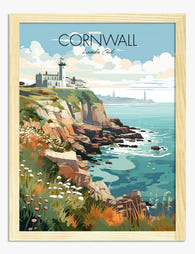
Cornwall Coastal Cliffs Art Print
Translation missing: en.products.product.sale_price From £11.95£19.95 -

Scottish Street Charm Art Print
Translation missing: en.products.product.sale_price From £11.95£19.95 -

Cornwall Coastal Cliffs Canvas Print
Translation missing: en.products.product.sale_price From £44.95£74.95 -
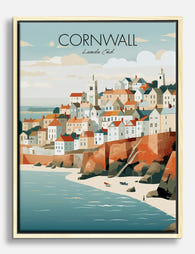
Cornwall Coastal Charm Canvas Print
Translation missing: en.products.product.sale_price From £44.95£74.95 -

Cornwall Coastline Charm Art Print
Translation missing: en.products.product.sale_price From £11.95£19.95 -

Cornwall Coastal Charm Canvas Print
Translation missing: en.products.product.sale_price From £44.95£74.95 -

Cornwall Coastal Village Art Print
Translation missing: en.products.product.sale_price From £11.95£19.95 -

Cornwall Coastal Charm Art Print
Translation missing: en.products.product.sale_price From £11.95£19.95 -

Cornwall Coastal Charm Canvas Print
Translation missing: en.products.product.sale_price From £44.95£74.95 -

Cornwall Coastal Charm Art Print
Translation missing: en.products.product.sale_price From £11.95£19.95 -
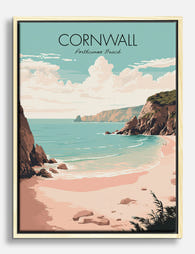
Cornwall Coast Vintage Canvas Print
Translation missing: en.products.product.sale_price From £44.95£74.95 -

Cornwall Coastal Charm Canvas Print
Translation missing: en.products.product.sale_price From £44.95£74.95 -

Cornwall Coastal Retreat Canvas Print
Translation missing: en.products.product.sale_price From £44.95£74.95 -

Coastal Charm: Cornwall Canvas Print
Translation missing: en.products.product.sale_price From £44.95£74.95 -

Cornwall Coastal Retreat Art Print
Translation missing: en.products.product.sale_price From £11.95£19.95 -

Cornwall Coastal Charm Canvas Print
Translation missing: en.products.product.sale_price From £44.95£74.95 -

Cornwall Coastal Charm Canvas Print
Translation missing: en.products.product.sale_price From £44.95£74.95 -

Cornwall Coastal Cliffs Canvas Print
Translation missing: en.products.product.sale_price From £44.95£74.95 -

Colorful Cornwall Harbor Art Print
Translation missing: en.products.product.sale_price From £11.95£19.95 -
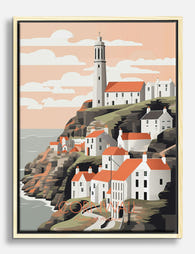
Cornwall Coastal Charm Canvas Print
Translation missing: en.products.product.sale_price From £44.95£74.95


More from The Frame

Living Room Urban Art Ideas: Building a Gallery...
A blank living room wall is an opportunity, but it's also where most gallery walls go wrong. Urban art gives you something that floral prints and abstract pastels can't: a...

Why Do Most Travel Gallery Walls Look So Clutte...
Most travel gallery walls fail for the same reason: they try to show everything. Every trip, every favourite shot, every poster picked up at a museum gift shop, all crammed...

Why Graphic Prints Work Better in Pairs Than Solo
Graphic prints have a reputation for being the difficult guests of the art world: loud, opinionated, hard to seat next to anyone else. That reputation is mostly wrong. With one...