
 Order today for delivery by
 Are Floral Prints Still in Style? What's Actually Trending Right Now
Why botanicals never really left, what's shifting in 2024, and how to spot a floral print that will still feel right in a decade.


Floral wall art is having a moment, but calling it a "trend" misses the point. Botanicals have been hung on walls since the 17th century, and the current resurgence is less about novelty and more about a shift in how we're styling them: darker frames, bigger scale, moodier palettes, and a confident mix of vintage and abstract.
Floral art isn't a trend: why it keeps evolving instead of disappearing
Botanicals fall under what designers call biophilic design, the principle that humans feel calmer in spaces that reference nature. It's the same instinct behind houseplants, linen curtains, and oak floors. That's not a passing fashion. It's a baseline preference that interior designers have been working with for centuries.
What changes is the styling. In the 2010s, floral prints meant pale pastels in thin white frames, often hung in groups of three above a sofa. In 2024, the same flowers might appear as a single oversized stem on charcoal paper, framed in solid black oak. The subject endures. The treatment evolves.
This is why floral print trends 2024 conversations matter less than people think. If you're choosing between a botanical you love and a "safer" abstract because you're worried about timelessness, you're solving the wrong problem. Florals have outlasted every minimalist phase of the last 50 years. They'll outlast this one too.

The vintage botanical revival and why dark frames are key
The single biggest shift in botanical wall art over the past two years is the move from light frames to dark ones. White and natural oak still have their place, but black, walnut, and deep espresso frames are dominating moodboards and well-styled homes. There's a reason.
Vintage botanical illustrations, the kind originally drawn for 18th and 19th century scientific journals, were printed on cream or aged paper with fine, precise linework. When you put that artwork in a thin white frame, the print floats and feels insubstantial. When you put it in a black frame with a generous mount, it suddenly looks like something you'd see in a serious gallery.
This is the grandmillennial influence at work: vintage references styled with modern confidence. A pressed-fern illustration in a 60x80cm black frame above a mid-century credenza reads as considered and grown up, not twee. The same print in a thin gold frame on a gallery wall reads as decorative filler.
If you're shopping vintage botanical prints, our advice is straightforward: go darker than you think. A walnut or black solid wood frame anchors the artwork and makes the cream paper background feel intentional. With UV-protective acrylic glazing the print stays sharp even on a sunny wall, which matters because vintage-style botanicals often end up in conservatories, bathrooms, and bright hallways.
Mixing scientific illustration with looser styles
Strict scientific illustrations (think Pierre-Joseph Redouté rose plates) read very differently from looser watercolour botanicals or pressed-flower compositions. You can absolutely mix them, but pick one to dominate. Three Redouté-style prints with one watercolour as the "breath" works. Equal numbers of each turns into visual noise.
Abstract florals: the modern alternative to traditional flower prints
If vintage botanicals feel too literal for your space, abstract florals are where the most interesting work is happening right now. These are prints where the flower is recognisable but stylised: a tulip reduced to three confident brushstrokes, a poppy field painted in flat colour blocks, a peony rendered as overlapping translucent shapes.
The appeal is that they bring the warmth and softness of botanical subject matter without the literalness. They sit comfortably next to modern furniture, work in minimalist interiors, and don't compete with patterned textiles the way a detailed botanical can.
Modern floral prints in this category tend to share three things: limited palettes (often three or four colours), confident negative space, and a slightly painterly or screen-printed quality. They're the natural choice if your taste leans more contemporary but you still want the calming effect of organic subject matter.
For inspiration, browse abstract art prints alongside more traditional floral options. The pieces that work hardest in real homes often sit on that boundary: clearly botanical, but loose enough to feel like art rather than decoration.

Oversized single-stem compositions and why scale matters
This is the trend that's quietly reshaping how florals are styled, and almost no one writing about wall art has caught up to it. Traditional floral compositions show a bouquet, a vase, or a full meadow. The new dominant format is a single stem, sometimes a single flower head, sized large.
A single peony on a 70x100cm print. One tulip stretched across 100x150cm of canvas. An iris filling the frame with nothing else competing for attention. It's a runway influence (fashion has been doing oversized singular florals for three or four seasons) that translates beautifully to walls.
Why it works: scale gives a single object gravity. A small print of a rose is decorative. A 1.5-metre print of the same rose is a statement piece. It becomes the thing your eye lands on first when you walk into the room, the equivalent of an architectural detail.
Where to use big single-stem prints
These pieces want space around them. Above a low sideboard with nothing else on the wall. At the end of a hallway as a vista. Above a bed where they replace a headboard's worth of visual weight. They struggle in busy gallery walls or above heavily patterned furniture.
For oversized work, canvas is often the better choice than framed paper. A 100x150cm canvas weighs a fraction of an equivalent framed print and gives you the option of an unframed, minimal look or a floating frame for something more polished. The mirrored edge wrap means you don't lose any of the image to cropping, which matters when the composition is built around a single subject.
A note on ditsy florals at small scale
The opposite of the oversized trend is also having a moment: tiny repeating florals (sometimes called ditsy) in small frames, hung in clusters of six or eight. This is the cottage-core, English country house influence. It works brilliantly in older homes, on stair walls, and above narrow consoles. The key is committing fully. Three small floral prints look like an afterthought. Eight or ten in matching frames look like a curated collection.
Colour trends in floral wall art right now
The pastel era is genuinely over. Are botanical designs trending now? Yes, but in colours your grandmother wouldn't recognise as floral.
Current palettes worth knowing:
Moody and dark: Deep aubergine, oxblood, forest green, charcoal backgrounds with single pale blooms. This works particularly well in north-facing rooms, snugs, and bedrooms where you want enveloping rather than bright.
Earth tones: Terracotta, ochre, rust, mustard, sage. These read sophisticated and adult, and they coordinate naturally with the warm neutrals (off-white walls, oak floors, linen) that dominate current interior palettes.
Muted vintage: Faded sepia, soft cream, dusty rose, antique blue. Not pastel, more like a watercolour that's been sitting in sun for 80 years. This is the palette doing most of the heavy lifting in the vintage botanical revival.
Black and white botanicals: Often overlooked, but a high-contrast monochrome fern or palm leaf is one of the most versatile pieces of wall art you can buy. It works in almost any room and survives every change of paint colour you'll make over the next decade.
What's notably absent from current trends: bright primaries, glossy finishes, and the soft millennial pastel pink/mint combination that defined the late 2010s.

How to pick a floral print that won't date in two years
This is where most trend articles fail you. They describe what's current, then leave you to figure out which of those currents will still feel right in 2030. Here's a framework that actually works.
Choose subject over styling. A peony is timeless. A peony rendered in 2014's chevron-pattern background is not. When you're evaluating a print, mentally subtract the styling choices (colour grading, background, frame) and ask whether the underlying subject would have worked 50 years ago. If yes, you're probably safe.
Pay attention to paper and print quality. Cheap floral prints date quickly because the inks shift and the paper yellows in unflattering ways. Museum-grade giclée printing on thick matte paper, the standard for serious art prints, ages slowly and evenly. UV-protective glazing matters here too, particularly for anything hanging on a sunlit wall.
Avoid the most aggressively "of the moment" treatments. If a print's distinguishing feature is a specific Instagram-era filter, a trendy typography overlay, or a colour gradient that screams 2024, that's the part that will date first. The flower won't date. The styling around it will.
Trust frames more than mounts. Solid wood frames in classic profiles (black, walnut, natural oak, white) have looked good for 200 years and will look good in 200 more. Heavy decorative mounts, coloured frames, and ornate gilding are riskier long-term bets, even when they're currently fashionable.
Buy what you'd buy if no one else saw it. The genuine test of longevity is whether you'd still want the print on your wall if it were hanging in a room only you ever entered. Trend-driven purchases tend to be social. Lasting ones tend to be personal.
Our current favourite floral art prints on Fab
A few directions worth exploring if you're shopping now.
Single-stem botanical illustrations in dark frames. The classic Redouté-style rose, tulip, or anemone in a 50x70cm or 60x80cm black frame is genuinely one of the safest, most versatile purchases you can make. It works above a desk, in a hallway, in a guest bedroom, or as part of a gallery wall.
Abstract floral pairs in earth tones. Two complementary abstract florals in ochre, sage, or terracotta, hung side by side above a sofa or sideboard. This is the modern interpretation of the traditional floral grouping, and it photographs beautifully in real homes.
Oversized single bloom on canvas. A 100x150cm canvas of a single peony, magnolia, or protea, hung in a room that can take the scale. If you've been waiting for the right piece for the wall opposite your sofa, this might be it.
Black and white botanical line drawings. The quiet workhorses of any floral collection. Ferns, monstera leaves, eucalyptus branches rendered as simple line drawings on cream paper. They cost less, they go with everything, and they look just as good on their own as in a group.
Browse the full floral designs collection or, if your taste leans more contemporary, the modern art prints selection for pieces that blur the line between abstract and botanical.

The bottom line
Buy the flower you love, in a quality that will age well, in a frame that won't fight the rest of your room. Skip the styling gimmicks. Go a size up from what feels safe, and go a shade darker on the frame than your instinct suggests. That's how you end up with a floral print you'll still be glad you bought ten years from now.

Fab products featured in this blog
-

Botanical Flow in Beige and Black Art Print
Sale price From £11.95£19.95 -

Floral Statement Style Art Print
Sale price From £11.95£19.95 -

Proteas in a Blue Vase Art Print
Sale price From £11.95£19.95 -

Woman in Floral Coat Art Print
Sale price From £11.95£19.95 -

Bold Botanical Vases Art Print
Sale price From £11.95£19.95 -

Big Cream Bloom on Green Art Print
Sale price From £11.95£19.95 -

Boho Flower Burst Art Print
Sale price From £11.95£19.95 -

Risograph Daisies in Pink and Green Art Print
Sale price From £11.95£19.95 -

Modern Botanical Burst Art Print
Sale price From £11.95£19.95 -

Blue Bottle, Dog Rose and Garden Anemone Art Print
Sale price From £11.95£19.95 -

Boho Botanical Vases Art Print
Sale price From £11.95£19.95 -

Ceramic Collection Vase 10 Art Print
Sale price From £11.95£19.95 -

Sage Garden Bloom Art Print
Sale price From £11.95£19.95 -

Hollyhocks in Pink and Deep Green Art Print
Sale price From £11.95£19.95 -

The Botanical House — Purple Heritage Floral Art Print
Sale price From £11.95£19.95 -

Riso Buttercups in Green and Pink Art Print
Sale price From £11.95£19.95 -
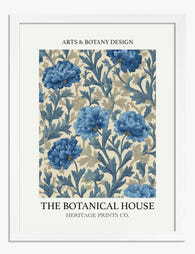
The Botanical House — Blue Heritage Floral Art Print
Sale price From £11.95£19.95 -
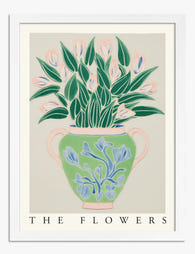
Botanical Bloom Vase Art Print
Sale price From £11.95£19.95 -

Modern Green Botanical Burst Art Print
Sale price From £11.95£19.95


More from The Frame

Japandi Bedroom Wall Art: How to Create a Space...
Bedrooms are the hardest room to decorate well because the goal isn't to impress anyone. It's to help you sleep, wake up gently, and spend quiet hours in a space...

Matisse Botanical Art vs Modern Botanical Print...
Both trends promise to bring nature indoors, but they do it in almost opposite ways. Matisse throws colour at the wall like a jazz solo. Modern botanical prints whisper in...

Why Do Matisse Tree Prints Work in Every Room?
Matisse's trees and gardens sit in a strange sweet spot: recognisable enough to feel considered, quiet enough to live with. Unlike his cut-outs, which shout, his tree work whispers. That's...