
 Order today for delivery by
 Modern Canvas Art: What's Actually Worth Hanging in 2025
A designer's view on which canvas styles will outlast the trend cycle, and which ones to skip entirely.


The canvas market is loud right now, full of identical abstracts and over-saturated botanicals that all look the same on Instagram. Below is what's genuinely worth your wall space, why it works, and how to spot the styles that will still feel right in five years.
The shift from loud gallery walls to single statement canvases
The eclectic gallery wall, twelve mismatched frames arranged like a Pinterest puzzle, has had its run. The dominant move in 2025 is the opposite: one large canvas, properly scaled, sitting in negative space.
There are a few reasons this shift has stuck. Interiors have moved towards calmer, more textural palettes (warm whites, putty, oat, soft clay), and a busy gallery wall fights that mood instead of supporting it. A single canvas behaves more like architecture. It anchors the room rather than decorating it.
There's also a practical reason. Gallery walls are genuinely difficult to get right. Spacing, alignment, frame consistency, scale relationships between pieces, all of it has to work, and most don't. A single 100x150cm canvas above a sofa solves the problem in one decision.
If you're going this route, scale matters more than anything else. The piece should fill roughly two-thirds the width of whatever furniture sits beneath it. Smaller than that and it looks marooned. The most common mistake we see is people buying canvas art that's 40cm too small for the wall it's meant to fill.

Abstract canvas prints: why muted palettes are winning over bold colour
Walk through any well-designed home this year and the abstract canvas prints you'll see share a quiet quality. Bone, ochre, taupe, faded indigo, charcoal smudged into cream. Not beige (beige is dead), but layered neutrals with subtle warmth.
The reason muted abstracts outlast bold ones isn't aesthetic preference. It's structural. A bold colour-blocked abstract makes a strong statement on day one and competes with everything else in the room from day two onwards. Cushions, rugs, throws, books on the shelf, all of it has to negotiate with the painting. Muted abstracts let your soft furnishings shift seasonally without the art looking suddenly wrong.
There's also a longevity argument. Highly saturated colour combinations tend to date themselves to a specific moment. The mustard-and-teal pairing of 2018, the millennial pink and sage of 2022, the ultra-saturated dopamine palettes of 2023. These read as time stamps within a few years. Muted, layered tones don't carry the same dating risk because they're closer to how natural materials actually look.
How do you spot a "too trendy" abstract? A few warning signs:
- Colours that look adjusted for an Instagram filter rather than a wall
- Very specific palette combinations that feel borrowed from a 2024 mood board
- Shapes that mimic the same handful of viral artists (you'll know them when you see them)
- Anything that screams more on a phone screen than it does in a photograph of an actual room
The abstract pieces that age well tend to share something with mid-century work from the 1950s and 60s. Rothko, Diebenkorn, the quieter Helen Frankenthaler pieces. Those compositions still look current after seventy years because they're built on tonal relationships, not trend-driven colour stories.
Botanical and nature art on canvas: the look that keeps evolving
Botanical art is the rare subject that genuinely doesn't go out of style, but the way it's rendered changes constantly. The Victorian pressed-fern era gave way to mid-century minimalist line drawings, which gave way to maximalist tropical prints, which have now given way to something quieter: large-scale, painterly, almost meditative studies of single plants or landscapes.
The current mood in botanical art prints leans towards muted greens, dried-grass golds, and soft greys. Think a single olive branch rendered in watercolour washes, or a misted hillside reduced to three tonal layers. The aggressive jungle-print era is over. What's replaced it is closer to the work of Japanese woodblock artists or quiet Scandinavian landscape painters.
This works on canvas specifically because canvas softens detail in a way that suits these subjects. A high-resolution paper print of a botanical can feel clinical, almost like a scientific illustration. The same image on poly-cotton canvas reads as painterly, more like an actual brushwork study.
Botanical and landscape subjects have staying power because they reference something permanent. Trends come and go, but humans have hung images of plants and landscapes on walls for several thousand years. The specific style will date. The subject won't.

Textured and painterly prints: canvas as the ideal format
If there's one differentiator for canvas in 2025, it's texture. Painterly brushwork, visible mark-making, work that looks like it was actually painted rather than digitally generated. This is where canvas has a genuine technical advantage over paper.
Here's why. The weave of a poly-cotton canvas adds physical texture to anything printed on it. A flat digital painting reads as flat on paper. The same image on canvas takes on a tactile quality, because the canvas weave breaks up the surface and your eye reads it as paint. It's a small thing, but it's the difference between "print" and "artwork."
For abstract work especially, this matters. The painterly abstracts dominating well-designed homes right now (loose washes, visible brush gestures, scumbled edges) only really sing on canvas. On paper they look like reproductions. On canvas they look like originals.
A few quality markers to look for:
- Giclée printing, not standard inkjet. Giclée uses pigment-based inks and produces far deeper colour and finer detail.
- Mirrored edge wrapping, where the edges of the canvas continue the image rather than cropping it or leaving a white border. This means you can hang the piece unframed without it looking unfinished.
- Hand-stretched over solid wood, not stapled to a hollow plastic frame. This is what stops canvas from sagging or warping after six months on the wall.
- UV-resistant inks that won't fade in direct sunlight. Cheap canvas prints lose 30% of their colour saturation within a year near a south-facing window.
The frame-versus-frameless question for canvas is genuinely a matter of taste, but here's our position: gallery-wrapped (frameless) canvas reads as more contemporary and works better in minimal interiors. A floating frame in black or natural oak adds polish and works better in more traditional rooms. Both age well. The thing to avoid is a chunky ornate frame on a contemporary canvas, which looks like a costume.
How to pick modern canvas art that suits your room's existing palette
The simplest rule: pick a piece that contains at least one colour already present in your room, but in a different intensity. If your sofa is sage green, a canvas with muted forest tones will tie in. If your walls are warm white and you have oak floors, a canvas with cream, ochre and umber will sit naturally.
What you don't want is exact matching. A sage green canvas above a sage green sofa looks like a furniture showroom display. The art should harmonise with the room, not duplicate it.
Some specific guidance:
If your room is warm-toned (oak, terracotta, cream, brass): look for canvases with ochre, rust, burnt umber, soft black. Avoid cool greys and icy blues, they'll fight the warmth.
If your room is cool-toned (white walls, grey sofa, chrome or steel hardware): look for canvases with charcoal, slate, faded indigo, bone. Warm-toned art can work as contrast, but only if it's a single dominant piece.
If your room is neutral and minimal: this is where painterly abstracts in muted palettes earn their keep. You have permission to go larger and more atmospheric.
If your room already has strong pattern (patterned rug, bold curtains): go quieter with the canvas. Solid tonal abstracts or simple botanical studies. Adding more pattern creates visual chaos.
For sizing, the standard guidance is: above a sofa or bed, the canvas should be roughly 60-75% of the furniture's width. Above a console or sideboard, slightly less. On a blank wall with no furniture beneath, go larger than feels comfortable. Most people undersize.

Styles we think will still look great in five years
Here's the honest version. Some things being heavily promoted right now will look dated by 2027. Others will still feel current in 2030. The difference comes down to whether the style is grounded in something durable or borrowed from a passing visual moment.
Likely to age well:
- Muted, painterly abstracts with tonal rather than chromatic relationships
- Single-subject botanical studies in restrained palettes
- Mid-century-influenced abstracts (the lineage from Rothko, Diebenkorn, Frankenthaler)
- Atmospheric landscape work, especially anything with a sense of distance or weather
- Black and white photography with strong composition (architectural, landscape, figurative)
- Anything that references hand-made mark-making rather than digital perfection
Likely to date quickly:
- Highly saturated colour-blocked abstracts in viral palettes
- Anything featuring trending typography or motivational text
- Hyper-stylised "AI-look" landscapes with that specific glossy synthetic quality
- Tropical maximalist prints (the moment has passed)
- Abstracts that feel designed for an Instagram grid rather than a wall
- Anything that's clearly imitating a specific currently-famous artist
The simplest test: would this piece look at home in a well-designed room from 1965, 1985, 2005, and now? If you can imagine it working across decades, it'll probably keep working. If it could only exist in 2025, treat it cautiously.
Our current picks from the Fab canvas collection
A few directions worth exploring if you're starting a search through our canvas wall art collection.
For a living room focal piece: a large painterly abstract in cream, ochre and charcoal, sized at 100x150cm or close. This is the single highest-impact decision you can make for a lounge that feels half-finished. Hang it 15-20cm above the back of your sofa.
For a bedroom: a quieter botanical or landscape study in soft greens and oat tones, framed in natural oak if your bedroom leans warm. Bedrooms benefit from softer subjects. Save the dramatic abstracts for spaces you're awake in.
For a hallway or entryway: vertical-format canvas prints work better than horizontal in most hallways. A tall, narrow painterly piece (something like 50x100cm) in muted tones gives the space presence without crowding it.
For a dining room or kitchen: this is where you can take more risk with subject matter, because it's a social, energetic space. A bolder modern art print on canvas can work here in a way it wouldn't in a bedroom.
For a home office: keep it calm. Painterly abstracts in a restricted palette help focus rather than distract. Avoid anything too detailed or visually noisy.

A final thought
The best canvas art is the kind you stop noticing for weeks at a time, then look at properly one Sunday afternoon and remember why you bought it. It shouldn't shout. It should sit in the room like it always belonged there. Buy for that quiet recognition, not for the first impression, and you'll end up with something you don't replace in two years.

Fab products featured in this blog
-

Houseplant in the Corner Canvas Print
Translation missing: en.products.product.sale_price From £49.95£74.95 -

Boy in a Striped Jumper Canvas Print
Translation missing: en.products.product.sale_price From £49.95£74.95 -

Urban Green Abstract Canvas Print
Translation missing: en.products.product.sale_price From £49.95£74.95 -

Coral Bloom on Terracotta Canvas Print
Translation missing: en.products.product.sale_price From £49.95£74.95 -

Quiet Company Canvas Print
Translation missing: en.products.product.sale_price From £49.95£74.95 -

Quiet Curve in Green and Teal Canvas Print
Translation missing: en.products.product.sale_price From £49.95£74.95 -

Playful Potted Blooms Canvas Print
Translation missing: en.products.product.sale_price From £49.95£74.95 -

The Thoughtful Footballer Canvas Print
Translation missing: en.products.product.sale_price From £49.95£74.95 -

Earthy Modern Geometry Canvas Print
Translation missing: en.products.product.sale_price From £49.95£74.95 -

Modern Muse in Pink and White Canvas Print
Translation missing: en.products.product.sale_price From £49.95£74.95 -

Modern Vase Bloom Still Life Canvas Print
Translation missing: en.products.product.sale_price From £49.95£74.95 -

Cubist Bust in Warm Neutrals Canvas Print
Translation missing: en.products.product.sale_price From £49.95£74.95 -

Modern Balance Shapes Canvas Print
Translation missing: en.products.product.sale_price From £49.95£74.95 -
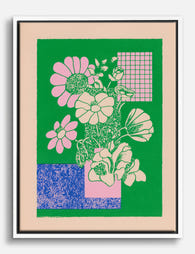
Risograph Daisies in Pink and Green Canvas Print
Translation missing: en.products.product.sale_price From £49.95£74.95 -

Indigo Half Moon and Dots Canvas Print
Translation missing: en.products.product.sale_price From £49.95£74.95 -

Terracotta Muse Canvas Print
Translation missing: en.products.product.sale_price From £49.95£74.95 -

Magnolia in Terracotta Pot Canvas Print
Translation missing: en.products.product.sale_price From £49.95£74.95 -

Bone Leaf on Warm Brown Canvas Print
Translation missing: en.products.product.sale_price From £49.95£74.95 -

Quiet Bloom in Deep Red Canvas Print
Translation missing: en.products.product.sale_price From £49.95£74.95 -

Bold Blooms Bouquet Canvas Print
Translation missing: en.products.product.sale_price From £49.95£74.95


More from The Frame

Urban Jungle Interiors: Using Wall Art Instead ...
The urban jungle look is having a moment that refuses to end. But most of the people pinning those plant-drenched living rooms will never own 47 monsteras, and that's fine....

Room by Room: How to Hang William Morris Floral...
You've fallen for Morris. The question now is which floral goes where, at what size, in what frame. This guide skips the Arts and Crafts lecture and gets straight to...

Jungle Bedroom Ideas for Adults: Grown-Up Ways ...
Jungle bedrooms have a reputation problem. Search the term and you'll find nursery mood boards, cartoon monkeys, and bright kelly green walls that would keep anyone awake. The grown-up version...