
 Order today for delivery by
 The Abstract Tree Art Edit: 12 Curated Picks for Modern Homes
Twelve ways to bring tree art into a contemporary home without a single touch of farmhouse, fairy lights, or floral chintz.


Tree art has a reputation problem. For years it's been associated with rustic cabins, woodland nurseries, and the kind of soft botanical prints that whisper "country kitchen." But abstract tree art is a different animal entirely, and once you see it placed correctly, it becomes one of the most versatile categories you can hang.
The new nature wall: why abstract tree art is replacing botanical prints
Traditional botanical prints, the labelled fern studies and pressed-flower compositions, lean heavily traditional. They reference Victorian science, country houses, and old apothecaries, which is charming in the right setting but tricky in a modern flat with concrete floors and a low-slung sofa.
Abstract tree art does the opposite job. It keeps the calming, grounding quality of nature, the sense of something living on your wall, but strips out the literal detail. You're left with silhouette, gesture, colour, and rhythm. That's why it works in interiors where a labelled botanical would look out of place.
The shift mirrors what's happening across interior design generally. Designers are moving away from cluttered, decorative nature references and toward what you might call "essential nature," which is a single strong form, an abstracted shape, a palette borrowed from a landscape rather than a depiction of it. A stylised tree wall art print fits this brief perfectly.
If you've been wanting to bring nature in but worried it would tip your space into cottage territory, the trick is to choose work that prioritises form over realism. Bold silhouettes, broken-up colour fields, geometric reductions. These are the visual cues that read as contemporary rather than rural.

Bold and colourful: abstract trees for maximalist spaces
Maximalist rooms thrive on contrast, layering, and visual confidence. A timid print gets lost. What works here is colourful abstract tree art with real saturation, think cobalt against burnt orange, magenta against forest green, or ochre against ink black.
Pick 1: The expressionist canopy. A loose, painterly tree with visible brushwork in clashing tones. Hang this above a velvet sofa in a deep jewel colour, surrounded by patterned cushions. The art holds its own because it's louder than its surroundings.
Pick 2: The colour-block forest. Multiple tree forms reduced to flat planes of colour, almost like a mid-century travel poster. Works brilliantly in a dining room with bold wallpaper. The graphic quality stops things feeling chaotic.
Pick 3: The fauvist single tree. One tree, wild colour. Pink trunk, yellow leaves, a violet sky. Sounds ridiculous, looks incredible at 70x100cm in a hallway with terrazzo flooring.
The rule with maximalist tree art is to commit. Half-hearted colour reads as accidental. If you're going bold, go properly bold, and pick a size that signals confidence rather than caution.
Monochrome and minimalist: pared-back tree prints for Scandi rooms
Scandi interiors live or die on restraint. Too much pattern and the whole calm thing collapses. A minimalist tree art print is one of the easiest ways to add organic warmth without disturbing the palette.
Pick 4: The ink-wash silhouette. A single tree in soft black ink on warm white paper. The asymmetry matters here, you want the tree to feel observed rather than designed. Place it above a pale oak sideboard with one ceramic vessel beside it.
Pick 5: The line-drawing pair. Two prints, each a continuous line tree, hung side by side. This is the Scandi sweet spot, repetition with subtle variation. A wall art set like this works particularly well in a bedroom above a low headboard.
Pick 6: The negative-space study. A print where the tree is implied as much as drawn, lots of breathing room, faint branches dissolving at the edges. In a Scandi lounge with pale walls, this is the kind of piece guests notice on their third visit, not their first. That slow-burn quality is exactly what you want.
For Scandi rooms, framing matters as much as the art itself. A slim black frame keeps things graphic. A natural ash or oak frame adds warmth without veering rustic. Avoid anything ornate, distressed, or chunky.

Geometric tree art: where sharp lines meet organic forms
Geometric tree art is the clearest signal you can send that your nature print is contemporary, not country. The geometry overrides any rustic association immediately. Triangles for foliage, perfect circles for canopies, clean parallel lines for trunks. The eye reads "designed" before it reads "tree."
Pick 7: The triangular pine. A coniferous tree reduced to stacked isosceles triangles. Often done in two-tone, a dark trunk against a flat-colour background. Works beautifully in mid-century modern interiors with walnut furniture and tapered legs.
Pick 8: The circle-canopy abstract. A perfect circle or cluster of overlapping circles forming the crown, a single straight line as trunk. Almost Bauhaus in feel. Pair with a tubular steel chair and a wool rug in muted clay.
Pick 9: The fractured forest. Multiple geometric trees arranged in a flat plane, each one made from different polygon shapes. The composition rewards close looking, which is why these prints suit a study, a reading nook, or anywhere people sit still for a while.
Geometric tree art also handles Japandi interiors well. The clean shapes echo the Japanese influence, the natural subject keeps the Scandi softness. If you're working in that style, look for geometric trees in earthy, desaturated palettes rather than bright primaries.
Abstract woodland prints for hallways and transitional spaces
Hallways are awkward. They're narrow, often poorly lit, and you walk through them too quickly to register much detail. This is why abstract woodland prints work better here than detailed botanical studies. You want something that registers as a mood, not a study.
Look for prints with vertical emphasis, abstract birch groves, repeating trunk lines, soft fog or misty backgrounds. The verticality flatters narrow walls and elongates the space.
A long horizontal print at eye level works above a console table near the front door. A series of three smaller prints, hung in a row, draws the eye down a corridor and makes it feel intentional rather than transitional. If you're using a series, keep the framing identical, this is where consistency pays off.
For staircases, place prints stepped along the rising line of the stairs rather than straight across. A loose grove of three abstract tree prints in similar tones, with the bottom edge of each frame following the rake of the stairs, looks considered without feeling fussy.
These spaces also benefit from prints with UV-protective glazing if you've got sunlight coming through a front door's glass panel. Direct light fades cheap inks fast, which is why giclée prints on acid-free paper hold up where standard posters would yellow within a year.
Pairing abstract tree art with other prints in a gallery wall
Gallery walls fall apart when there's no shared thread. With abstract tree art, you've got three natural threading options: colour, subject, or style.
Threading by colour. Pick two or three colours from your tree print and only include other prints that share that palette. The subjects can vary wildly. An abstract tree, a colour-field painting, a black-and-white photograph with a tonal warmth that matches, a piece of typography in a tonal colour. The palette is what holds it together.
Threading by subject. All nature, all the time. Mix abstract trees with abstract landscapes, abstract florals, abstract water studies. Keep some restraint in the palette, but the shared nature theme will tie things together even with variety. This is where browsing botanical art prints alongside your tree prints pays off.
Threading by style. All line drawings, or all painterly, or all geometric. The subjects can be diverse, trees, figures, architecture, but the visual language stays consistent.
For practical layout, the rule we keep coming back to is: pick a hero piece (usually the largest), place it slightly off-centre, and let everything else orbit around it. Leave 5 to 8cm between frames. Don't mix more than two frame finishes in a single wall.

Seasonal shifts: warm-toned vs cool-toned tree art and when to use each
Colour temperature changes how a room feels far more than people give it credit for. The same room with warm-toned art versus cool-toned art reads as two different spaces.
Warm-toned tree art (rust, ochre, terracotta, warm browns, deep reds) makes a room feel enclosed, intimate, evening-lit. It works brilliantly in north-facing rooms that get cool, blueish daylight, the warmth in the art compensates. It also works in rooms you use mostly at night, like a bedroom or a snug, because the colours hold their richness under artificial light.
Cool-toned tree art (slate, sage, dusty blue, charcoal, soft greens) makes a room feel open, airy, daylit. It suits south-facing rooms that already get warm light, the coolness in the art balances. It also works in spaces where you want a sense of calm and distance, like a home office or a guest room.
A practical seasonal note: if you have one large print and you find it feeling wrong in summer or winter, the problem is usually temperature mismatch with your current daylight. The fix isn't always to swap the art. Sometimes it's to add a second piece nearby in a complementary temperature so the wall has both.
For rooms with very little natural light, lean warm. Cool tones in dim spaces can read as flat and cold rather than calm. A warm abstract tree on a low-lit landing will give you 80% of the calm benefit with none of the gloom.
Our curated picks for every style
Bringing it all together, here are the final three picks rounding out the twelve.
Pick 10: The oversized statement tree. A single tree at 100x150cm canvas size, dominating one wall. Works above a sofa, behind a bed, or in an open-plan room as the visual anchor. The mirrored edge wrapping on a canvas means the image doesn't get cropped at the sides, which matters for tree compositions where the canopy reaches outward. Canvas also handles humidity better than framed glass, so this is a smart pick for kitchen-dining spaces.
Pick 11: The diptych or triptych. A tree image split across two or three panels. Hung with a small gap between each, this gives you scale and rhythm at once. Suits long walls in living rooms, dining areas, or above a wide headboard. A wall art set designed as a single composition removes the alignment guesswork.
Pick 12: The framed gallery print. A medium-sized framed print, 50x70cm or 60x80cm, in a slim solid wood frame with UV-protective acrylic glaze. This is the all-rounder. Works above a desk, in a bedroom, in a hallway, in a kitchen. If you only buy one piece of abstract tree art in your life, make it this format.

A note on quality, because it matters more than people realise. The biggest letdown in this category is usually framing, prints that arrive warped, frames shipped separately, art that doesn't sit flat. When you're buying abstract art prints, look for prints fitted into the frame before shipping, solid wood (not MDF), and acrylic glazing rather than glass if you've got the print going anywhere near a busy hallway or a child's bedroom.
Where to start
If you're new to abstract tree art and unsure where to begin, pick one room you spend a lot of time in. Identify whether it leans Scandi, maximalist, mid-century, or transitional. Match the art style to the room style (geometric for mid-century, monochrome for Scandi, bold colour for maximalist, soft abstract for transitional). Choose your colour temperature based on the room's natural light. Buy one piece slightly larger than feels safe.
That last point is the one most people get wrong. Undersized art is the single most common mistake in home styling, and abstract tree prints in particular reward scale. Go one size up from your instinct, and you'll thank yourself every time you walk into the room.

Fab products featured in this blog
-
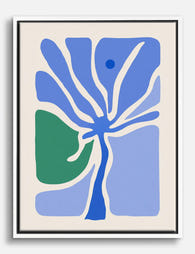
Blue Abstract Tree Harmony Canvas Print
Sale price From £49.95£74.95 -

Blue Abstract Tree Harmony Art Print
Sale price From £11.95£19.95 -

Blue Canopy Tree Art Print
Sale price From £11.95£19.95 -

Canopy in Monochrome Art Print
Sale price From £11.95£19.95 -

Blue Breeze Tree Art Print
Sale price From £11.95£19.95 -

Modern Green Botanical Burst Art Print
Sale price From £11.95£19.95 -

Yellow Modernist House Art Print
Sale price From £11.95£19.95 -

Modern Boho Leaf Silhouette Art Print
Sale price From £11.95£19.95 -

Monochrome Canopy View Canvas Print
Sale price From £49.95£74.95 -

Colour Splash Tree Art Print
Sale price From £11.95£19.95 -

Whimsical Woodland Hills Canvas Print
Sale price From £49.95£74.95 -

Floating Canopy Silhouettes Art Print
Sale price From £11.95£19.95 -
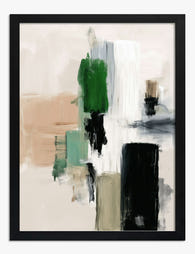
Urban Green Abstract Art Print
Sale price From £11.95£19.95 -

Green Circles and Arches Art Print
Sale price From £11.95£19.95 -

Bone Leaf on Warm Brown Art Print
Sale price From £11.95£19.95 -

Vibrant Life Tree Art Print
Sale price From £11.95£19.95 -
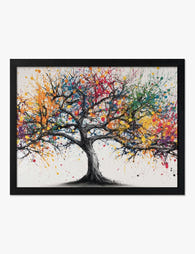
Colour Splash Tree Art Print
Sale price From £11.95£19.95 -

Shadowed Canopy Silhouette Art Print
Sale price From £11.95£19.95


More from The Frame

The best dog art by breed, from dachshunds to r...
Dog art has a long history, from Egyptian tomb paintings of sight hounds to Landseer's Victorian retrievers, and each breed carries its own visual language. The trick to choosing a...

The best bird art for a bedroom, from flight si...
Bird art is one of those categories that can drift into cliché fast. Done well, it brings movement, calm and a sense of open sky into the most private room...

The 12 Most Famous William Morris Designs (and ...
Morris designed over 50 wallpapers and textiles in his lifetime, but most people can only name three or four. This guide covers 12, with the story behind each one and...