
 Order today for delivery by
 The Nature Gallery Wall Edit: Curated Picks for Every Room
The one rule professional designers use to make eclectic nature prints look curated, not chaotic.


Most nature gallery walls fail for the same reason: people pick prints they love, hang them up, and hope cohesion magically appears. It doesn't. The good news is that curating a wall of forests, botanicals, and landscapes that actually looks intentional comes down to a handful of decisions you make before you buy anything.
The one rule for gallery walls: consistent framing, varied subjects
If you take nothing else from this guide, take this. Keep your frames consistent and let your subjects do the variety work.
That means matching frame colour, frame width, and mount style across every piece on the wall. Black with black. Natural oak with natural oak. Wide white mount with wide white mount. The frames become the visual grammar that holds the wall together, which frees you to mix a misty forest photograph with a delicate fern illustration with a moody mountain landscape and have it all read as one collection.
When people say a gallery wall looks "random" or "Pinterest-y," they almost always mean the framing is mismatched. Fix that and you've solved 80% of the problem before you've thought about layout.
A quick decision tree on frame finish:
- All black: modern, graphic, best for high-contrast photography and bold botanical illustration.
- All natural oak: warmer, softer, best for muted landscapes, watercolours, and earthy palettes.
- All white: gallery-clean, best for light rooms and delicate line work.
- Mixed finishes: only if you're confident, and only if you commit to a strict 50/50 split with a clear pattern (alternating, or one finish for the outer ring and another for the centre).

Choosing a nature sub-theme that holds everything together
"Nature" is too broad. A wall of tropical palms next to alpine peaks next to English meadow flowers will fight itself no matter how good the framing is. You need a sub-theme.
Pick one of these and stick to it:
- All forests: moody, immersive, works beautifully in lounges and bedrooms. Mix close-up tree trunks, misty canopy shots, and forest floor details. Browse forest art prints for the full range.
- All botanicals: cleaner and more decorative. Pressed-flower style, leaf studies, single-stem illustrations. Best in kitchens, bathrooms, and bright hallways. Start with botanical art prints.
- A specific landscape region: Pacific Northwest, Scottish Highlands, Mediterranean coast. The geographic constraint does enormous heavy lifting for cohesion.
- Earth tones only: less about subject, more about palette. Deserts, savannas, autumn woodland, dried grasses. Anything that lives in ochre, rust, and sand.
- Wilderness wide shots: mountains, lakes, open plains. Big-sky energy. Best on a large wall with room to breathe.
The pros and cons are simple. A tighter sub-theme is easier to curate but harder to refresh later. A looser sub-theme like "earth tones only" gives you more flexibility but demands more discipline on palette. If you're new to gallery walls, go tight. You can always loosen up on your second wall.
Layout templates: the grid, the salon hang, and the asymmetric cluster
Three layouts cover almost every wall you'll ever style. Pick one based on your print count and the wall's proportions.
The grid (best for 6 to 9 prints)
Equal-sized prints, equal spacing, arranged in a 2x3, 3x2, or 3x3 formation. Calm, architectural, deeply satisfying. Ideal above a sofa, behind a bed, or in a hallway. Use the same print size throughout (a 3x3 of 30x40cm prints with 5cm gaps takes up roughly 100x130cm of wall).
The grid is the safest option and looks the most "designed." It also makes mixing nature photography prints with illustration easier, because the rigid structure absorbs the visual difference.
The salon hang (best for 7 to 12 prints)
Mixed sizes, mixed orientations, packed densely with consistent gaps. This is the one that looks chaotic if you get it wrong, so the framing rule above becomes non-negotiable. Anchor it with one larger piece (around 50x70cm), then build outward with mediums (30x40cm) and a few smalls (20x30cm). Keep the outer edges of the arrangement roughly rectangular, even if the internal layout feels organic.
A salon hang works best on a tall wall, in a stairwell, or above a long sideboard. It rewards collecting over time.
The asymmetric cluster (best for 4 to 6 prints)
A small group of mixed-size prints arranged off-centre, often weighted to one side. Modern, restrained, and the right answer for awkward wall spaces (next to a doorway, above a console, in a narrow alcove). One large print, two mediums, one small, arranged so the visual weight balances even when the layout doesn't.
This is our favourite layout for people who think they need lots of prints but actually don't.

How many prints you actually need (spoiler: fewer than you think)
Most people buy too many prints. They see a dense salon hang on social media, panic-buy twelve pieces, and end up with a wall that feels cluttered.
A working rule: your gallery wall should cover roughly two-thirds of the wall width above whatever furniture sits beneath it. Above a 200cm sofa, your arrangement wants to be around 130cm wide. That's a 3x2 grid of 40x50cm prints, or four pieces in an asymmetric cluster. Not twelve.
Rough formulas by wall size:
- Small wall (under 150cm wide): 3 to 4 prints, asymmetric cluster.
- Medium wall (150 to 250cm): 5 to 6 prints, grid or cluster.
- Large wall (250cm+): 7 to 9 prints, grid or salon hang.
- Stairwell or feature wall: 9 to 12 prints, salon hang.
Pre-made wall art sets are a useful shortcut here because the curation work is already done, and the prints are sized to work together.
Mixing photography and illustration without visual whiplash
This is the part nobody explains properly. You can absolutely mix a black-and-white forest photograph with a hand-drawn botanical study, but only if you respect what designers call weight matching.
Visual weight is how much "presence" a piece has on the wall. A high-contrast, full-bleed photograph is heavy. A delicate single-stem line drawing on a white background is light. Hang them next to each other at the same size and the photograph will swallow the drawing whole.
Three rules for mixing media:
- Match weight to weight. Pair heavy photography with heavy illustration (bold botanical prints with strong colour fills). Pair delicate photography (misty, low-contrast, lots of negative space) with delicate illustration (line work, watercolour washes).
- Use size to compensate. If you must mix a heavy piece with a light one, make the light piece larger. A delicate fern illustration at 50x70cm can hold its own next to a punchy 30x40cm forest photograph.
- Alternate, don't cluster. Don't put all your photography on one side and all your illustration on the other. Distribute the media types across the arrangement so the eye moves evenly.
The same logic applies to colour intensity. A saturated autumn landscape next to a pale eucalyptus print will create whiplash unless you size them to balance, or unless you bridge them with a piece that contains both palettes.
Colour palette anchoring: picking 2 or 3 tones that run through every print
Here's the trick that separates a curated wall from a chaotic one: pick two or three colours and make sure every single print contains at least one of them.
This works because nature art is naturally varied. A forest scene might have twenty colours in it. A botanical illustration might have five. By forcing every piece to contain your anchor palette, you create a thread the eye follows even when subjects are wildly different.
Three palettes that work brilliantly for nature art decor ideas:
- Sage green + cream + charcoal: versatile, calm, works in almost any room.
- Rust + ochre + warm white: earthy, autumnal, brilliant in living rooms with wood furniture.
- Slate blue + soft grey + bone: moody and cool, ideal for bedrooms and bathrooms.
When you're shopping, hold each potential print against your palette mentally. If the dominant colours don't match, it doesn't go on the wall. No exceptions, even if you love the piece. Save it for somewhere else.
This is also where matte paper earns its keep. Glossy finishes shift colour under different lighting and fight each other on a gallery wall. A matte giclée print on thick paper holds its colour evenly and lets your palette read consistently across the whole arrangement.

Practical hanging: spacing, tools, and avoiding a wall full of holes
You've chosen your prints. Now don't ruin them with sloppy hanging.
The non-negotiable spacing rule
Keep 5 to 7cm (roughly 2 to 3 inches) between every frame, and keep that spacing identical across the entire wall. Inconsistent gaps are the second-biggest cause of "why does this look off?" after mismatched frames. Use a ruler. Don't eyeball it.
The floor layout method
Before you put a single nail in the wall, lay every print out on the floor in front of the wall. Photograph it from above. Move pieces around. Try the same arrangement at different scales. Spend twenty minutes on this. It will save you an hour of patching holes later.
The paper template technique
Cut sheets of newspaper or kraft paper to the exact size of each print. Mark where the hanging fixture sits on the back. Tape the paper templates to the wall with low-tack tape. Stand back. Adjust. Once you're happy, hammer through the paper at the marked points, then tear the paper away. Zero guesswork, zero extra holes.
Hanging height
The centre of your arrangement should sit roughly 145 to 150cm from the floor (gallery standard eye level). Above furniture, leave 15 to 20cm between the top of the furniture and the bottom of the lowest frame. Any more and the art floats. Any less and it feels cramped.
Tools you actually need
- Spirit level (or a level app on your phone)
- Tape measure
- Pencil
- Hammer and picture hooks rated for the weight of your frames
- Low-tack masking tape
If you're working with framed prints from us, the fixtures are already attached to the back, so you're hanging the piece itself rather than fiddling with separate hardware. The frames are solid FSC wood with UV-protective acrylic glaze, which means they're lighter than glass-fronted alternatives and far less terrifying to hang above a sofa.
Canvas as an alternative
If your wall is in a humid room (kitchen, bathroom) or you want a softer, frameless look, canvas prints work beautifully on a gallery wall. Mix canvas and framed prints only if you commit to it as a deliberate texture choice across at least half the arrangement. One lone canvas surrounded by framed prints looks like a mistake.

Troubleshooting: why your wall still looks off
If you've done all of the above and something still feels wrong, run through this checklist:
- Too many focal points? You probably have more than one heavy piece competing. Demote one by swapping it for something quieter.
- Inconsistent visual density? One area of the wall is busy, another is sparse. Redistribute or resize.
- Frame style mismatch? Even slight differences in frame width or finish read as wrong. Audit your frames in daylight.
- Palette drift? One print is the odd one out colour-wise. You know the one. Replace it.
Seasonal rotation without starting over
Once your wall is working, you don't need to redo it to keep it feeling fresh. Swap two or three pieces seasonally while keeping the rest fixed. In autumn, replace lighter botanicals with rustier landscapes. In spring, swap moody forest scenes for greener, brighter ones. Because your framing and palette stay consistent, the rotation feels like a refresh rather than a redesign.
Build your starter wall from the broader nature art prints collection, then keep a small stash of two or three rotation pieces in a cupboard. Future you will thank present you.
The bottom line
Cohesion comes from constraints. Pick a sub-theme, lock in your frames, anchor your palette, match your visual weights, and hang everything with consistent spacing. Do that, and a mix of forest prints for wall, botanical illustration, and wilderness wall art will look like the work of someone who knew exactly what they were doing. Which, by this point, you do.

Fab products featured in this blog
-

Whimsical Woodland Hills Canvas Print
Sale price From £49.95£74.95 -

Bright Path Through the Woods Art Print
Sale price From £11.95£19.95 -

British Botanical View Art Print
Sale price From £11.95£19.95 -

Tranquil Woodland Stroll Canvas Print
Sale price From £49.95£74.95 -

Whimsical Woodland Hills Art Print
Sale price From £11.95£19.95 -

Mediterranean Plant Parade Canvas Print
Sale price From £49.95£74.95 -
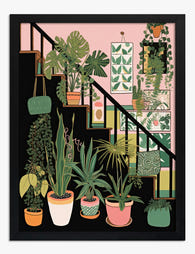
Botanical Stairway Art Print
Sale price From £11.95£19.95 -

Sunlit Forest Path Art Print
Sale price From £11.95£19.95 -

Tiny People at the Zoo Art Print
Sale price From £11.95£19.95 -

Sunlit Cabin Retreat Canvas Print
Sale price From £49.95£74.95 -

Jungle Gathering Art Print
Sale price From £11.95£19.95 -

Rocks and Trees by Cézanne Art Print
Sale price From £11.95£19.95 -

Jungle Gathering Canvas Print
Sale price From £49.95£74.95 -

Quiet Woodland Path Art Print
Sale price From £11.95£19.95 -

Garden Welcome Art Print
Sale price From £11.95£19.95 -

Enchanted Woodland Botanicals Art Print
Sale price From £11.95£19.95 -

Sunlit Forest Pathway Art Print
Sale price From £11.95£19.95 -

Sunlit Forest Pathway Canvas Print
Sale price From £49.95£74.95 -

Boho Botanical Harmony Art Print
Sale price From £11.95£19.95


More from The Frame

The best dog art by breed, from dachshunds to r...
Dog art has a long history, from Egyptian tomb paintings of sight hounds to Landseer's Victorian retrievers, and each breed carries its own visual language. The trick to choosing a...

The best bird art for a bedroom, from flight si...
Bird art is one of those categories that can drift into cliché fast. Done well, it brings movement, calm and a sense of open sky into the most private room...

The 12 Most Famous William Morris Designs (and ...
Morris designed over 50 wallpapers and textiles in his lifetime, but most people can only name three or four. This guide covers 12, with the story behind each one and...