
 Order today for delivery by
 Wall Art Sets for Living Rooms: What to Buy, Where to Hang It, What Size
Exact configurations, real dimensions, and the colour pairings that actually work above your sofa.


You've just moved in, or you've finally accepted that the wall above your sofa has been beige and bare for two years. Below is exactly what to buy, what size to get, and where to hang it, broken down by the three walls that matter most in a living room.
Above the sofa: why a set of 3 in 40x50cm is the default
A set of 3 in 40x50cm (roughly 16x20 inches each) is the most reliable choice above a standard three-seater sofa, and there's a good reason it shows up everywhere. Three pieces at that size, hung with 5cm of space between them, give you a total artwork width of around 130cm. That sits comfortably within the two-thirds rule: artwork should span roughly 60 to 75% of the furniture below it.
A standard UK three-seater is about 200 to 220cm wide. Two-thirds of that is 130 to 145cm. Do the maths and a set of 3 at 40x50cm lands you exactly where you want to be. If your sofa is closer to 240cm (a generous three-seater or a small corner unit), step up to 50x70cm prints with 5cm spacing, giving you 160cm of total width.
The hanging height matters as much as the size. The bottom edge of the artwork should sit 15 to 20cm above the back of the sofa, no more. The most common mistake we see is hanging art too high, which leaves a floating band of empty wall between the sofa and the prints. The art should feel anchored to the sofa, not levitating above it.
For arrangement, hang all three prints with their centres aligned horizontally. Portrait orientation works best for sets of 3 because it creates rhythm without overwhelming the wall. If you want something looser, an abstract art print set in three related tones reads as deliberate even when the compositions differ.

When a set of 3 isn't right
Skip the triptych if your sofa sits under a window, in front of a radiator that breaks the wall line, or against a wall narrower than 180cm. In those cases, a single large piece (70x100cm framed) or a set of 2 in 50x70cm reads cleaner. Forcing three prints into a tight wall always looks cramped.
The TV wall: a set of 2 to balance the screen without competing
The TV is already the visual anchor of the wall, so the art's job is to soften it, not to wrestle it for attention. A set of 2 works better than a set of 3 here because you want symmetry and breathing room, not a busy gallery effect.
For a 55-inch TV mounted on a standard wall, hang a set of 2 in 30x40cm (12x16 inches) vertically on either side of the screen, with the centre of each print roughly aligned with the centre of the TV. Leave 20 to 30cm between the edge of the TV and the inner edge of each print. For a 65-inch TV, go up to 40x50cm.
Stick to calmer compositions on the TV wall. Botanical line drawings, soft abstracts, architectural studies, or single-subject prints in muted tones all work. Avoid anything with strong colour contrast or complex detail, because it will fight the screen for attention every time you sit down.
If your TV is on a media unit rather than wall-mounted, you have more flexibility. A horizontal pair of 50x70cm prints hung above the unit, treated like art above a sideboard, reads beautifully and helps the TV feel less dominant. The unit, the TV, and the art become one composed area instead of three competing elements.
The mounted TV trick
For wall-mounted TVs, consider hanging a set of 2 prints slightly higher than the TV centre line, with the bottom edges aligned with the bottom of the screen. This creates a horizontal "shelf" line across the wall that ties everything together. It's a small adjustment and it works every time.
Alcove pairs: matching prints for awkward spaces
Chimney breast alcoves are one of the most common features in UK living rooms, and one of the most consistently mishandled. They're too narrow for a set of 3, too wide to leave empty, and the proportions throw people off. The answer is almost always a matching pair, one print per alcove, treated as a set.
Measure your alcove width first. Most UK alcoves are 80 to 120cm wide. Your print should occupy roughly 50 to 60% of that width, centred. For a 100cm alcove, that means a 50x70cm print sits perfectly. For a 90cm alcove, a 40x50cm print is the right call. For wider alcoves over 130cm (common in Victorian conversions), go up to 70x100cm.
Matching wall art prints work especially well in alcoves because the symmetry across the chimney breast creates instant architectural rhythm. The prints don't need to be identical: a pair from the same series, or two prints in the same palette and frame, will read as a set even with different subjects.

Hang both prints at exactly the same height. The standard rule of art hung at 145 to 150cm from the floor to the centre of the piece works in alcoves too, unless you have shelves or a low-set piece of furniture below, in which case treat it like a sofa: 15 to 20cm above the top of the furniture.
Size guide: exact dimensions for common living room walls
Here's the cheat sheet, organised by wall and sofa width. All measurements assume 5cm spacing between prints.
Standard UK two-seater sofa (160-180cm):
- Set of 2 in 40x50cm portrait, side by side (total width 85cm)
- Or one 50x70cm portrait, centred
Standard UK three-seater sofa (200-220cm):
- Set of 3 in 40x50cm portrait (total width 130cm)
- Or set of 2 in 50x70cm portrait (total width 105cm)
Large three-seater or small corner sofa (230-250cm):
- Set of 3 in 50x70cm portrait (total width 160cm)
- Or one statement 70x100cm portrait
Standard US sofa (84 inches / 213cm):
- Set of 3 in 16x20 inches (total width approximately 52 inches)
- Or set of 2 in 20x28 inches
Wide US sofa (96 inches / 244cm):
- Set of 3 in 20x28 inches with 2-inch spacing (total width approximately 64 inches)
Beside a TV (55-65 inch):
- Set of 2 in 30x40cm or 40x50cm portrait, one on each side
Standard alcove (80-120cm wide):
- One 40x50cm or 50x70cm portrait per alcove, treated as a pair
For spacing within sets: 5cm between prints (roughly 2 inches) is the default. Tighter spacing of 3cm makes the set read as a single block, which works well for abstract triptychs. Wider spacing of 8cm gives each piece room to breathe and works better when each print is a distinct image.
Colour palettes that work
Three palettes consistently land well in living rooms. Pick the one that matches your existing furniture, not the one that looks best on a mood board.
Warm neutrals (Scandi, Japandi, modern farmhouse)
Cream, oatmeal, terracotta, soft clay, warm beige, muted ochre. These palettes flatter oak floors, linen sofas, and any room with a lot of natural wood. Pair with light oak or natural ash frames. Avoid black frames here: they cut through the softness and look harsh against the warmth.
Best subjects: abstract landscapes, line drawings, minimalist botanicals, soft figurative work. A set of 3 in this palette will work in 90% of UK living rooms because most homes lean warm-neutral by default.
Coastal blues (relaxed, airy, mid-century)
Soft denim, pale sea green, chalk white, sandy beige, deep navy as an accent. This palette works beautifully in rooms with white walls, mid-century furniture, or any space that gets a lot of natural light. Pair with white frames or pale oak.
Coastal doesn't have to mean literal beach scenes. Abstract shapes in blue and white, architectural prints, or quiet landscapes do the job without being on the nose.
Rich and moody (bold botanicals, dramatic, evening-light rooms)
Forest green, deep teal, burgundy, ink black, brass accents, rich cream. This palette works best in north-facing rooms, dark-walled living rooms (think hunter green, navy, or charcoal walls), and any space that's used mostly in the evening. Pair with black metal frames or dark-stained wood.
This is where botanical art prints earn their place: dense leaf studies, deep palm prints, or moody florals all sit beautifully against rich walls and become genuine focal points.

When in doubt
Pull two colours from your sofa, one from your rug, and find prints that contain at least two of those three tones. That's it. You don't need to match exactly, you need the artwork to feel like it belongs in the room rather than parachuting in from somewhere else.
Framing matters: why cheap frames ruin the whole effect
You can buy a beautiful print and undermine it completely with a poor frame. This is the single biggest reason wall art sets look amateur even when the art itself is good. Three things to watch for.
Warped materials. Cheap frames are usually made from MDF or veneer over particleboard. They warp in humid rooms, they sag at the corners, and the mitre joints separate within a year. Solid FSC-certified wood frames stay flat and tight. The difference is visible from across the room.
Glass that glares. Standard glass frames bounce light back at you, especially in rooms with overhead lighting or south-facing windows. UV-protective acrylic glaze (which we use across our framed prints) cuts glare almost entirely and prevents the print from fading in direct sunlight. It's also lighter, which matters when you're hanging three pieces on plasterboard.
Frames shipped separately. A frustratingly common failure: you order a print, you order a frame, and they arrive in two boxes a week apart. You then have to fit the print yourself, hope it doesn't bubble or warp, and align everything by eye. Our framed prints ship in one box, properly fitted, ready to hang with fixtures attached. It sounds basic. It's the difference between hanging your art that evening or leaving it leaning against a wall for three months.
The other reason framing matters is consistency. If you're buying a set, all three frames need to be identical in colour, finish, and depth. Mixing frame styles across a set is the single fastest way to make a wall look chaotic. Buy your set as a set, from the same source, fitted at the same time.
Budget framework
A good starter set of 3 framed prints sits around £150 to £200, depending on size. Investment-quality sets with solid wood frames, acrylic glaze, and museum-grade printing run £250 to £400 for a set of 3 at 40x50cm. The price difference reflects materials, not markup: solid wood, sustainable inks, and acrylic glaze cost more than MDF and standard glass. You'll see and feel that difference for the next decade.

A few common mistakes worth avoiding
Hanging too high. The bottom of your art should sit 15 to 20cm above the sofa back, not 30 or 40cm. When in doubt, lower.
Going too small. A 30x40cm print floating above a three-seater sofa looks like a postage stamp. Trust the two-thirds rule. Bigger almost always works better than smaller in a living room.
Mismatched frames within a set. One oak frame, one black frame, one white frame, no matter how clever, looks like indecision. Pick one frame finish and commit.
Centring on the wall instead of the sofa. If your sofa isn't centred on the wall (because of a door, a radiator, or a window), centre the art on the sofa, not on the wall. The eye reads the sofa-and-art relationship, not the wall edges.
If you want to browse the curated living room wall art edit before you start measuring, that's the easiest place to see set configurations in context. Otherwise: get a tape measure, find your sofa's width, work out two-thirds of that number, and you'll know exactly what size to buy.

Fab products featured in this blog
-

Cozy Library Living Art Print
Translation missing: en.products.product.sale_price From £11.95£19.95 -

Cozy Green Living Art Print
Translation missing: en.products.product.sale_price From £11.95£19.95 -

Neutral Modern Vase Still Life Canvas Print
Translation missing: en.products.product.sale_price From £55.99£79.99 -

Cozy Reader on Sofa Canvas Print
Translation missing: en.products.product.sale_price From £55.99£79.99 -

Chic Lounge Evening Canvas Print
Translation missing: en.products.product.sale_price From £55.99£79.99 -

Cozy Book Nook Living Room Canvas Print
Translation missing: en.products.product.sale_price From £44.95£74.95 -

Vibrant Pop Living Room Art Print
Translation missing: en.products.product.sale_price From £11.95£19.95 -

Colorful Modernist Haven Canvas Print
Translation missing: en.products.product.sale_price From £44.95£74.95 -

Colorful Modern Living Art Print
Translation missing: en.products.product.sale_price From £11.95£19.95 -

Green Sofa Still Life Art Print
Translation missing: en.products.product.sale_price From £11.95£19.95 -

Cozy Library Living Canvas Print
Translation missing: en.products.product.sale_price From £44.95£74.95 -

Cozy Library Living Canvas Print
Translation missing: en.products.product.sale_price From £44.95£74.95 -

Cozy Reader on Sofa Art Print
Translation missing: en.products.product.sale_price From £13.99£19.99 -

Cozy Green Living Nook Canvas Print
Translation missing: en.products.product.sale_price From £44.95£74.95 -

Sunlit Modern Living Canvas Print
Translation missing: en.products.product.sale_price From £44.95£74.95 -
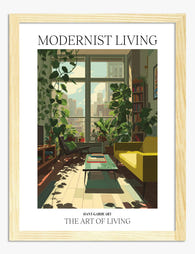
Urban Oasis Living Art Print
Translation missing: en.products.product.sale_price From £11.95£19.95 -

Cozy Modern Bedscape Canvas Print
Translation missing: en.products.product.sale_price From £44.95£74.95


More from The Frame

Klimt's Portrait Style: How Gold, Pattern, and ...
The collision of decoration and realism in Klimt's figures Stand in front of a Klimt portrait and your eyes do something strange. They dart. They settle on a face, then...

Klimt's Tree of Life: The Story Behind the Icon...
You've seen it on phone cases, yoga studio walls, and tote bags. But the Tree of Life wasn't conceived as a standalone painting at all. It started life as a...

Living Room Klimt Garden Prints: A Modern Styli...
Klimt's gardens get unfairly lumped in with his gilded portraits, and that's why so many people assume they'll look stuffy at home. They won't, if you treat them as the...