


 Order today for delivery by
From Van Gogh to Modern Botanical: Every Style of Sunflower Wall Art Explained
A proper art history lesson disguised as a buying guide, from 18th-century herbarium plates to Van Gogh to today's minimalist photography.


Sunflower art is everywhere, but almost nobody explains the difference between a vintage botanical plate, a post-impressionist reproduction, and a modern photographic close-up. This guide fixes that. By the end you'll know exactly what you're looking at, what to pair it with, and how print quality changes the way each style actually reads on your wall.
Why sunflowers have been an artist obsession for centuries
Sunflowers arrived in Europe from the Americas in the 16th century and immediately caused a stir. They were huge, structurally strange, and behaved oddly (young flowers track the sun, a phenomenon called heliotropism). Botanists wanted to document them, painters wanted to capture their scale, and by the 19th century they had become shorthand for warmth, abundance, and a kind of optimistic rural romance.
That symbolic weight is why the sunflower keeps reappearing across wildly different art movements. Scientific illustrators used them to demonstrate botanical precision. Van Gogh used them to test the limits of yellow pigment. Georgia O'Keeffe used them to explore scale and form. Contemporary photographers use them as clean graphic subjects. The flower itself is a shape-shifter, which is why the sunflower art print category contains so many completely different visual languages.
Understanding those languages is the whole point of this article. Once you can tell them apart, choosing the right one for your space becomes obvious.

Vintage botanical sunflower prints: the scientific illustration look
Vintage botanical prints come from a very specific tradition: the illustrated plates found in 18th and 19th-century botanical encyclopedias, herbariums, and pharmacopoeias. Think of names like Basilius Besler, Pierre-Joseph Redouté, and the Curtis's Botanical Magazine (published continuously since 1787). These artists worked alongside botanists to create accurate visual records of plants, often showing the flower head, stem, leaves, and cross-sections of the seed in a single composition.
The visual signatures are consistent: cream or aged parchment backgrounds, meticulous linework, muted natural pigments, and often a small block of handwritten or engraved Latin text identifying the species (Helianthus annuus, in the sunflower's case). Composition is usually a single specimen isolated on a plain ground, drawn to scale.
Authentic vintage vs. vintage-inspired
Here's the distinction most retailers gloss over. An "authentic vintage" print means a reproduction of a real historical illustration, digitised from the original plate. A "vintage-inspired" print means a contemporary illustrator working in the same visual style. Both are valid, but they read differently on the wall. Authentic reproductions have the tiny imperfections of old engraving (slight paper foxing, uneven ink pressure) that give them character. Vintage-inspired pieces tend to be cleaner and more decorative.
If you want the herbarium look, browse the botanical art prints collection or the wider vintage art prints collection for reference points.
Where they work
Botanical prints suit rooms that already have some age or texture: panelled walls, hallways with dado rails, kitchens with shaker cabinets, studies with bookshelves. They also work brilliantly in sets of three or six, hung in a grid, which is closer to how they'd have appeared originally as pages in a bound volume.
Painterly and impressionist sunflower art: warmth with texture
This is Van Gogh territory, and it deserves proper context because "Van Gogh sunflowers" is not one thing. It's two distinct series that get constantly conflated.
The Paris series (1887)
Van Gogh painted his first sunflower canvases in Paris in 1887, and these are the ones most people don't recognise. They show cut sunflowers lying on tables or the ground, viewed from above, in muted browns, ochres, and blues. They're studies more than statements, and only four of them exist.
The Arles series (1888-89)
The famous ones are the Arles paintings. Van Gogh moved to the south of France in early 1888 and started painting sunflowers in vases to decorate the guest room he was preparing for Paul Gauguin, who was coming to stay at the Yellow House. He wanted a "symphony in blue and yellow" and painted at least seven versions. The most recognised are the ones with 15 flowers on a yellow background, held in the National Gallery in London, the Van Gogh Museum in Amsterdam, and a few other institutions.
Understanding this matters because a "Van Gogh sunflower print" can mean any of these, and they have very different moods. The Arles paintings are the joyful, thickly painted, high-yellow ones. The Paris paintings are quieter and darker. Neither is better, but they'll do different things in a room.
Other painterly traditions
Beyond Van Gogh, Claude Monet painted sunflowers in vases during his early Giverny years, softer and more atmospheric than Van Gogh's. Gustav Klimt's "Sunflower" (1907) treats the flower almost as a decorative pattern in his gold-and-pattern style. Georgia O'Keeffe painted sunflower close-ups in the 1930s that anticipated the modern photographic aesthetic by half a century.
The key visual quality across all painterly work is texture. A good sunflower painting print should preserve the visible brushstrokes and impasto (the raised, sculptural build-up of paint). If it looks flat and glossy, the reproduction has lost the point.

Contemporary and photographic sunflower prints: clean and modern
Photographic sunflower art is the newest addition to the category and the one currently dominating minimalist interiors. It typically falls into two subgenres.
Close-up macro photography
Tight crops on a single flower head, often filling the frame, with a shallow depth of field that blurs the background into soft green or cream. The appeal is graphic: strong geometric spiral of the seed head, saturated yellow petals, and clean negative space. These read as almost abstract when hung large.
Field photography
Wide compositions showing rows or fields of sunflowers, often shot at golden hour with warm backlighting. These bring a landscape quality into the room and work well as horizontal statement pieces above a sofa or bed.
Photography demands the most from print quality. Because the image has no visible brushwork or hand-drawn linework to distract the eye, any flaw in the print (banding, dull colour, low contrast) is immediately visible. Photographic prints benefit from museum-grade giclée printing on thick matte paper, which is what we use for our art prints. Matte finishes suit photography better than gloss because they eliminate the reflective glare that flattens colour under room lighting.
Abstract sunflower art: when you want the feeling without the literal
Abstract sunflower work strips the flower down to essentials: a circle, radiating shapes, a yellow-and-brown colour relationship. Sometimes it's clearly a sunflower rendered loosely; sometimes it's a pure geometric or watercolour reference that only reads as "sunflower" because you're told it is.
This category includes:
- Loose watercolour: soft washes of yellow and ochre suggesting a flower head without hard outlines
- Geometric abstraction: the seed head reduced to a Fibonacci spiral or concentric rings
- Colour field work: large blocks of sunflower yellow with minimal representational content
- Line drawings: single-stroke or continuous-line renderings of the flower
Abstract work is the most versatile because it carries the mood of a sunflower (warmth, radiance, summer) without imposing a specific era or aesthetic on the room. It's what you want when you like the idea of sunflower art but the literal versions feel too on-the-nose. Browse the abstract art prints collection for a sense of how varied this can be.
Which style works with which interior aesthetic
Here's where taste meets practicality. Some pairings just work.
Modern minimalist and Scandinavian interiors
Clean photographic close-ups, black and white sunflower photography, or minimalist line drawings. Look for prints with plenty of negative space. A single 50x70cm framed print in a slim black or oak frame is usually enough.
Farmhouse, country, and cottage
Vintage botanical plates or vintage-inspired illustrations. Sets of three or six hung in a grid look intentional rather than random. Warm wood frames or off-white frames suit the palette better than black.
Traditional and classical interiors
Van Gogh reproductions (particularly the Arles series), Monet-style painterly work, or Klimt-inspired decorative pieces. Go larger than you think, 70x100cm framed, and don't be afraid of a substantial frame with visible profile.
Bohemian and eclectic
Watercolour abstracts, loose painterly work, or mixed collections that combine a vintage botanical with a modern abstract and a photographic piece. The unifying element is the subject, not the style.
Mid-century modern
Geometric abstract sunflowers or graphic photographic work. Colour palettes that lean into mustard and burnt orange rather than pure yellow tend to sit better with mid-century furniture.

Field vs. close-up: what the composition does to a room
A field composition pulls the eye outward and suggests space, which is why it works well in smaller rooms where you want a sense of expansion. A close-up composition pulls the eye inward and creates intimacy, which is why it works well in bedrooms and reading corners. Neither is inherently better, but they do different jobs.
How print quality affects the way each style reads on the wall
This is where most sunflower art online falls apart, and it's worth taking seriously before you buy.
Why botanical prints need crisp detail
The whole appeal of a botanical illustration is the fine linework: individual petal veins, the crosshatching on the seed head, the tiny script of the Latin caption. Cheap printing blurs these details and turns the print into a vague yellow blob at anything larger than A4. Look for giclée printing (a high-resolution inkjet method used by galleries and museums) on thick matte paper. Our art prints use museum-grade giclée on paper heavy enough to hold detail even at large sizes.
Why painterly reproductions need texture and colour accuracy
Van Gogh's yellows are famously difficult to reproduce because he used chrome yellow pigments that have shifted over 130 years, and modern reproductions have to make a choice about which "version" of the painting they're representing. Beyond colour, the texture of impasto brushwork needs to be visible in the print, which requires high-resolution scanning of the original and inks capable of holding subtle tonal shifts.
Some painterly reproductions work beautifully on canvas because the poly-cotton weave adds a texture that echoes the original painted surface. Canvas is also lighter than framed paper prints and easier to hang in humid rooms like kitchens.
Why photography demands the flattest, most accurate print possible
Photographic prints have nowhere to hide. A dull grey where it should be black, a slight cast in the highlights, a hint of banding in a smooth gradient, all of it shows up instantly. Matte paper is generally the right choice because it prevents the reflective glare that ruins photography under overhead lighting. Frames with UV-protective acrylic glaze (rather than glass) reduce reflection further and prevent the print from fading in sunlight, which matters for a subject that will often hang in bright rooms.
Why abstract work is the most forgiving
Because abstract art doesn't rely on fine detail or precise colour matching, it's the most forgiving of print quality variation. That doesn't mean quality doesn't matter, but you can get away with more here than you can with a botanical or a photograph.
Framing considerations by style
A few practical notes. Botanical prints look best framed with a generous white mount, which references the way they'd have sat on the page of a book. Painterly reproductions, particularly Van Gogh, often look best on canvas without a frame, or in a simple wooden frame without a mount. Photographic prints work in slim modern frames, black or oak, with or without a mount depending on how graphic the image is. Abstract work is flexible.
One thing worth flagging: the biggest failure in this category is prints and frames arriving separately, not fitted properly, or warping in transit. Our framed prints ship together in one box, fitted, ready to hang, with fixtures already attached.

Choosing your style in three questions
If you're still undecided, ask yourself three things.
What era does your room already speak to? If your furniture is modern, go photographic or abstract. If it's traditional or country, go botanical or painterly. Matching the era of the art to the era of the room is the single most reliable rule.
Do you want the sunflower to be the focus, or a colour accent? If focus, go large and literal (a Van Gogh reproduction or a photographic close-up). If accent, go abstract or watercolour where the yellow does the work without demanding attention.
Are you buying one piece or building a collection? Single pieces should be statement-scale, at least 60x80cm for most rooms. Collections benefit from consistency of style: three botanicals, or three photographs, but rarely one of each unless you're deliberately going eclectic.
Pick the style that answers all three honestly, then buy the largest version you can comfortably fit. Sunflower art rewards scale, and almost every regret in this category is about going too small.

Fab products featured in this blog
-

Sunflowers by Vincent van Gogh Art Print
Sale price From £11.95£19.95 -

Sunlit Sunflowers on Black Art Print
Sale price From £11.95£19.95 -

Sunflowers by Vincent van Gogh Canvas Print
Sale price From £49.95£74.95 -

Sunlit Sunflowers on Black Canvas Print
Sale price From £49.95£74.95 -

Allotment with Sunflower by Vincent van Gogh Art Print
Sale price From £11.95£19.95 -

Allotment with Sunflower by Vincent van Gogh Canvas Print
Sale price From £49.95£74.95 -

Sunflower on Deep Blue Art Print
Sale price From £19.95£34.95 -

Sunflowers Detail by Vincent van Gogh Art Print
Sale price From £11.95£19.95 -

Vase With Three Sunflowers by Van Gogh Art Print
Sale price From £11.95£19.95 -

Sunflowers Detail by Vincent van Gogh Canvas Print
Sale price From £49.95£74.95 -

Sunflower on Deep Blue Canvas Print
Sale price From £59.95£119.95 -

Vase With Three Sunflowers by Van Gogh Canvas Print
Sale price From £49.95£74.95 -

The Sunflower by Gustav Klimt Canvas Print
Sale price From £49.95£74.95 -

Farm Garden with Sunflowers by Gustav Klimt Art Print
Sale price From £11.95£19.95 -

Farm Garden with Sunflowers by Gustav Klimt Canvas Print
Sale price From £49.95£74.95 -

Farm Garden with Sunflowers by Gustav Klimt Art Print
Sale price From £11.95£19.95 -

Vase of Sunflowers by Henri Matisse Art Print
Sale price From £11.95£19.95 -

The Sunflower by Gustav Klimt Art Print
Sale price From £11.95£19.95 -
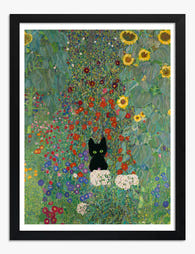
Gustav Klimt Farm Garden Sunflowers Art Print
Sale price From £11.95£19.95 -

Sunflower Field Abstract Art Print
Sale price From £11.95£19.95


More from The Frame

Why Do Monet Water Lilies Prints Fail in Most R...
The problem is almost never the art. It's that people buy a 40x50cm print for a room that needs 90x60cm, hang it twelve inches too high, and pick a frame...

From Matisse to Now: Modern Artists Inspired by...
Henri Matisse spent his final decade cutting leaves out of painted paper, and somehow those shapes ended up on half the walls you'll see on Instagram today. That's not an...

Transform Your Modern Home with William Morris ...
Morris patterns have been quietly staging a comeback, and not just in draughty cottages. The designs that defined the Arts and Crafts movement are showing up in flats with concrete...