
 Order today for delivery by
 Transform Any Room with Bird Prints That Feel Effortlessly Chic
How to decorate with feathered friends on your walls without your home looking like a Victorian birdwatcher's lodge.


Bird prints have a reputation problem. Done badly, they conjure doilies, dusty ornithology books, and a slightly fussy aunt's spare room. Done well, they're one of the most quietly sophisticated things you can hang on a wall.
Yes, you can have bird prints everywhere (if you do it right)
Let's address the nervous question first: will bird art make my home look like a themed gift shop? It can, yes. But only if you treat birds as a costume rather than a colour, a subject, or a mood.
The trick is to stop thinking of bird prints as "bird decor" and start thinking of them as art that happens to feature birds. A moody heron silhouette is closer to a minimalist landscape than it is to a cottage cross-stitch. A graphic, oversized parrot print sits comfortably alongside abstract work. Even a traditional Audubon-style plate, hung in the right frame, reads as serious art rather than nostalgia.
Bird motifs are having a quiet moment in mainstream interiors right now, moving out of nurseries and country kitchens into contemporary lounges and minimalist hallways. The rules below are how you ride that wave without falling off it.

Room-by-room: where bird prints shine and where they struggle
Some rooms are naturally hospitable to bird art. Others fight back.
Lounge and living rooms
This is bird art's natural habitat. Lounges have the wall space for larger pieces, the social context for conversation starters, and usually enough mixed materials (wood, linen, ceramic) to make a bird print feel grounded rather than themed. A single 70x100cm framed print above the sofa, or a thoughtful pairing of two complementary species over a console, almost always works.
Bedrooms
Bedrooms reward calm, atmospheric bird art. Think soft watercolour studies, dawn-light silhouettes, or a single elegant crane. Avoid anything too busy or too brightly coloured directly above the bed. You don't want a kingfisher staring you down at 7am.
Hallways and stairwells
Long narrow walls are perfect for a vertical sequence of three smaller bird prints, or a single tall piece on a stair return. Hallways are also the easiest place to experiment, because you walk through rather than dwell.
Kitchens and dining rooms
Botanical-leaning bird prints (finches on branches, hummingbirds with foliage) feel right at home here. Just keep them away from cooker splashes. Canvas handles humidity better than framed prints in a steamy kitchen.
Bathrooms
Possible, but cautious. A small canvas print works because the poly-cotton handles moisture better than framed paper. Skip anything precious.
Where bird prints genuinely struggle
Ultra-modern minimalist spaces (all concrete, glass, and zero pattern) can make even an abstract bird feel decorative in the wrong way. Industrial lofts with a lot of exposed metal and brick can fight with detailed nature prints. In both, you either go very graphic and oversized, or skip birds entirely. Honesty: not every room wants them.
Pairing bird art with other subjects: landscapes, abstracts, and botanicals
The single biggest mistake people make with bird art prints is hanging them only with other bird prints. That's how you end up in aviary territory. The fix is to mix bird prints with adjacent subjects so the birds become one note in a chord, not the whole song.
Birds and landscapes
Bird prints and landscape prints share a visual vocabulary: sky, horizon, atmosphere. A coastal landscape paired with a single seabird study feels like a curated nature collection rather than a theme. Mountain landscapes pair beautifully with birds of prey. Misty woodland scenes love a small owl or songbird.
Birds and botanicals
This is the easiest pairing because it already exists in nature. A pair of botanical art prints flanking a central bird print reads as a considered triptych. Just vary the visual weight so the bird isn't competing with a dense fern study.
Birds and abstracts
The most underrated pairing. A bold abstract in two or three colours next to a graphic bird print pulls the bird firmly into contemporary territory. The abstract gives the eye somewhere quiet to rest, and the bird gives the abstract a focal point. Match by colour palette rather than subject.
The 70/30 rule
A useful rough guide: in any room with multiple pieces of art, no more than 30% should feature birds. If you have ten pieces in a gallery wall, three birds is plenty. Two is often better. This is what separates "I love nature" from "I collect birds."

Colour coordination: using bird prints to introduce accent colours
Bird prints are stealth colour bombs. A single goldfinch print can drop a clean note of yellow into a neutral room. A kingfisher introduces electric blue without committing to a blue sofa.
Echoing what's already there
The safest approach is to pick a bird print that picks up an accent already in the room. Have a rust-coloured throw? A robin or a red kite ties it together. Sage green walls? Look for prints featuring greens and earth tones, like a wood warbler or a green woodpecker.
Introducing something new
The braver approach is to use a bird print to introduce a colour your room currently lacks. This works best when you commit to repeating that accent somewhere else: a cushion, a ceramic vase, a candle. One isolated colour pop looks accidental. Two looks intentional.
Room-specific palette suggestions
In a neutral lounge (whites, oatmeal, taupe), a print with a single saturated bird against a soft background adds warmth without disrupting calm. In a darker, moodier room (deep green walls, navy velvet), tropical birds with bright plumage genuinely sing. In a Scandinavian palette of whites and pale wood, line-drawn or watercolour birds in muted tones feel native.
Avoid one trap: matching too literally. If your sofa is teal and you buy a teal peacock, the whole thing flattens. Slight variation reads as designed. Exact matching reads as a showroom.
Size and scale: when to go big and when to keep it subtle
Most bird prints are hung too small. A 30x40cm print floating in the middle of a six-foot wall looks like a postage stamp.
The single large statement
For a focal wall (above the sofa, the bed, a fireplace), one large print at 70x100cm or a canvas at 100x150cm almost always beats three smaller ones. A single dramatic crane, owl, or heron at scale has the presence of a proper artwork. It also sidesteps the themed trap entirely. One large bird is a statement. Six small birds is a collection.
When to cluster
Clustering works in long corridors, up staircases, or on wider walls where a single piece would feel marooned. The rule for bird-inclusive gallery walls: vary the size, vary the frame, vary the subject. Three identical bird prints in three identical frames in a perfect grid is the visual equivalent of wearing a matching tracksuit. Technically fine, rarely chic.
Room size matters
Small rooms can take large prints surprisingly well. A 60x80cm print in a tiny snug feels intimate, not overwhelming. What small rooms can't take is too many things. One large bird print in a small bedroom beats four small ones every time.
The frame question
Frame choice does roughly half the work of making a bird print look modern or traditional. A thin black frame pulls almost any bird print into contemporary territory. A natural oak frame keeps things warm and Scandinavian. An ornate gilt frame, even on a graphic modern bird, leans heritage. If you want a traditional Audubon-style plate to feel current, put it in the simplest black frame you can find.

The one-print rule: making a single bird print the focal point
If you're nervous about bird art, this is where to start. Pick one print. Hang it well. Stop.
Choosing the one
The single-print approach raises the stakes, so the choice matters. Look for a bird print that does at least two of these three things: features a bird you genuinely find beautiful, contains a colour that already lives somewhere in your room, and has enough visual quality to hold a wall on its own.
Detail and depth matter at this scale. Cheap bird prints reveal themselves up close (flat colours, soft edges, slight pixelation). Giclée prints on thick matte paper hold up to scrutiny, which matters when the piece is doing all the work.
Placement
Hang the centre of the print at eye level, roughly 145 to 150cm from the floor. Above a sofa, the bottom edge should sit 15 to 20cm above the back cushions. Above a console or sideboard, leave a similar gap. A single print floating too high looks orphaned.
What single-print rooms tell guests
A solo, well-chosen bird print signals confidence. It says: I picked this because I love it, not because birds are a theme I'm committing to. It's the styling equivalent of one perfect piece of jewellery rather than the full set.
When to break the one-print rule
When you genuinely love birds and want to lean in. The escape valve is variety: mix sizes, mix species, mix eras (a vintage-style botanical plate next to a modern graphic print), and break up the bird prints with non-bird pieces. The 70/30 rule from earlier is your friend here.
Gift-worthy bird prints for the bird lover who has everything
Bird people are usually specific. They don't just like "birds." They like garden birds, or birds of prey, or seabirds, or one specific species they once saw on holiday in Norfolk. This is good news for gifting, because specificity makes the gift feel personal.
For the casual bird watcher
A beautiful single species they're likely to have spotted (robin, blue tit, goldfinch, blackbird) framed in something handsome. Keep it under 50x70cm so they can hang it without architectural commitment.
For the serious birder
Go niche. A specific raptor, a less common wader, or a species local to where they live. Bonus points if you can match the print style to their existing home. A traditional birder probably wants the watercolour or plate-style aesthetic. A younger, more design-led recipient probably wants something graphic.
For the person who lives in a small flat
A medium framed print they can hang straight away. The best gifts arrive ready to go, with fixtures attached, properly fitted so the print isn't bowing or shifting inside the frame. Anything that arrives in pieces becomes a future project, which becomes guilt.
For the maximalist
Three coordinated prints they can hang as a small set. Pick three species from the same family (three garden birds, three owls, three seabirds) for cohesion, or three different birds in matching frames for unity through framing. Either works.
For broader options, the wider nature art prints and animal art prints collections are worth a browse if you're unsure whether birds are quite the right fit. Sometimes a hare or a fox lands better than a finch.

A few last principles
Bird prints reward restraint and punish enthusiasm. The rooms that look best are rarely the ones with the most birds. They're the ones where a bird print sits comfortably among landscapes, abstracts, and botanicals, picks up a colour already in the room, and has been given enough space to breathe.
If you're starting from zero, buy one. Hang it properly. Live with it for a month before adding anything else. If after that month you find yourself wanting more, you'll know exactly what's missing and exactly where it should go. That's how good walls get built: slowly, deliberately, one bird at a time.

Fab products featured in this blog
-

Soaring Minimal Birds Art Print
Translation missing: en.products.product.sale_price From £11.95£19.95 -

Soaring Minimal Birds Canvas Print
Translation missing: en.products.product.sale_price From £44.95£74.95 -

Audubon Birds: Mockingbird & Thrush Art Print
Translation missing: en.products.product.sale_price From £11.95£19.95 -

Lincoln's Finch by John James Audubon Art Print
Translation missing: en.products.product.sale_price From £11.95£19.95 -

Vintage Garden Bird Art Print
Translation missing: en.products.product.sale_price From £11.95£19.95 -

Soft Silhouette Birds Art Print
Translation missing: en.products.product.sale_price From £11.95£19.95 -

Birds by William Morris Canvas Print
Translation missing: en.products.product.sale_price From £44.95£74.95 -

Mockingbird by Audubon Art Print
Translation missing: en.products.product.sale_price From £11.95£19.95 -

William Morris Birds Art Print
Translation missing: en.products.product.sale_price From £11.95£19.95 -

Tropic Bird by Audubon Art Print
Translation missing: en.products.product.sale_price From £11.95£19.95 -

Hokusai Birds Pattern Art Print
Translation missing: en.products.product.sale_price From £11.95£19.95 -

Audubon’s Woodland Birds Canvas Print
Translation missing: en.products.product.sale_price From £44.95£74.95 -

Graceful Flight Canvas Print
Translation missing: en.products.product.sale_price From £44.95£74.95 -

William Morris Bird with Strawberries Art Print
Translation missing: en.products.product.sale_price From £11.95£19.95 -
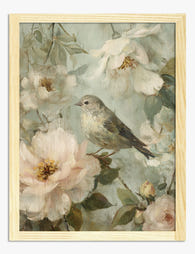
Spring Songbird & Blossoms Art Print
Translation missing: en.products.product.sale_price From £11.95£19.95 -

Terracotta Birds Duo Art Print
Translation missing: en.products.product.sale_price From £11.95£19.95 -

Audubon’s Songbirds Collection Art Print
Translation missing: en.products.product.sale_price From £11.95£19.95 -

Vibrant Marsh Bird Art Print
Translation missing: en.products.product.sale_price From £11.95£19.95


More from The Frame

Creative Studio: Colour and Personality, on Pur...
Most maximalism advice treats colour like a costume. Pile it on, mix the patterns, call it personality. But a creative studio is not a stage set. It is the room...

The Boutique Hotel Feel at Home: What to Copy, ...
There's a specific feeling you get walking into a good boutique hotel. The lobby art makes you stop. The bedroom print feels like it was chosen for that exact room....

Mediterranean Escape: Terracotta, Sage, and the...
There's a reason the same three colours keep showing up in every Mediterranean room you've pinned. Terracotta, sage green, and warm white aren't just pretty together. They're a coded language...